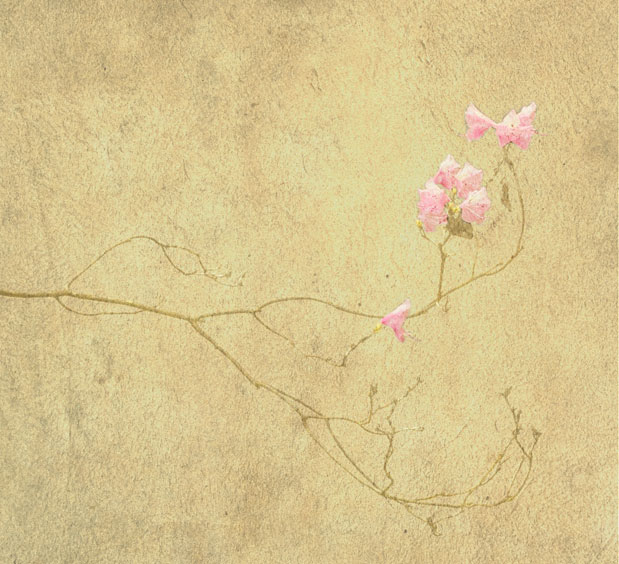
cell phone, mortgage, job,
cell phone
hair cut, dogwood?, cell phone…

cell phone, mortgage, job,
cell phone
hair cut, dogwood?, cell phone…

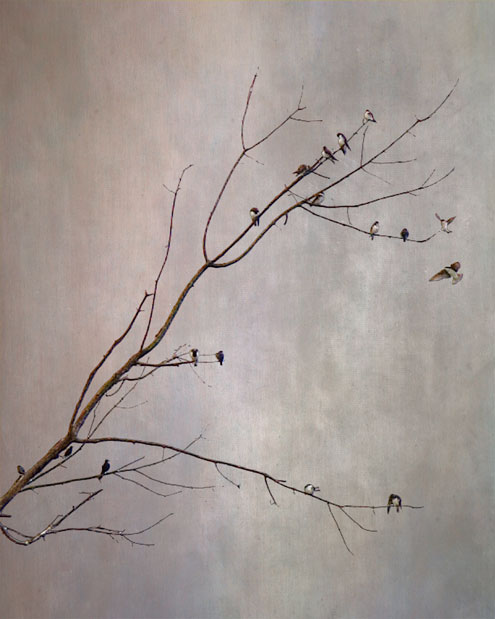
room for one more
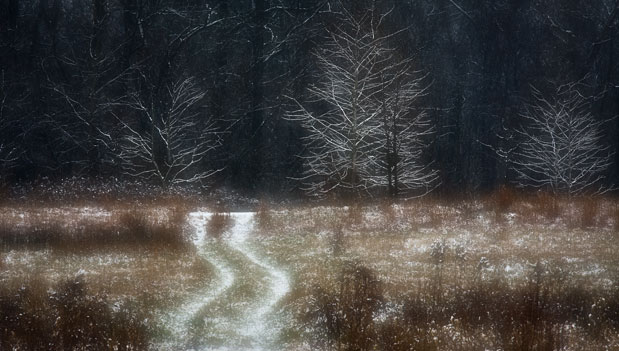
the road came
this way
to see the trees

“Weeds are flowers, too, once you get to know them.”
A. A. Milne

Our neighbor up the street has pond-front
property as a result
of the street being re-paved.

A bright, warm Saturday afternoon in October, what could be better than going for a ride in the country to find apples and black walnut fudge?
Alex and Claire had been married a year now and whatever they did, they plunged in and found the fun in it. Responsible people on their jobs during the week, they walled off the weekend for their time together. Work hard, play hard together, that’s Alex and Claire.
Apple in the cup holder and fudge in his right hand, Alex steered with his left. “Oh this fudge is good” he said. “There’s nothing that sets it off better than black walnuts, a dark, delicious taste.”
Claire agreed.
Alex and Claire had never been back in here, along this road. A dirt road but well kept.
Alex was perhaps concentrating a little too much on the fudge as they went around the bend.
Sheep! A herd of sheep in the road! Alex slammed on the brake, fishtailed and corrected but not fast enough to save one of the sheep. It was pretty clearly dead as it lay in the road.
Alex jumped out of the car and the farmer yelled “What are doin’ Mister, drivin’ so fast on these roads? You killed one of my favorite ewes.”
Alex was speechless. He tried to swallow but couldn’t. He pulled himself together and said “I’m very sorry and I know that is not nearly enough. What can I do to make up for this?”
The farmer scratched his chin with a broken finger nail, looked up at the sky and said “I know you didn’t mean to do that but I’m out one good ewe. $200 would help.”
Alex and Claire counted out their money and handed the farmer ten $20 bills.
The farmer took them, licked his finger and counted the money. “OK. I’ll move the herd and you can go on. But you be more careful.”
Just then a police car came around the bend and just missed the closest sheep before it stopped. It was a county cop and he took down Alex’s license number and checked it before getting out of his cruiser. He opened the door and got out, his belt creaking with the pistol, baton, bullet case, flashlight and handcuffs he had on it. He walked, not fast, not slow, over to Alex and the farmer.
Ignoring Alex, the cop turned to the farmer and said “Orvie, we’ve talked about this in the past. You’ve pulled this trick once too often. Get those sheep back in the field. You and I are going for a little ride.”
The cop turned to Alex and said “Well, you were going too fast coming around that curve weren’t you? How much did Orvie take you for?”
“$200.” Alex said, rather abashed.
“There’s a lesson for you. Why don’t you go on your way and just be more careful, will you?”
I don’t know where I first heard of it but I’ve recently been intrigued with the idea of wabi sabi, which appears to be so deeply embedded in Japanese culture that native Japanese don’t, and possibly can’t, give a clear picture of what it is. For them it just is. I’ve read several books about it, all by Western authors. One of these authors says that he has found no book on wabi sabi written by a Japanese. Perhaps in one culture there is only a need to experience and not explain while in our culture there is a need to explain just about everything.
The description that, so far, I find most satisfying is given by Andrew Juniper:
If an object or expression can bring about, within us, a sense of serene melancholy and a spiritual longing, then that object could be said to be wabi sabi.
Perhaps it is better to illustrate the idea rather than talk too much about it. I am a novice concerning this concept and what I write will be the thoughts of a novice. Might be better to show what it could mean and write about it just a little bit.

One of the defining features of wabi sabi is impermanence. This morning I had seen the light falling on a leaf just so. It was perfect. I went into the house, got my camera and tripod, came out and the light had changed. That moment of perfection of light and leaf was gone. But there were others. This one didn’t look like much at first but then the light touched it.
Another defining feature is simplicity.

But there is more in this image than simplicity, there are also other key features of wabi sabi, imperfection and impermanence. This car from a train is rusting away and will be dust someday.
Impermanence operates on every time scale. The backwash of water in the lower left in this image from the White River was gone in under a second. I am sure the leaves moved on when the water rose again. The rock and concrete are wearing down.

Simplicity, imperfection, impermanence. All these are part of life. There is beauty in all of it, if we’ll just stop and look. But what beauty was there when my father was dying from cancer? Where I saw beauty was in his dignity and his newly formed relationships with the hospice nurses. There was much beauty there. If there can be be beauty there, there can be beauty just about anywhere. Melancholy? Yes. Serenity in awareness? Yes.

What are your phylum, order, class, family, genus and species? I don’t know.
What is your name? I just am.
 Spirit and Seeing