Wondering in the trees

I really had no idea what I would be shooting today, I just knew I was going out.  The day was bright and around 20 degrees.  We haven’t had a great deal of snow but what there is, is hanging on.

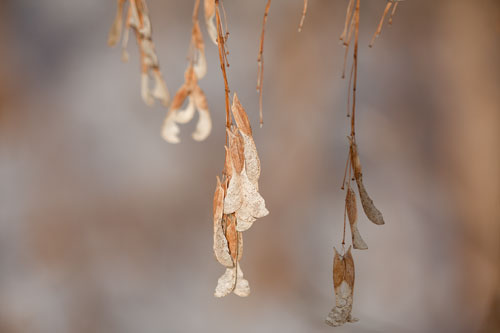
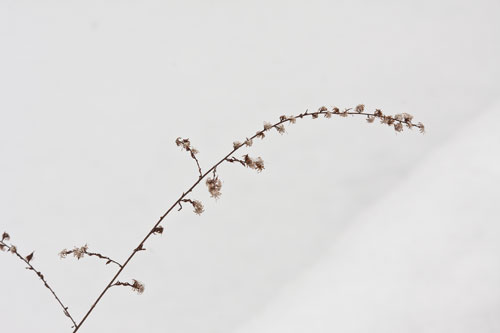
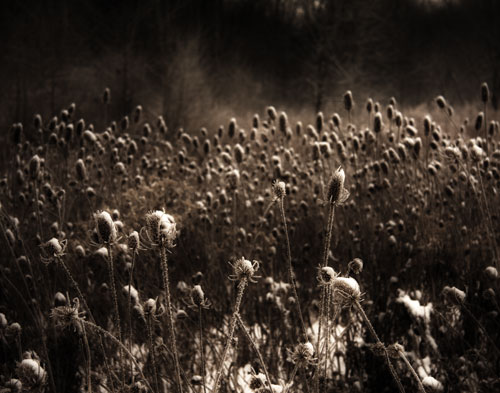
I would like to say that I was ready to shoot anything that would stand still long enough but in the case of the image below, the seed pods were still for most of the 1/3200th of a second the shutter was open.  Otherwise they were moving pretty briskly.


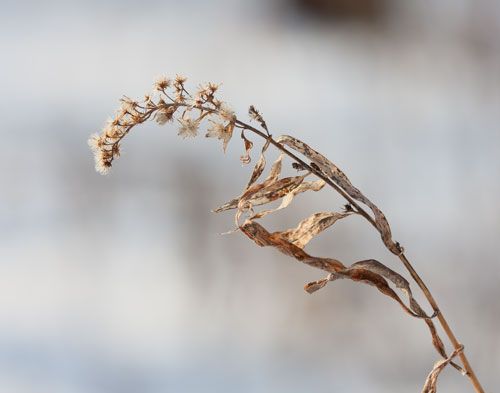
I had to chase this one for awhile too.  Not exactly strenuous exercise but fun.


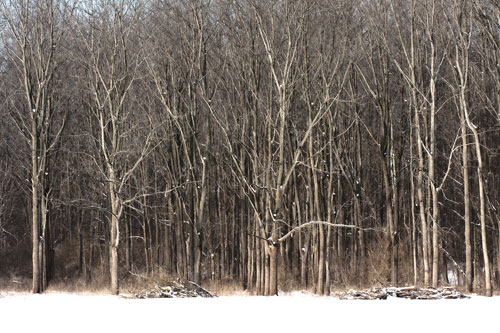
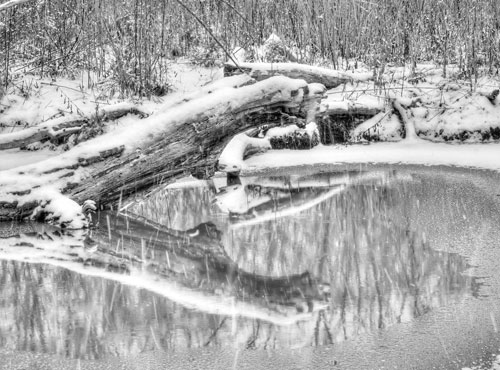
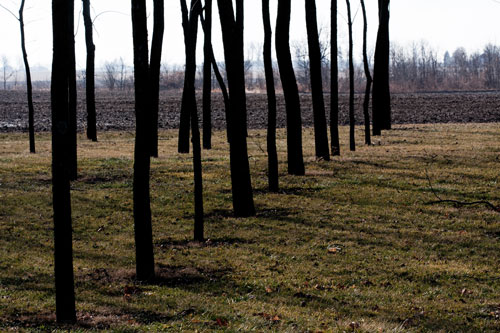
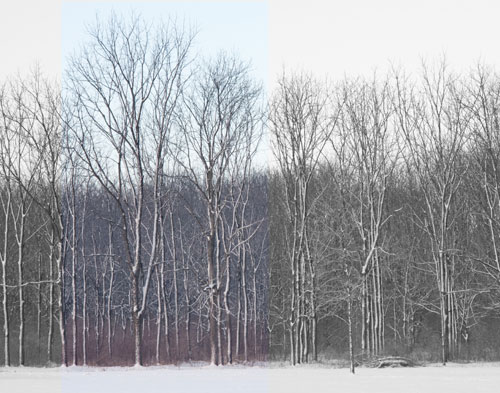
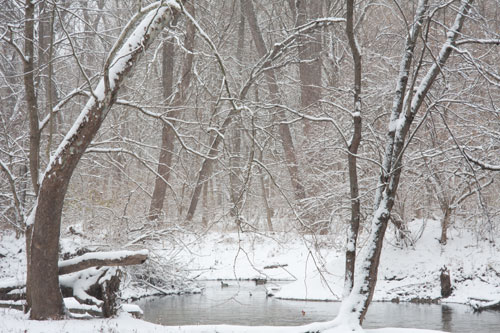
I’ve been doing more with sandwiching multiple images exposed for different lengths of time (high dynamic range or HDR).  This is part of a walnut plantation.

It reminds me of the Robert Frost poem, ‘Stopping by Woods on a Snowy Evening’ – ‘The woods are lovely, dark and deep.’  And like all of us, I have promises to keep.

Telephone survey

I got a call a few minutes ago; the fellow was doing a survey of in-home use of broadband, cellular, long distance and cable service.  I’m not really the one to talk to since I don’t watch TV and while I have a cell phone, I still have to read the customer instruction manual to figure out how to use it.  I believe it does have a camera on it and that might get some use.  But I was the senior male in the household so I got tagged for the survey.


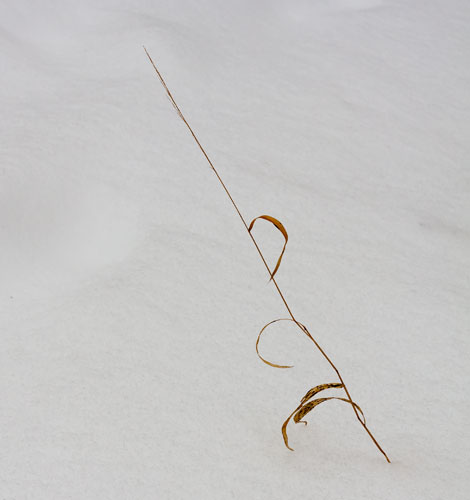
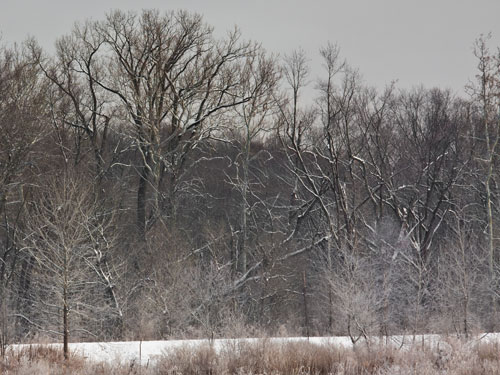
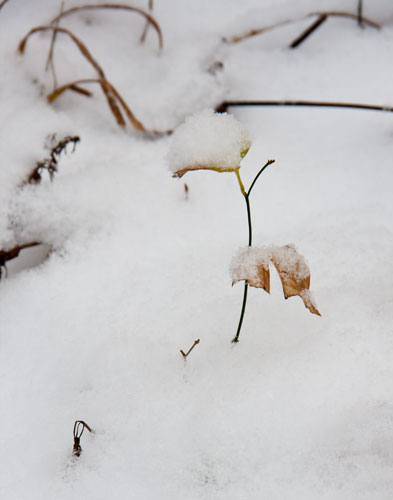
As I was answering his questions, typically by saying ‘that does not apply’, I was thinking about which images from today’s shooting at Fort Harrison State Park I would include in this post.  There were shots of trees but they didn’t seem to have the same impact as simple dead weeds do in the snow.


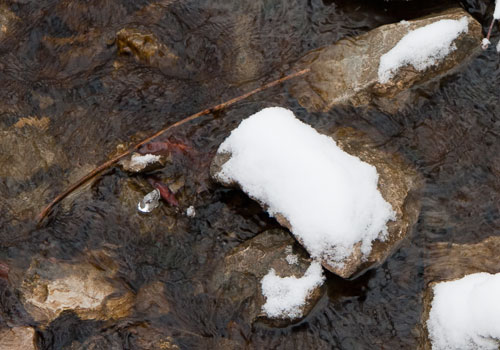
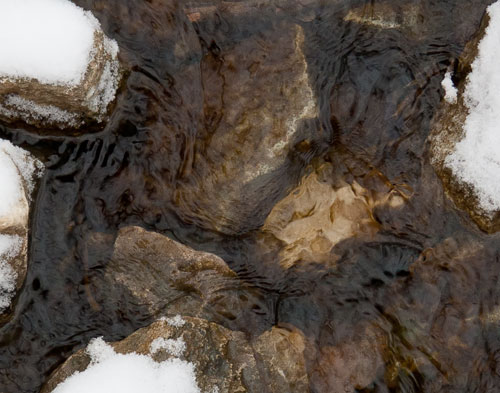
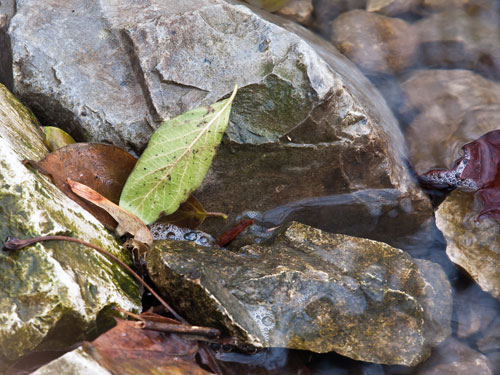
Or, for that matter, water flowing among snow-covered rocks.  I took several shots and they all are different because the patterns in the water keep changing.  Fascinating to watch.


I remember several years ago watching a movie (on TV) where a fellow put his foot through the screen.  That seemed a bit extreme at the time.  It doesn’t seem odd at all now.


I don’t advocate watching less TV.  If you enjoy it, more power to you.  My interests are just different.  Not better or worse, just different.


I’ll probably go back and shoot more tomorrow.  I know I missed a lot of good stuff.  Especially close to the ground.  And close to the water.

Snowy day

We’ve had a few inches of snow so far today, enough to go out with the snowblower but not enough to argue against going out to shoot so it was off to Fort Harrison State Park.


Picnic tables have nice geometries in the winter.


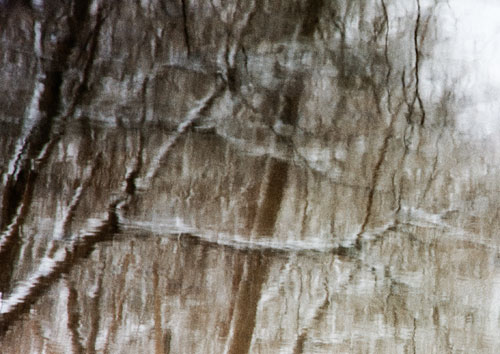
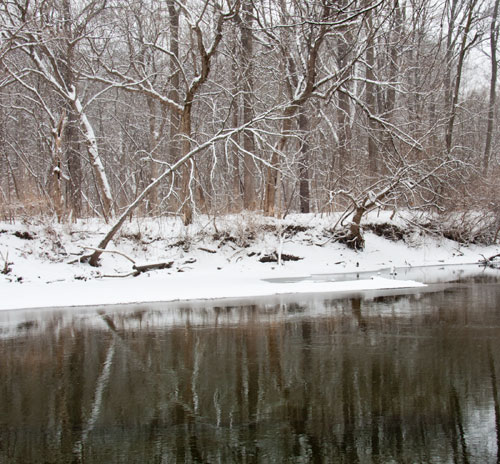
Reflections are fascinating any time of the year but especially so in the winter when the snow outlines shapes.


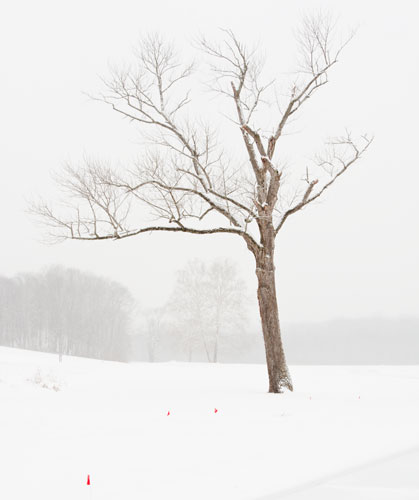
When I was composing this shot of the tree I thought I would take out the little red flags with Photoshop but I find that they add to the composition.


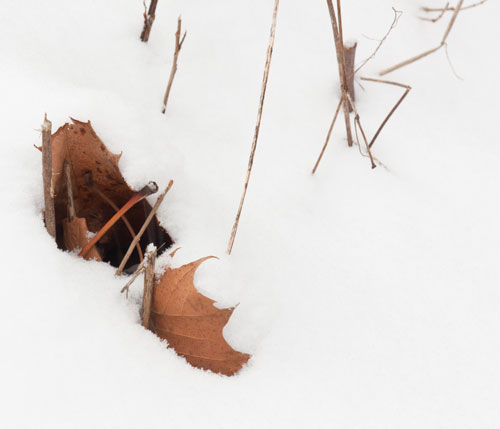
I wouldn’t even have noticed these leaves in spring, summer or autumn.  But there they are in winter.


Maybe there will be more leaves tomorrow.  Probably, but I had better go check.

EcoLab at Marian University in Indianapolis

Becky and I went to look at the EcoLab at Marian University this morning.  Last night someone brought a picture of a cedar waxwing to our camera club and was talking about what a good place the EcoLab is to go to see birds.  So we went.  We did hear a couple of birds but didn’t see any.  That didn’t matter in the least.  This place is well worth visiting for the general photography possibilities.


It was gently snowing and that only added to the charm of the place.


When I saw the scene below I thought of the caption ‘Three Points of View’.


We’ll be going back, I’m sure of that.

Nature in human hands or is it the other way around?

Most of the photography trips I have taken around Indianapolis have been to state and city parks and other areas that were once wild but have since yielded to the human hand enough to make them easily accessible.  Sally and I went on a different kind of shoot today.  She lives north of the city and we went into the countryside.  Farm land.  Flat land and big sky.  I’ve been wanting to do this for some time.


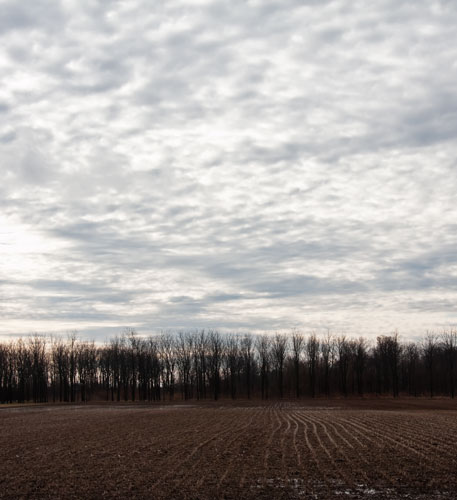
What becomes immediately apparent is that the governing of this land is bicameral – the farmer brings great skill and talent but still relies to a large extent on luck because there is nature, the other branch which governs this land.  The farmer brings order to the land, planting corn or walnut trees in rows for easier tending.


Nature brings variations in temperature, snow, rain, wind.  Weather is fickle.  Even the best estimates of what is going to happen with the weather (The Old Farmer’s Almanac aside) are made only a few days in advance and then with a probability attached.  Nothing is certain here.  The human proposes and nature, or God, disposes.  All of which adds to the appreciation of what we see when we come here.


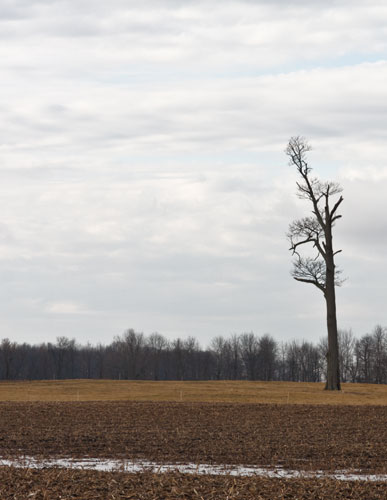
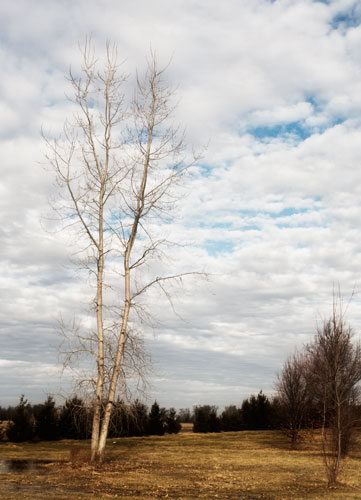
It is unlikely that the tree above was intentionally planted.  The one below probably was.


Both are beautiful in their own ways.  All things considered we humans do pretty well producing food and some of the beauty we need and enjoy.  But in the end, nature is the variable and always present factor.  When we are no longer able to work or if there is no one to take over, nature reclaims the land.


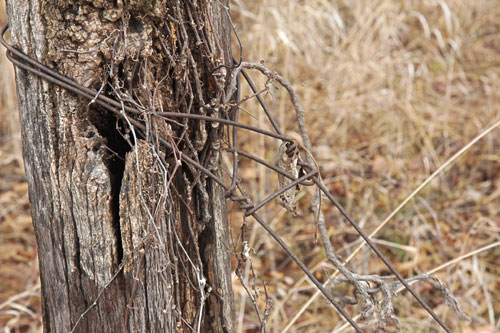
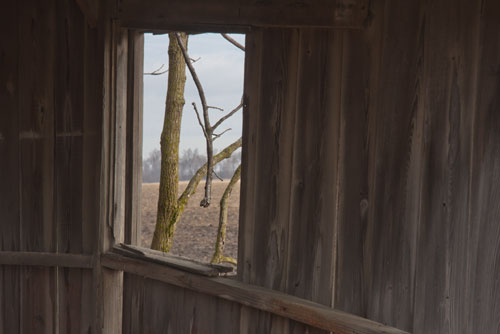
Where wheat, corn or grass once was once planted, nature takes over with its own plan.


If we think only within the perimeter of human activity, this might be seen as tragic; entropy has taken over and the chaos of nature has won.  But is it a contest, a war?  If it is, we humans are going to lose.  But if we see ourselves as part of a larger universe, it is all quite beautiful.  I’m thankful to be here, see it and be part of it.

First shoot in awhile

Becky and I went out with our cameras this morning.  There were little rain squalls from time to time but not enough to worry about.  At first we thought we might go downtown Indianapolis, then we switched to maybe the Indianapolis Art Museum – we had gone there last New Year’s Eve day.  We were going across the Butler University campus and the fountain said ‘stop here.’  So we did.

Using it for a background was as close as I got to photographing the fountain and being happy with the result.

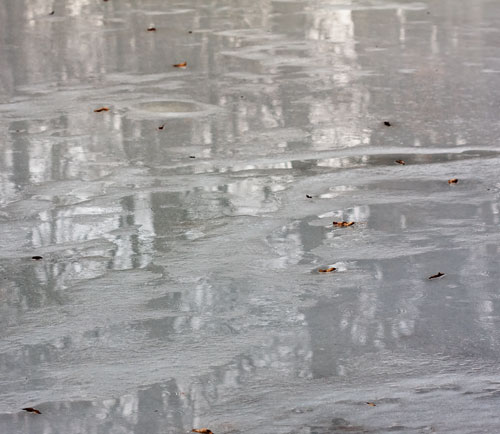
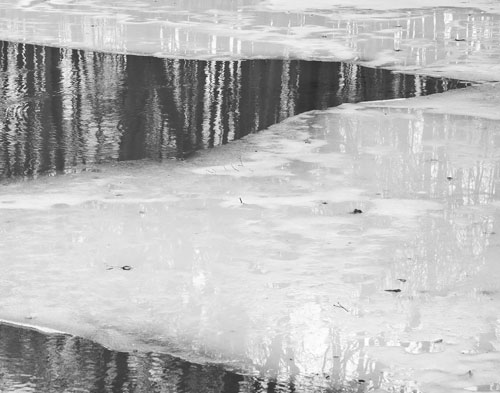
Reflections in the ice were interesting.


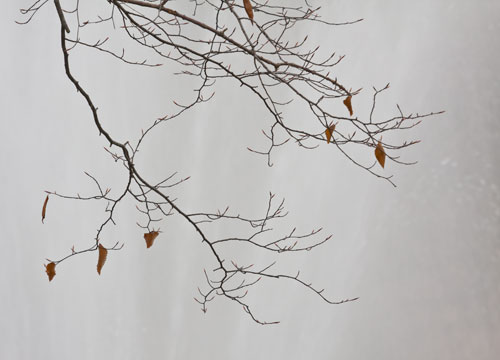
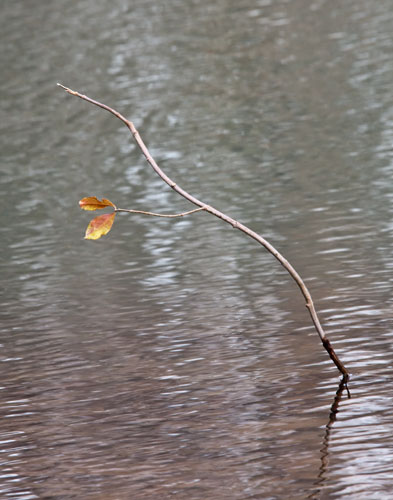
The leaves are dead but not altogether gone.


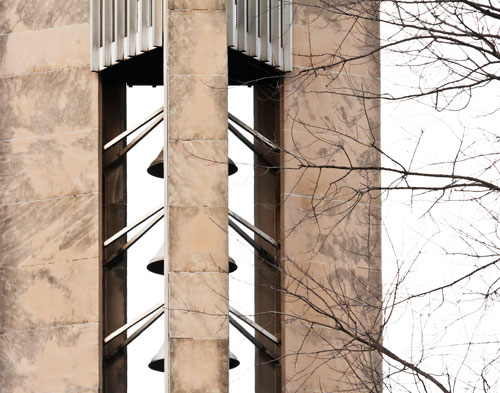
And there is a bell tower.


A very satisfying morning.

A day in the snow

It hadn’t snowed all that much, but there were about four inches of fresh snow on the ground and it was pulling several people – runners, sledders and a photographer – to Fort Harrison State Park on December 23, last Thursday.


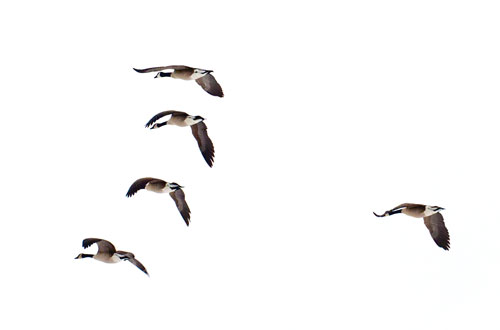
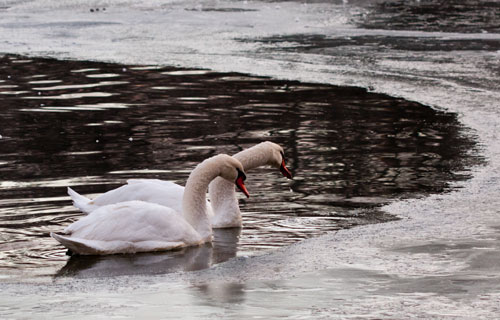
Also some Canada geese.

I hadn’t been out shooting in a week and the feeling of being out in the open on a photogenic day can only be hinted at; I felt as if my soul were being fed.  I hadn’t gotten as far as feeling at one with what I saw but it was moving in that direction.


I tend to see my creative life as being BDP and IDP – Before Digital Photography and Into Digital Photography.  Being able to go out, shoot and get immediate feedback is doing a lot for me.  I would not claim that my experience is universal, but I do believe it is a good bet that total immersion in an avocation such as digital photography stimulates creativity and even nurtures mental health.


Through digital photography I’ve made new friends in the Photo Venture Camera Club, friends who share a passion for pointing a camera and doing something interesting with the result.  That also is a real plus.


Enough with the words.  I plan to go out again tomorrow morning.  I hope to see you there.

Photography as conversation

Have you ever been in a conversation where the other party was obviously thinking up what they were going to say instead of listening to you?  Of course you have.  Far too often.  And it’s not as if we aren’t guilty of the same behavior ourselves.  ‘What I have to say is far more important than what you have to say’ is a prevalent attitude although it is seldom directly voiced.  That wouldn’t be polite. On the other hand, how has it felt when someone has genuinely listened to you?  What was that like?  That was a gift, wasn’t it?
This problem of not listening isn’t restricted to conversations. In an interview, the jazz musician Wynton Marsalis complained about the problem of pulling a small jazz ensemble together.  As you know, in many pieces the musicians in the ensemble will play together and then they will take solos and go back to playing together.  Everybody gets a turn at solo.  The problem Marsalis saw was that while one musician was playing solo the others would be off somewhere else in their heads, working their own agendas,  maybe getting ready for their own solos.  It isn’t really an ensemble when that happens.  This, after all, is jazz and the performance is not going to be exactly the same from one day to the next.  It’s a different day, the people are different and the music will be different.  Listening to the other members of the ensemble, really listening, will likely affect how one plays.  After all, it is a kind of conversation.
Photography has a lot in common with conversation, although initially it may not appear that way.  We go out, we see something we like, we take a picture.  Wham, bam, thank you ma’am.  When you are actively listening to someone, really listening, you put your own agenda aside.  Over a period, an agenda, a theme, does develop in the conversation but it very likely isn’t the one you might have predicted – the other individual is contributing to the conversation too.  If you are both listening to one another, really listening, a sense of oneness might develop.  You are each reflecting something about the other individual.
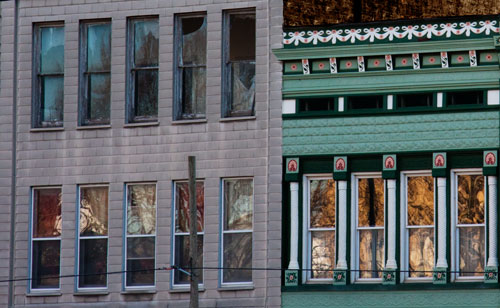
When going out to shoot, even if it is for a specific assignment, why not relax the reins of the going-in-agenda, if you have one, and let the scene communicate with you.  Minor White captured it in this quote:

‘Be still with yourself.  Let the subject generate its own composition.  When the photograph is a mirror of the man, and the man is a mirror of the world, then Spirit might take over.’

Losing one’s self means letting the scene speak to you in its fashion.  This isn’t a matter of walking up to the scene and saying ‘Hi, how are you?’  The form of communication is subtle and I doubt that it can be put into words.  There is no doubt this is difficult and it takes practice, lots and lots of practice, just as active listening in a conversation takes practice.  It takes patience.  When out on a shoot, a place to begin might be to just find a subject and spend some time with it, just looking.  I find that the image I might make changes as I look at it more closely.  Frederick Franck, author of ‘The Zen of Seeing/Drawing as Meditation’, urged students in art workshops to spend two hours with the subject and draw it looking only at the subject and not the paper on which they were drawing.  I would suggest just spending time with the subject.  This isn’t always possible what with the light and conditions changing almost constantly but it is a way of ‘letting the subject generate its own composition.’

We can do some preparation for this kind of photography even when we don’t have a camera with us, even when all we are doing is talking with another individual.   I think that active listening is good practice for developing active looking.  In both cases that agenda, that ego statement is relaxed and something larger and more meaningful can take its place.  Better conversations result and, I believe, better photography comes of it when you pick up your camera.
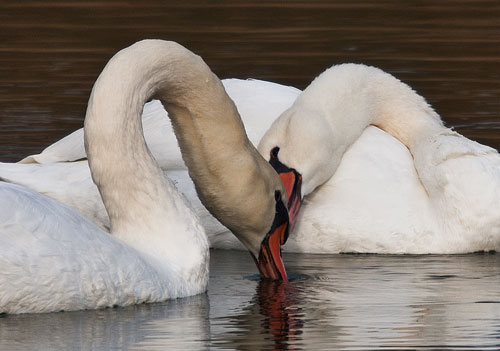

A trip to New Harmony

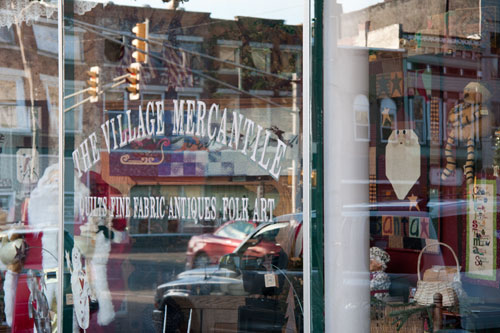
Ellie and I recently spent a few days in New Harmony and enjoyed it immensely.  On the way down, as is her wont, Ellie needed to go to a quilt shop.  This is not something we do on every trip out the door but Ellie does comb her sources for these places and when we have time we stop.  This time the shop was The Village Mercantile in Boonville, IN.

As a seasoned escort to Ellie on these trips I know that I have to find ways of entertaining myself while she does whatever she does in there.  A camera is very useful in this respect.


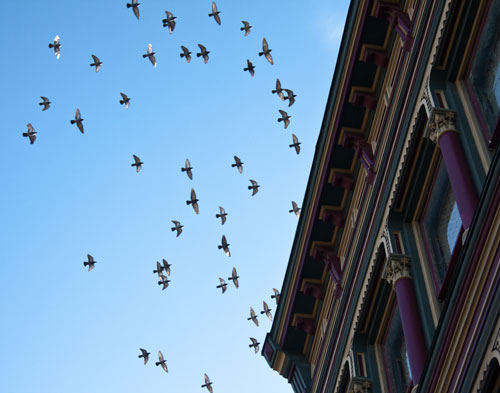
The pigeons were wheeling about and that made a fine subject.  Ellie pronounced this a good quilt shop and we continued to New Harmony.

New Harmony is a beautiful and quiet place, excellent for meditating and sorting things out.  That’s the main reason we go there.


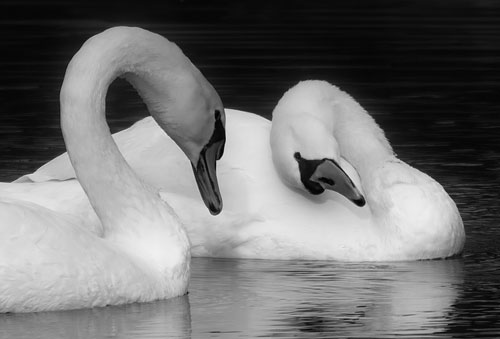
As you can see, there are birds there.  We were out for a walk along the Wabash River and I was composing a shot of the sweep of a bend in the river when Ellie exclaimed ‘There’s a bald eagle!’  ‘Where?’ I asked.  ‘Right over your head!’  Ellie doesn’t always speak with exclamation points but this called for them.  Sure enough, there was the eagle.


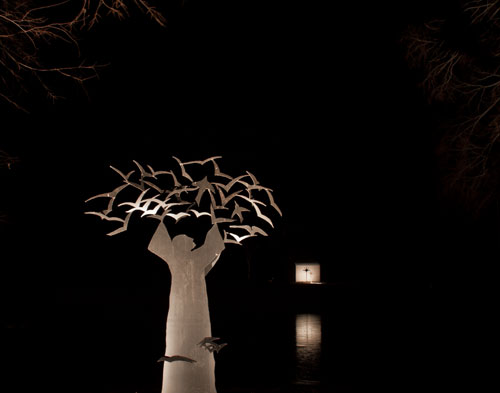
Continuing the bird theme,  they’ve added a metal sculpture of St. Francis and the birds behind the New Harmony Inn.  Here’s a night shot with a small chapel dedicated to St. Francis across the small lake.


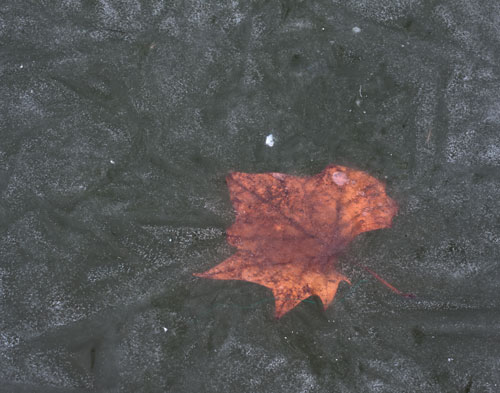
Most of the lake had a thin coating of ice.


Photographic opportunities in the area are good any time of the year.

Highly recommended.


A special day: Afternoon

When I got back from shooting yesterday morning there was a message waiting saying my friend Sally was ready to go shoot.  Was I ready?  Yes.  We went over to Fort Harrison State Park.  A World War II re-enactment was going on so we chose a different part of the park.


We walked up along Fall Creek and, as was the case in the morning, there were lots of opportunities.


I wonder what today will bring?