As photographers, and I will stress, consumers, we pant after the next version of the ‘the best camera to come along in a long time’. Meaning that the best camera to come along that I can afford (I’m willing to sacrifice to make that purchase) will cost a lot of money and, because it has more pixels, better color rendition, etc., etc., I will need to get better lenses (read in the thousands of dollars apiece). This would mean that I can capture more detail, more sharply.

Then along comes the ability to apply painterly effects to the image. Now the game changes. One of the things a paint brush doesn’t do well, compared with a camera, is record fine detail in relatively small images, that is, images under, say, two feet by three feet. But who cares? Jumping back into the consumer frame of reference, paintings, when they are sold, go for more than photographs. That is, purchasers are expressing preferences in concrete terms and those preferences are not favoring fine detail. So if I want to produce something people like, and more importantly what I like, what’s the need for the expensive camera and lens?
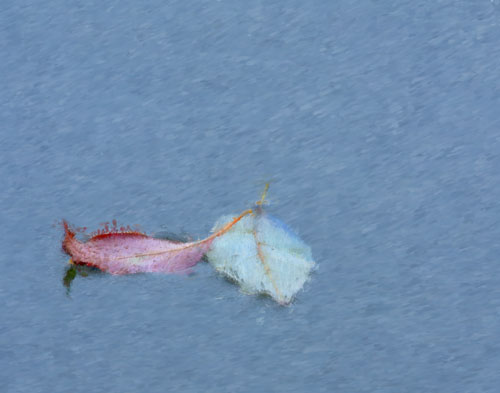
As you may know, I’ve been obsessing for the last week or so over Corel’s Painter Essentials 4 which allows controlled application of painterly effects to digital image files. The first thing the program does is to blur the image to some extent, wiping out some of the detail.
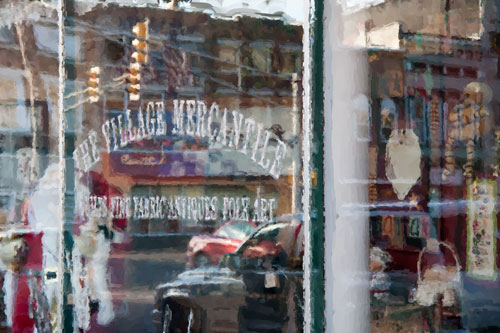
So if detail is gone, or at least disappearing, what do we do when looking through the viewfinder at a scene we want to eventually turn into one of these painterly images? The answer is we simplify the composition.
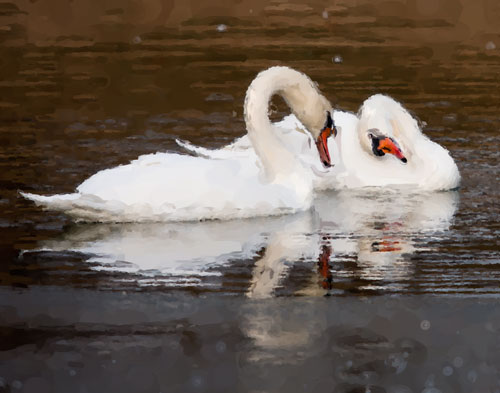
I’ve been reading Richard Schmid’s ‘Alta Prima: Everything I Know About Painting’ to see what a painter could tell photographers; after all, these painter people have been at this for hundreds of years and photography has only been around for a little over a century and a half. His recommendation on starting the composition is to look at the scene and squint. If you are practiced at this, you see a blurry image with a lot of the detail gone.
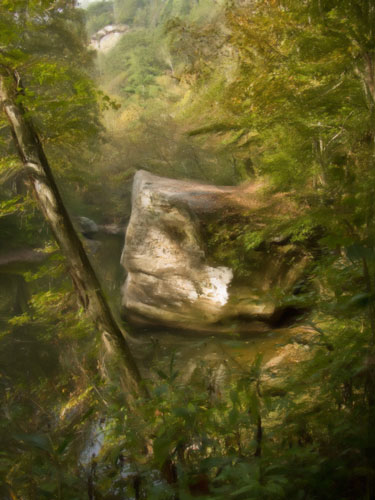
You see the major outlines and it turns you toward simplifying composition. Does the blurry image look as if it has potential? If so, take the picture or paint it, depending on whether you are a photographer or a painter.
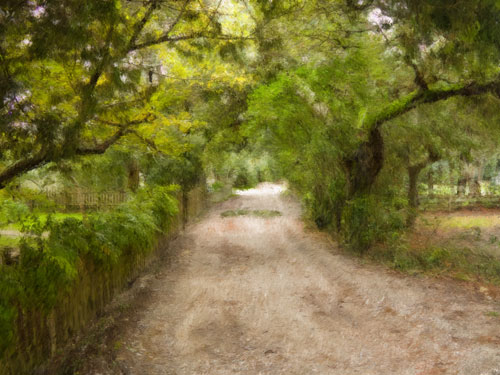
I don’t want to come away from this post saying detail is not important. It is very important for photography but in setting up the composition, simplicity will win out over complexity just about every time.
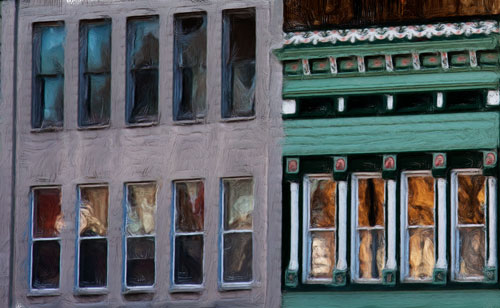
I wonder what cameras would be like today if the final images produced were always painterly. There would be little need for tens of megapixels and super sharp lenses. 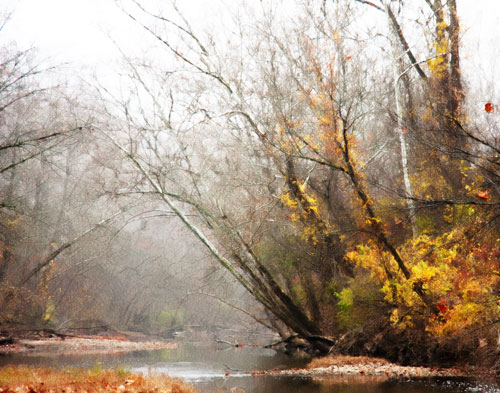
Cameras could be much simpler and less expensive.

In fact there is a thread of a movement to do just that. The iPhone has applications available to take pictures and apply painterly effects to them. See for example the work of Rad Drew, Dan Burkholder, or Harry Sandler. And from the other direction, serious paint artists such as David Hockney are working with the iPhone and iPad. This is an important development. It isn’t going to run Canon or Nikon or Adobe out of business but the simplicity it permits is a welcome innovation. Composition is bound to improve.
Now on the assumption that my wife is reading this, I really didn’t mean that I don’t need a better camera or better lenses……..
 Spirit and Seeing