
What does it mean to you? Ask other people what they think.
Tag Archives: Spirituality
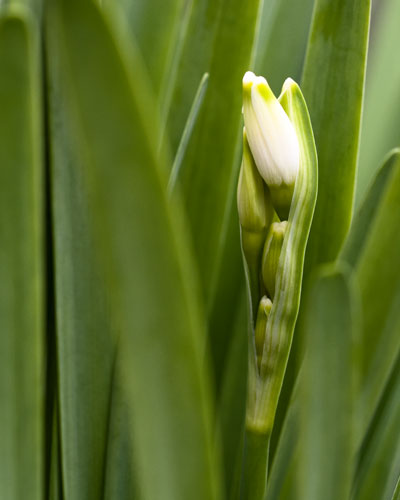
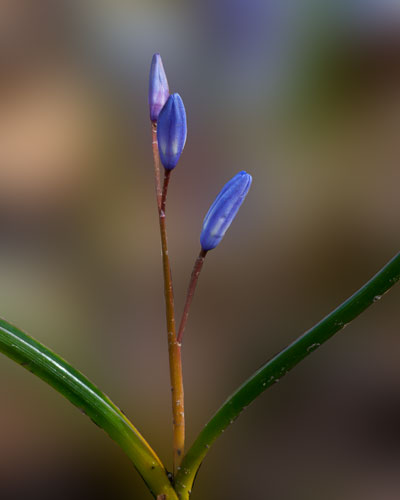
Spring is in the details
I’ve been out some over the last few days looking for the details of Spring.
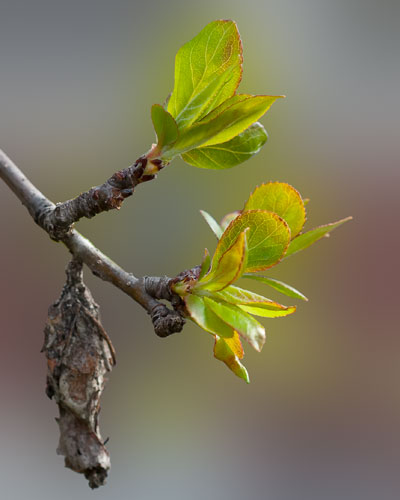
New growth and a cocoon hanging on. Something new and something old in the changing seasons.

I started out looking for that soft green, rather indistinct, we see in trees just coming out but it was the details that pulled me in.

So much beauty in small places. If nothing else, it gets one to pay attention to what is there.
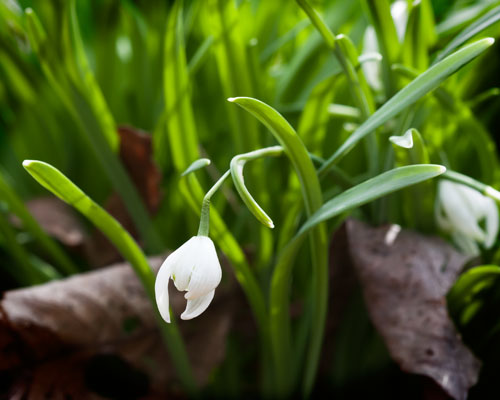
Stopping to look is key whether a camera is available or not.
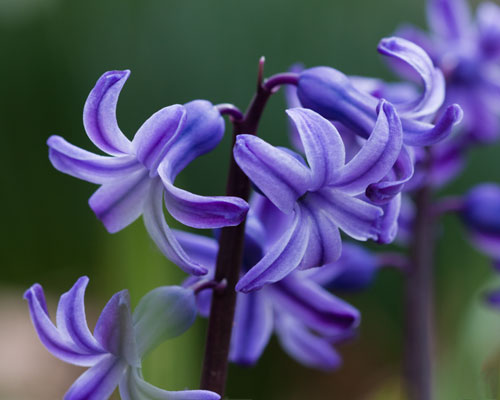
We usually see the hyacinth in the plural; but individual blossoms are gorgeous. And they smell good.
I guess we are often too much in a hurry to really look. Georgia O’Keeffe said that the reason she painted large images was that that was what was needed to get people’s attention.
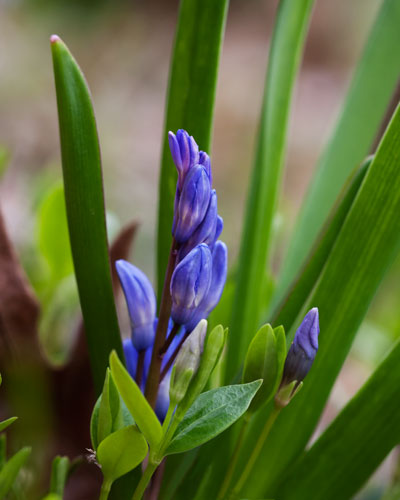
Maybe I’ll try that. Make some very large images. Maybe make a large image of some beautiful small thing and then hang the image outside, right over the subject of the image. Probably have to put an arrow pointing down to tell people what this was about.
People need to look at what is there. That is very important. By the way, I walked no more than a couple of hundred feet (at most, at the very most) off my normal daily paths to get these images.
It’s dark out now so I can’t go look some more tonight. I’ll do that tomorrow.
For sure.
A trip to New Winchester Indiana and beyond
My friend Eileen and I were on our way to Cloverdale, IN to photograph flowers at Hilltop Orchids (which will get its own post later) and we passed through New Winchester along the way. There are some deserted homes there that just beg to be photographed and we were there to oblige.

This place is at the corner of highways 36 and 75. I’ve been by there several times and always wanted to stop. This was the time. That building to the left was probably a convenience store and perhaps a gas station. A house is to the right.
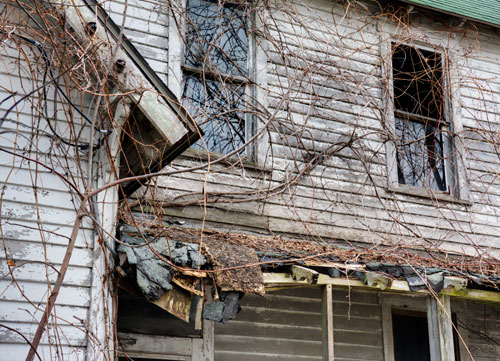
Buildings like this seem so much more attractive to photographers than homes presently occupied and taken care of. Perhaps part of the attraction is that lives were shaped in these places at one time and what happened to the people remains a mystery.
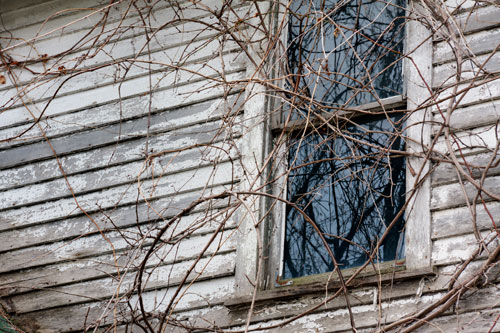
I find that the way I shoot, the windows remain largely opaque giving only a hint of what is inside. Technically it would not be a problem to show inside detail but this is a metaphor for me – looking through the window into the past and the past remains a mystery.
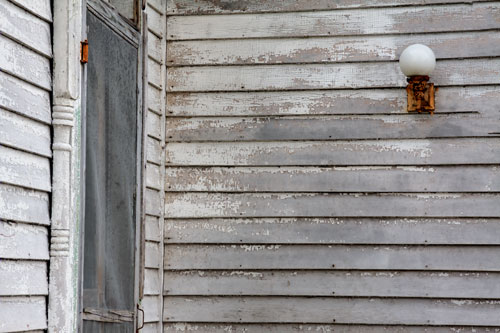
Or a mostly blank wall.

This place is out in the country.
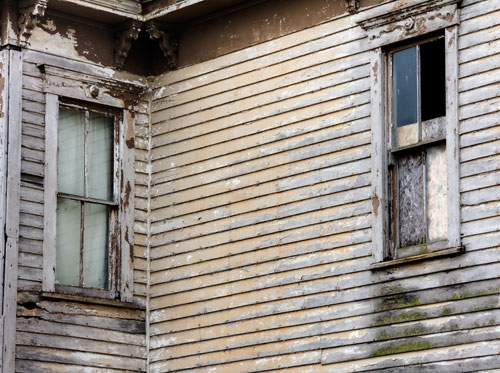
Who slept there? Who dreamed their dreams there?
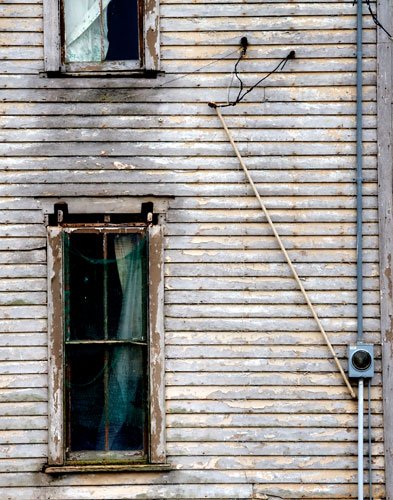
Again a wall, and opaque windows.

Who hung their coats there? I don’t know.
Change of season
Spring is popping and the shift over to shooting flowers and new growth is following in kind.
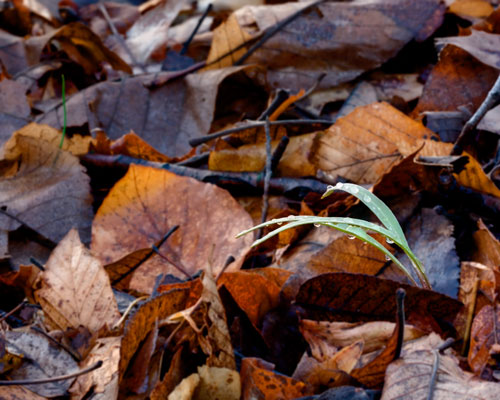
One of the features of local flora I find funny is that some of it is green all year round but I don’t really notice it until Spring is coming.

The ivy is green all year even if the grass is not.
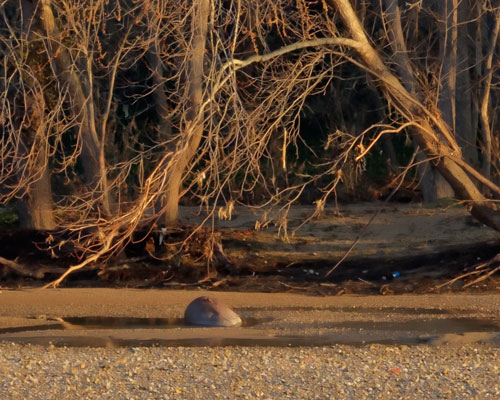
In a few weeks these trees will be verdant and not desolate looking at all.
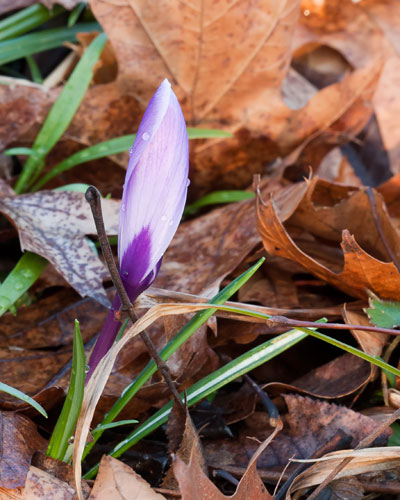
A real sign of Spring.
I’m seeing a shift also in my work.

More painting effects, less straight photography.

I’ve seen enough Springs to know that changes in people can occur along with changes in the season.
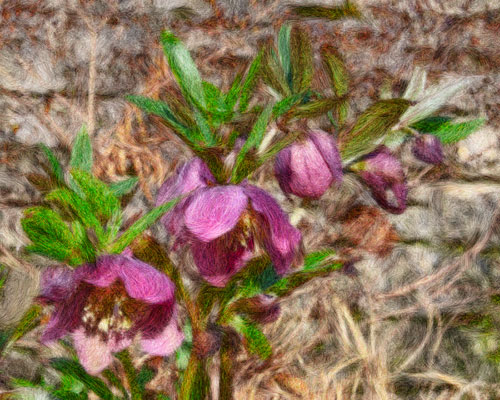
So perhaps a Spring season is coming to us as individuals as well.

We can always use another Spring.
Darkness and light
Winter is often thought of as a time of darkness and there is something to that. We often have days at a time with little or no direct view of the sun and nights are longer. Life isn’t as evident.
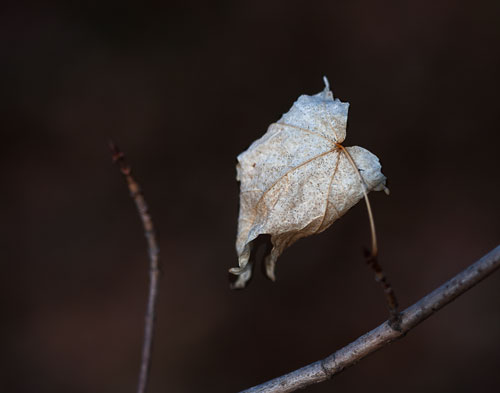
This calls me to note darkness and share some of its beauty, for absence of color is not absence of beauty.
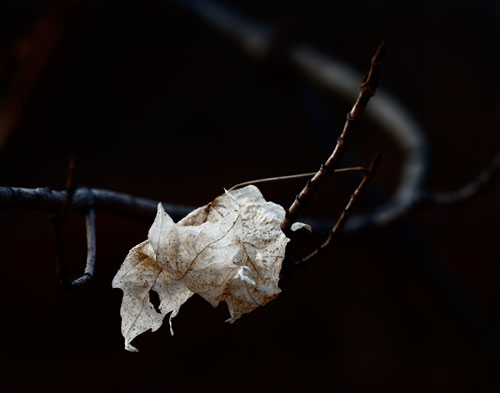
But the sun has come out in the last day or so and that is to be celebrated too.

I like to shoot the little things. There are so many of them and their patterns are beyond description.
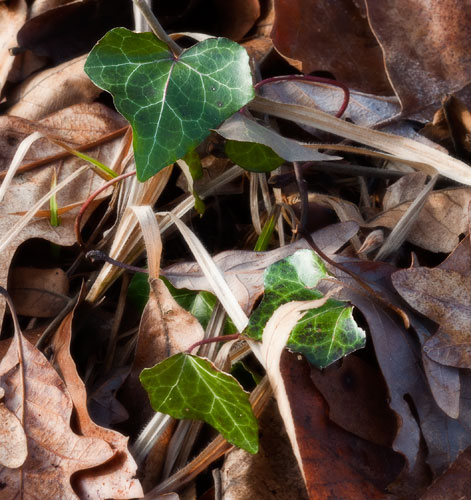
It is a time for gratitude whether there are clouds in the sky or not, whether it is night or day.
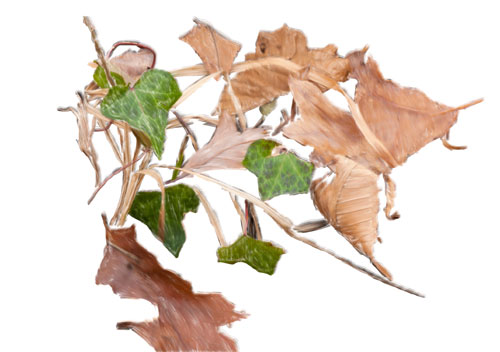
By the tender mercy of our God,
the dawn from on high will break upon us,
to give light to those who sit in darkness
Luke 1:78-79
Early Spring break
I’ve not been out shooting much recently and neither had my friend Becky so we went to the grounds of the Indianapolis Museum of Art this morning. It was a sunny day and quite inviting.
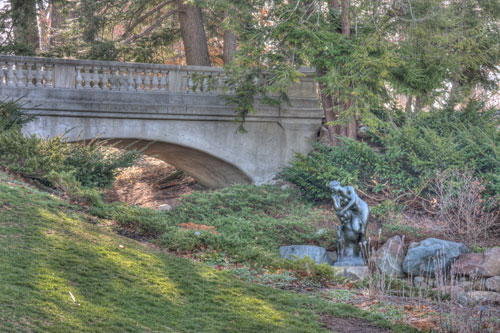
Surprisingly green for the second day of March, but no leaves on most of the trees.
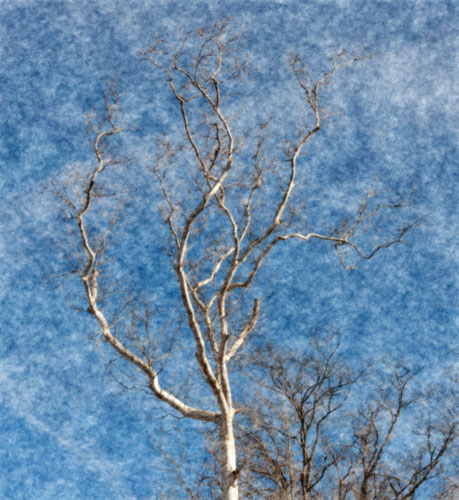
It was cool but not cold enough for gloves or even zipping up my jacket. Altogether pleasant.

Water in the canal and ponds was high, we’ve had a good bit of rain.
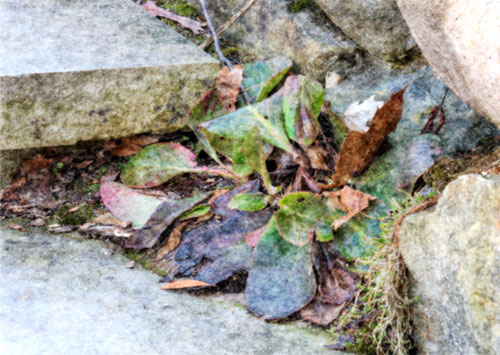
I don’t know if those are weeds or not. Probably not. In any case, I liked them.
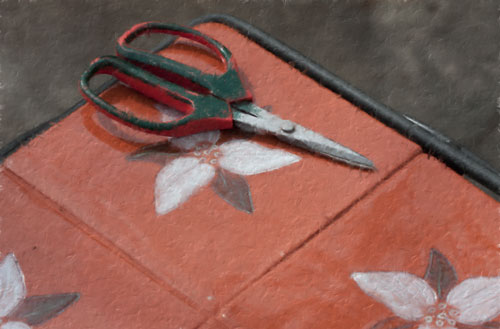
The greenhouse was open and there were many photo opportunities there.
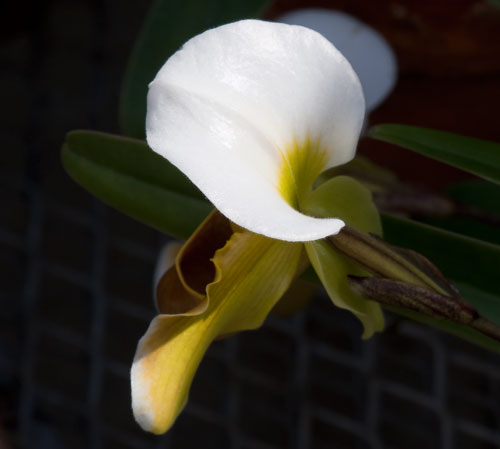
I suppose I should have stopped to find out what each plant was but I would have forgotten anyway.

The IMA grounds, a definite member of the short list of places to go for photography in Indianapolis.
Feel free to touch the paint
My brother is an academician who studies Mormon missionaries – why they are so dedicated to their mission, what it is like to be one, etc. He himself is not Mormon but has had a long standing interest in that religion. He told me about a couple of young missionaries who were going door to door in a small town. They walked up the sidewalk of this one house and across the front porch. They knocked on the door and after a few moments it was opened by a very irate man who said ‘What’s the matter with you? I just painted the porch and can’t you see that paint’s still wet? Who are you and what do you want?’ Thinking fast, one of the missionaries said ‘We’re Jehovah’s Witnesses and we’ll come back another time! Sorry to have walked on your wet paint!’
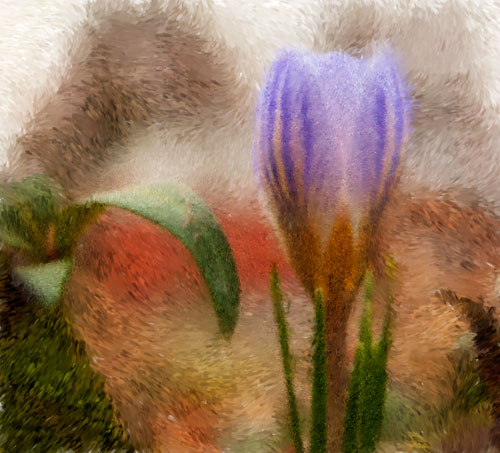
I’ve been working with Corel Painter 11 along with Photoshop and have been so immersed in it I haven’t even been out to shoot much let alone write about it. Lots of paint here but no wet paint.
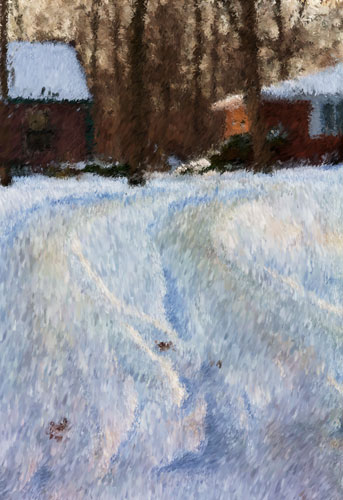
One of the first things I found out about this program is that it destroys details and presents pretty much only the larger elements along with tonality and color.

In other words, it puts a high premium on basic composition.
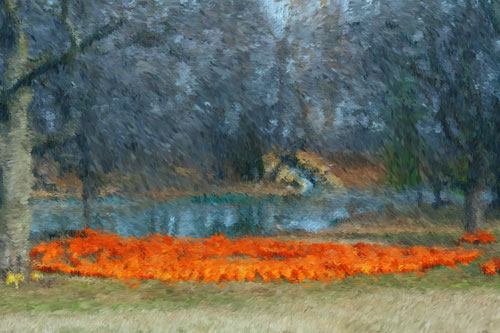
One quickly finds out that ‘it don’t mean a thing if it ain’t got that swing.’ And the swing here is composition.
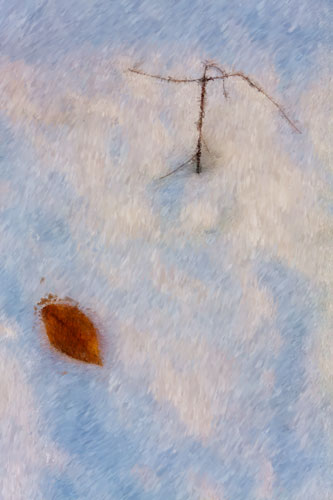
I’m starting to get it. The good thing about it is that many elements of composition can be learned. Probably not all of them, certainly not all of them, but enough that any photographer or painter can improve.
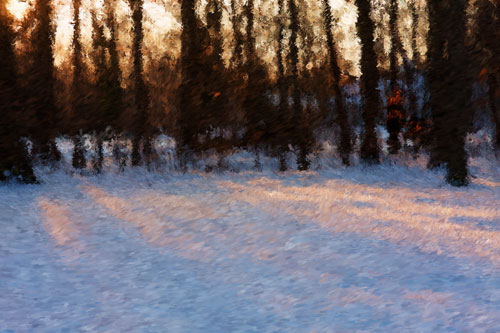
Painter is almost as complicated as Photoshop so the learning curve is long. But one can do enough right from the start to provide encouragement.
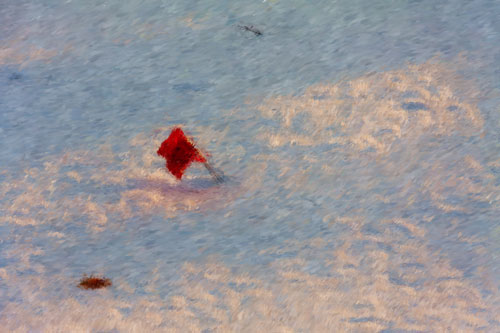
I’ve mentioned before that I’ve always wanted a painterly effect in my work and now that possibility is here in spades.
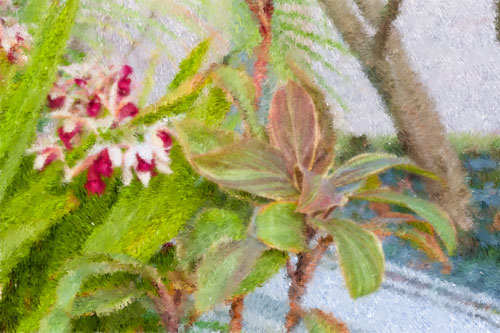
We had a lot of rain night before last and there were puddles in the driveway. As soon as I saw them I knew I had to photograph them. I’ve photographed puddles before and been disappointed because too much detail showed. Gravel and blacktop aren’t that interesting to look at. That’s changed now that I am using a paint program.
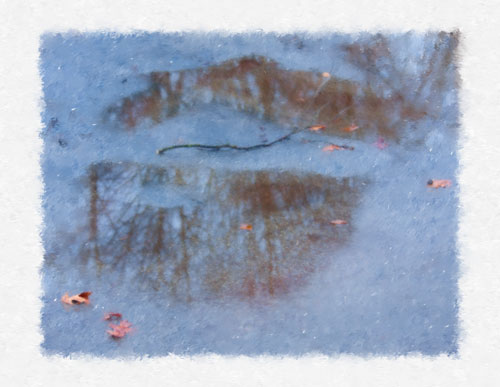
It’s fascinating to notice that I’m looking at the world differently now. I’m not sure how to describe it, but having some idea of what I can do with images – standard photographic techniques and now painterly effects – affects what I look for.

Makes for a larger world. And it’s a world where the paint doesn’t need to dry.
What is there and what you see
Photo Venture Camera Club went to Garfield Park in Indianapolis to photograph flowers and foliage in the conservatory yesterday. This is always a good trip.

A friend and I were talking as we were shooting and he said that his wife asked why he photographed leaves. He responded that he was attracted by the textures, colors, shapes, etc.; in other words, aspects we see but which do not translate easily into words. The leaves were more a platform for exhibiting these features than they were objects in and of themselves, at least for my friend. I suspect that is a problem for some photographers – they go out to photograph, say, leaves, and don’t get much because they are not attending to the light, the shapes, colors, textures etc., aside from the label ‘leaves’. I bring this up because it can be hard to avoid getting trapped by the words.
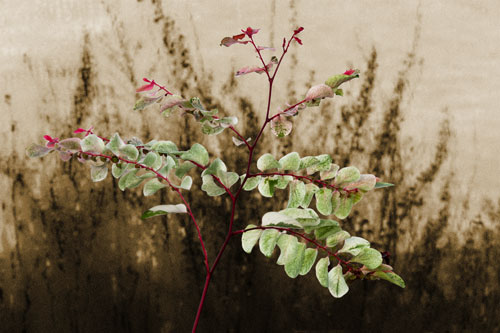
Words are important as ingredients of communication but unless one is doing documentary photography where it is extremely important to show exactly what is there – the aftermath of a storm, the condition of a house that is for sale, an accident scene – the features of the scene – the light, textures, shapes, colors – are often more important than the fact that we are photographing leaves, trees, reflections in water.
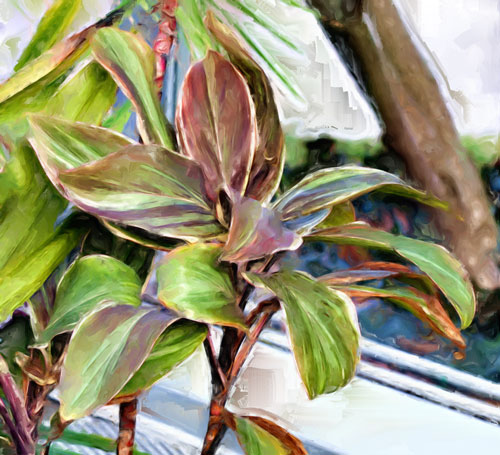
As you can see from the examples I have shown so far, I don’t think it too important to represent what I saw as objects so much as platforms for the features.
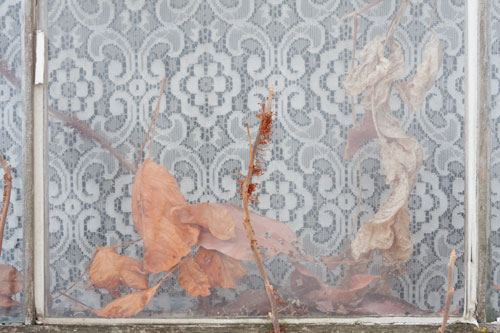
On the way home it struck me that maybe this is at least part of the answer why photographers are so often attracted to crumbling buildings. These buildings can’t really be adequately described by words; pictures, images are needed and what is interesting about them is not so much the crumbling structures themselves but the textures, colors and shapes.
Well. Having solved that problem we can move on to solving the problem of bringing peace to the world.

On second thought, let’s save that problem for another day.
Turkey Run
Ellie and I spent a few days at Turkey Run State Park. The weather was decent and it was good to get away.
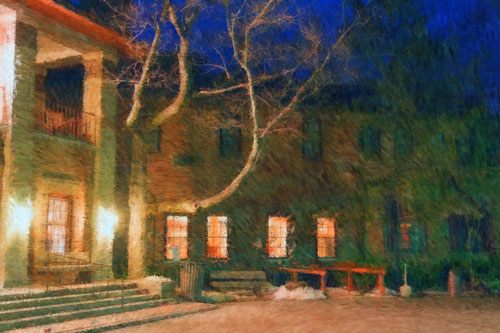
They were running a two-nights-for-the-price-of-one deal and as we drove around the park on first arriving, Ellie’s comment was ‘no wonder it’s two for one, half the roads are closed here.’ But we did have a good time.

I wasn’t anxious to go off on the icy trails by myself so I stayed fairly close to the roads.
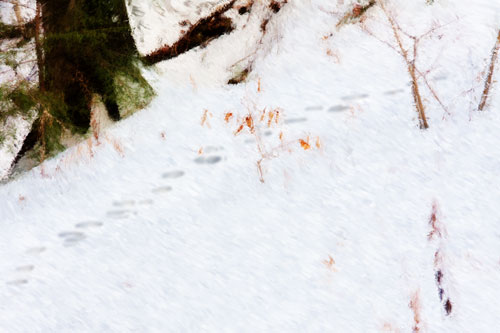
Even so there were good opportunities for photography.
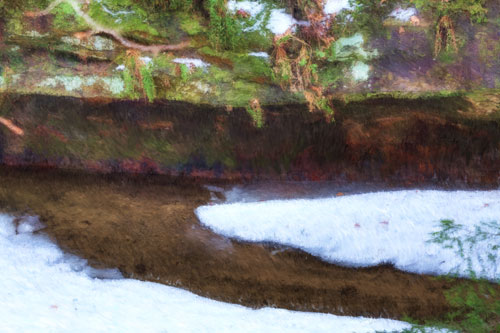
I was going to throw this next one out but I think it works.
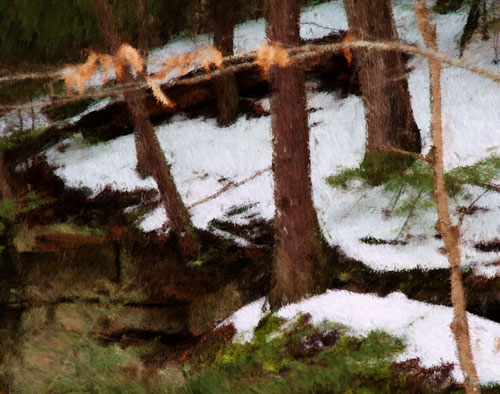
It’s good to get out.
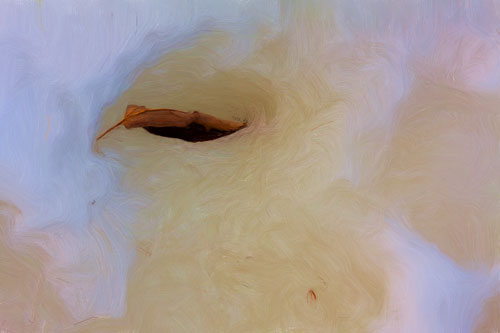
The leaf stuck in the ice might feel that way too.
A good day
Several of us were at church this morning digging out the driveway and enough of the parking lot that people could be dropped off in front of the church. Two inches of hard, tight ice is difficult to remove. While we were getting organized and the guys who were going to be using the rental frontloader were figuring out how to use it, I did a little photography.
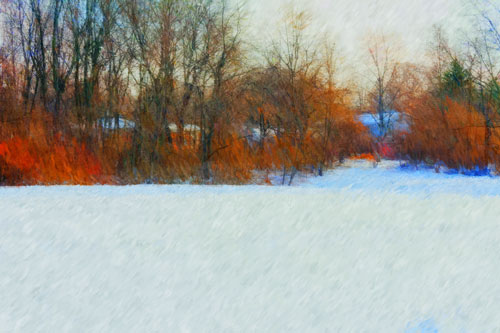
The frontloader was equipped with a device on the back with large teeth. The idea was that the teeth would break through the ice and as it was pulled along, the ice would come up. The ice was not impressed.
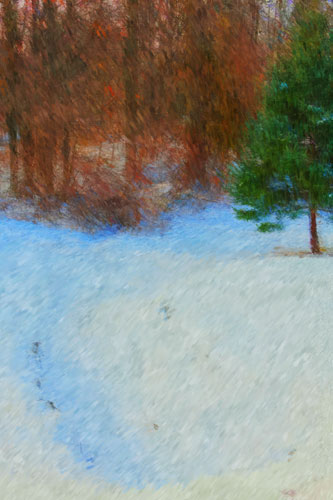
So several of us attacked the ice with pickaxes, shovels, etc. while a snowplow on a garden tractor, a soil cultivator and the frontloader all peeled back the ice a little bit at a time.
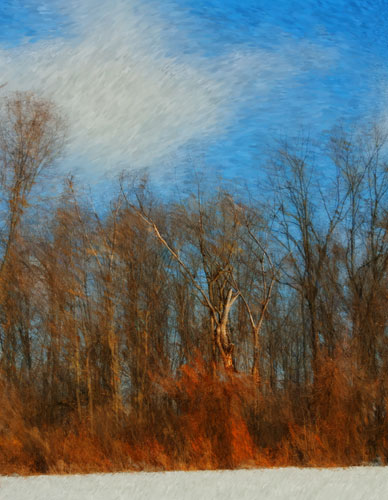
Various ideas were proposed, including building a 10 foot wide parabolic mirror to focus the rays of the sun on the ice and drilling holes in the ice and loading them with M-80 fireworks. Then we went back to work with the pickaxes and the shovels.
All this photography, by the way, was done before we got organized.
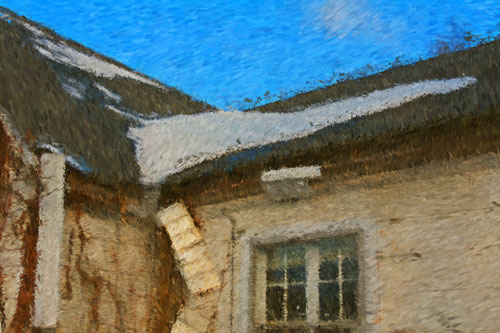
There is an abandoned house next to the church. It called. I answered.
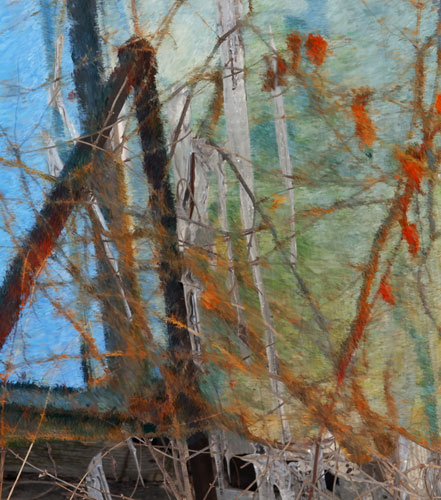
If you are wondering when I will quit obsessing with impressionistic painting techniques, the answer is I don’t know.
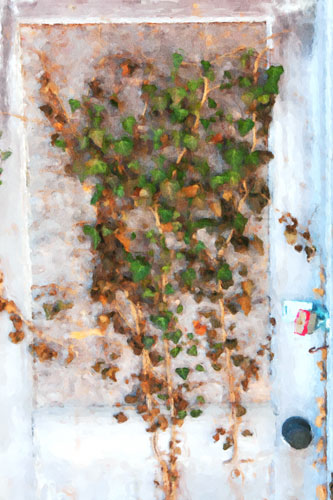
I’m enjoying it though. I hope I’m not as stiff in the morning as I am now.
 Spirit and Seeing