At Fall Creek

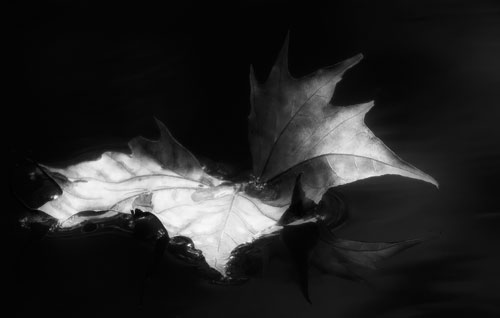
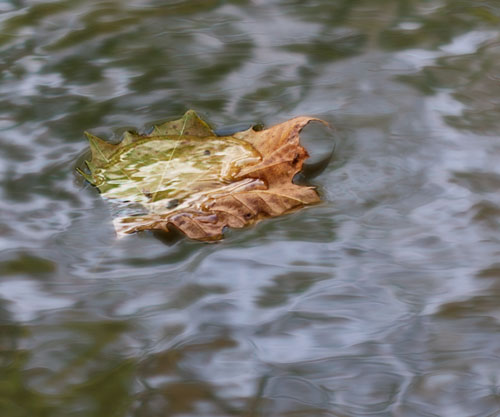
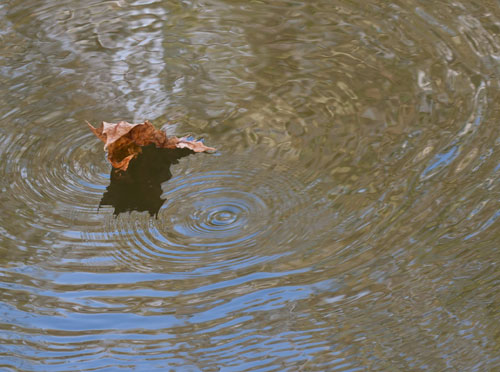
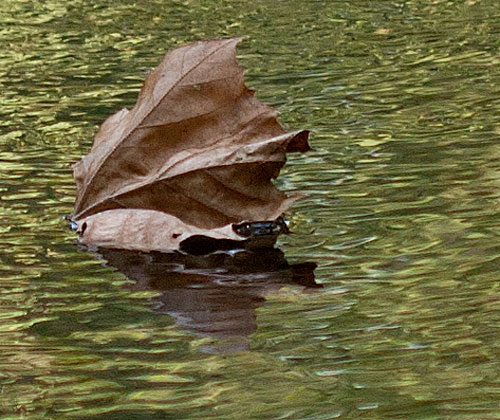
I went back to Fall Creek today intending to shoot more leaves in the water.  That had worked nicely the other day but today, unlike then, there was virtually no wind.  Hence few leaves falling in the water.  But there were some.  I especially like the way surface tension shows up.  That can be a design element for photographers.

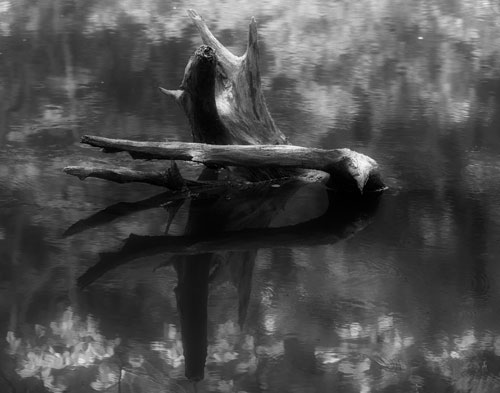
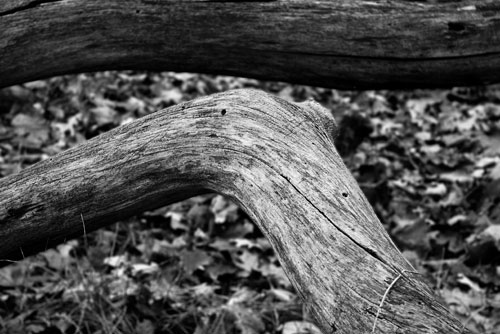
If there weren’t many leaves there were logs in the water and this was interesting too.

I liked the symmetry here.


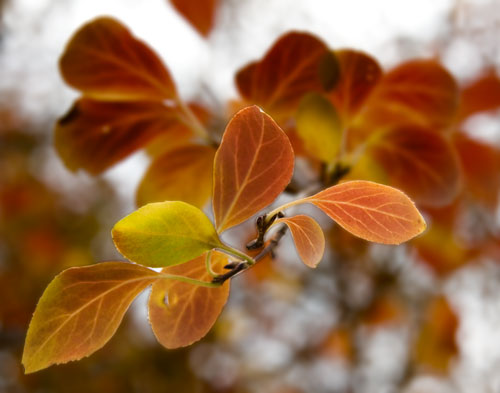
There was a lot of color but I thought it distracted from form.  Jay Maisel, an outstanding photographer, repeating what he had been told, once said that color is the enemy of form.  I can see what he means.


A few leaves did show up eventually.  I’ll go back tomorrow.

Leaves and water

I went over to Fort Harrison State Park yesterday morning.  We had had a long spell of hot weather (record breaking on at least one day) and cooler air followed a front into the area.  In other words, it was still pretty warm but it was windy.  Not a good day for exacting close up work.  But it did mean that leaves would be falling on the water at Fall Creek.  I went down there and it was a bonanza.


The wind did die down long enough to do a little close up work.


I wonder what is out there today?

Wondering around

Mom patted me on the shoulder and said to the aide: ‘He’s a good boy.’  I turned 71 last week and I’m a good boy.  Well, Mom is 94.


This ‘boy’ doesn’t walk as fast as he used to and that’s good.  The faster you walk the more you have to treat the rest of the stuff in the world as potential obstacles to be avoided.  Walking slower, moseying, means you can see what else is there and perhaps appreciate it more.


One’s eyes don’t have to be old to see what is nearby though.  I ran into a librarian friend of mine this morning who had a young teen-age girl with her.  While we were talking the girl spotted a dead mole and a six inch garter snake and who knows what else within a six foot radius of where we were standing.  My friend tells me the girl is interested in photography.  She indeed has a good eye.


The cycle of the year is approaching its last quarter and if the year is aging it doesn’t appear to be slowing down.  We have defined time in an objective way in hours, minutes and seconds counted off by an atomic clock.  But the experience of time is anything but objective.  It does seem that days rush past faster as we get older but walking more slowly helps bring a bit more sanity to it.


And we can see more interesting stuff.

It’s a time for wondering.

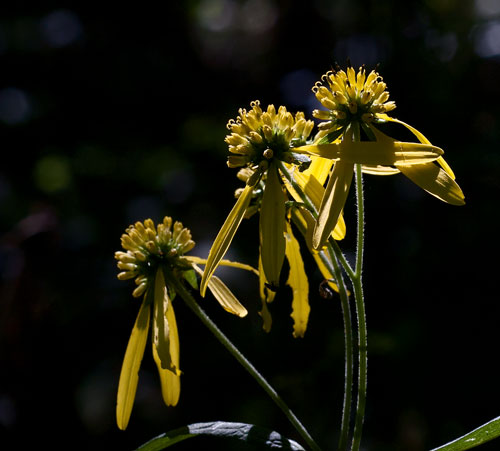
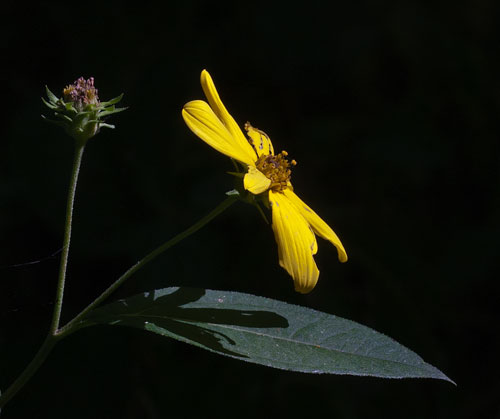
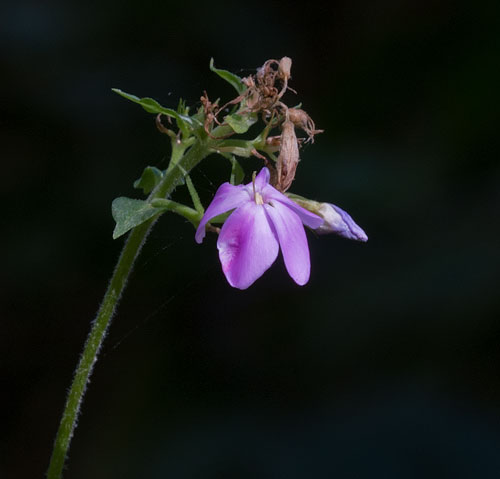
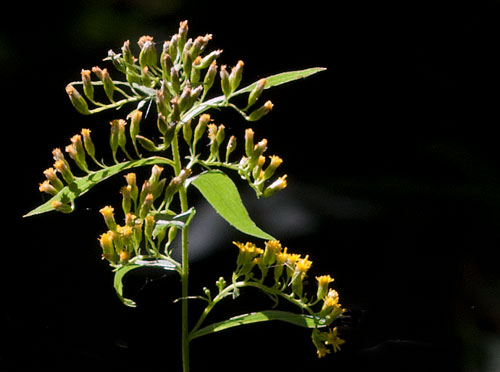
Some flowers

Going into the woods, a field, anywhere, for that matter, where there are good opportunities for photography is, for me, akin to going into a beautiful cathedral.  There is beauty and if I am still enough inside, there is a Presence.  I spell Presence with a capital ‘P’ because it is something beyond comprehension and while elusive, present none the less, open to awareness at some level.  I think this is one of the main reasons for loving photography.  It brings me closer to the Presence.  I’ll say no more about it now and simply ask you to go out yourself and be open to the Presence.

Here are some of the images I got today in the Presence.


It was a good day.

Life beyond butterflies

I went over to Fort Harrison State Park this morning and instead of heading to the area where I’ve seen the most butterflies, I went in another direction.  It wasn’t that I didn’t expect to see butterflies in the old location, the question was whether I could find happiness in subjects other than butterflies (soft plaintive violins in the background).


A leaf in the water.  Not bad if all we want to do is aim the camera away from butterflies.  But not too good either.  Try again.


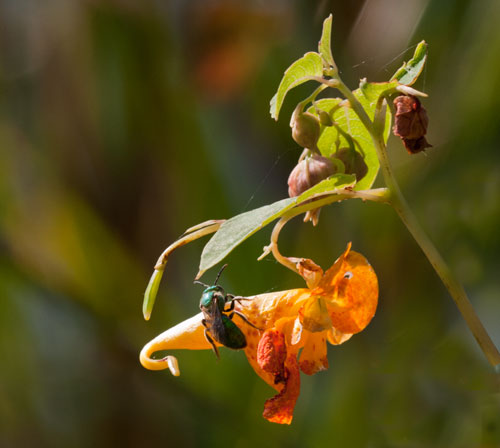
Jewelweed is nice, very bright and I can’t say I have ever noticed an insect like that before; one of the benefits of macro photography.


Now I like that.  I can’t count the number of times I’ve walked by little beauties like this.  Once again, a benefit of going out with a macro lens.  I’ve noticed that when I have a telephoto lens on the camera, I tend to see more telephoto opportunities.  Today I was using my 100 mm macro lens.  This lens works as a moderate telephoto but I tend to think of it more in its macro application.

Here’s the high point of the morning.


I love back lit shots.  A very important lesson came out of this morning’s jaunt.  I was headed east on the Fall Creek Trail because I picked up the trail at its western end – walking toward the sun, accidentally creating the opportunity for back lit shots.  There were many opportunities.  I went a couple of hundred yards past the area of this shot and turned around looking for what other opportunities I could find.  There weren’t many.  If you like back lighting try going east in the morning and west in the evening.  Writing this down is a little embarrassing.  Of course that is what we would do to get back lit shots.  This is one of those points that is so obvious it needs to be stated.

And yes, there is happiness beyond butterflies.

Better opportunities some days than others

Ellie was called to baby sit our step great grandson (I feel old just writing that) and I joined her later in the morning.  I got some shots of the three year old who is handsome, intelligent and delightful.  We aren’t directly related so that is an unbiased judgment.  His granddad came back and we left.

I went to lunch with my friend Sally – she’s an excellent photographer and the one who came up with the expression ‘wondering around’.  I had my camera with me so after lunch I did a little shooting in the parking lot of the restaurant which is next to an old concrete grain storage tower. 

I don’t know that I made the most of the opportunities but there were some interesting possibilities.

These were nice but not that satisfying.  Had the shooting day ended then I would have felt that it was OK and maybe I need to get out tomorrow.

I got home and that was when the fun started.  After greeting the dogs (they thought I had been away for days, instead of hours) I went back outside and heard a call I had been waiting for – sandhill cranes.  Once you hear their call you are unlikely to forget it.  You can hear them here. They stop over at Jasper-Pulaski Fish and Wildlife Area about 100 miles north and west of Indianapolis and then head south.  Fortunately we seem to be on their path.

I ran back in and put the 120-400 mm lens on the camera and went back out.  That wave of cranes had gone but one of the local squirrels was in a nearby tree.

A few minutes later another wave of cranes came over and I was able to get into position for them.  Here are just a few of them.

They passed over and when it was clear there wouldn’t be any more, at least for awhile, I headed back toward the house.  That is when the hawk showed up.
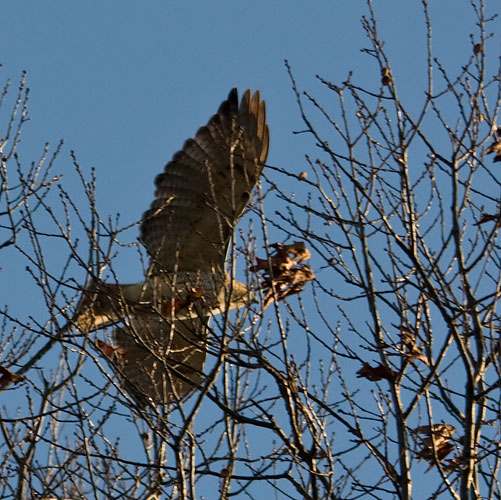
Not a shot I would submit for a competition, I include it to give some sense of what was going on this afternoon.  A squirrel, sandhill cranes and a hawk, all in less than nine minutes.  It pays to keep your camera handy with charged batteries.

Over lunch, Sally and I were talking about how there are virtually always opportunities for photography; it is a question of being ready and seeing the possibilities.  A lot of the time those opportunities are rather subtle but there is nothing subtle about squirrels, sandhill cranes and hawks.  Now there is something to wonder about.

An unexpected treasure

I was on my way over to my friend Becky’s to pick her up and go shooting this morning.  I passed Marott Park, one of Indianapolis’s nature preserves, and for the first time noticed it.  Driving by, I only saw it for a few seconds but it looked like a good place to wonder around.  I got to Becky’s and the conversation was along the lines one expects when going out to dinner with friends – she jumped in first and asked where I wanted to go.  I answered with the standard “I don’t know” and she said “I noticed Marott Park the other day, would you like to try that?”  Wow!  We were obviously on to something here.

Marott Park is not large, it only had three picnic tables today and although there was a fair size field and then paths through the woods and down to Williams Creek it would be difficult to say it is any more than a modest size park or nature preserve.  But so what?  We discovered (again) that size of the park has little or nothing to do with it. 

The sky was overcast but that didn’t matter either.  It would be more profitable to think of the lighting as indirect and diffuse rather than weak.  The sun did come out after awhile and I got the shot of the leaves above.

My favorite shot of the day though, was of three trees standing near one another. 

This was a special day for me and I think it was for Becky too.  You can see some of her work, although possibly no images from today, in her galleries on photo.net.

Wondering around.  Nothing beats it.

Go to Plan B

The plan yesterday morning was to go out and shoot, come back in and write about it.  I did go out and shoot and I did come back in but that’s when the disappointment started.  raspberry_leaves_8724

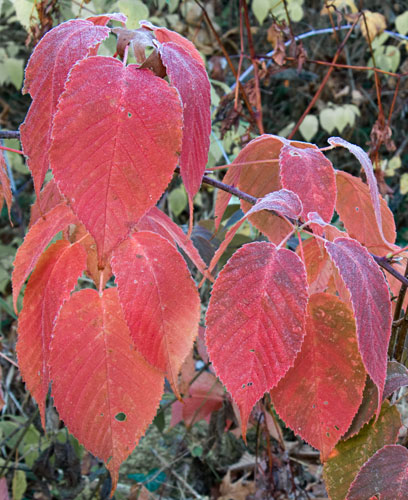
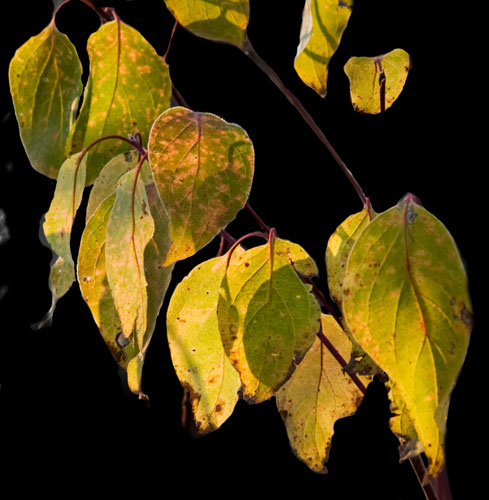
The images were ‘nice’ but not something I would want to hang on the wall or even show anyone.  (So why am I showing them to you?  Stay tuned.)  It wasn’t as if there were no subjects.  Black raspberry leaves in the fall are gorgeous and backlit golden leaves can be treasures.leaves_8747

But that just didn’t seem enough.  These were standard, garden variety fall pictures.  Big deal.

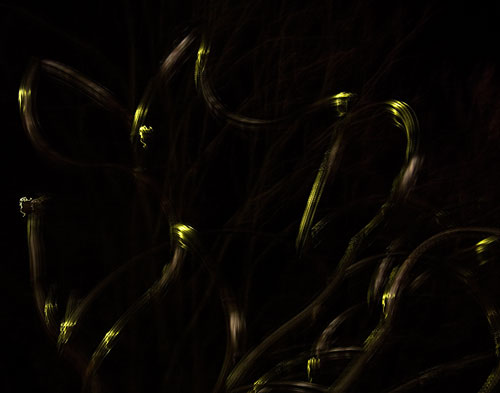
I went to the camera club meeting last night and didn’t have great hopes for that either.  We were going to shoot indoors.  There would be models and good lighting, as well as a set up for macro photography.   These were some fine opportunities but I thought instead I would take my camera and tripod outside.  It was dark and lights were showing up some interesting opportunities.   night_8933

This was a lot better.  I was not able to previsualize what I would get before I opened the shutter, I was just hoping for something interesting (and undefined).night_8957

And that made it a lot more fun.

An appreciation of milkweed

Yesterday I talked about the utility of milkweed – habitat for monarch butterflies, substitute for kapok in World War II – and said I would go back today to gather seeds for our butterfly garden.  I did that.  It was breezy and since I had my camera with me I planted it in front of a nice strand of milkweed floss and took a lot of shots as it danced in the breeze.milkweed_8662

It is easy to walk by milkweed and to notice the floss and seeds in only the most pedestrian way.  Unless we are looking, truly looking, they won’t occupy more than a moment of thought; visually, just a glimpse.

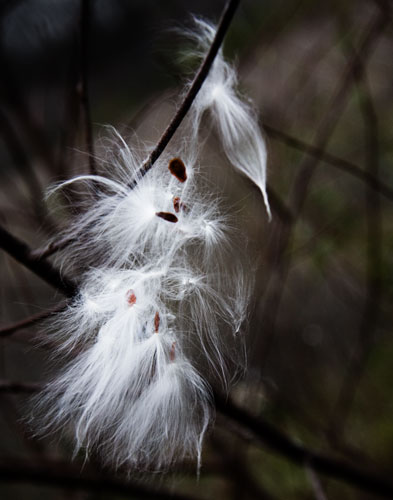
These little creations are striking when you take the time to look at them.  I could go on and on about this but I think the best tribute to them is just to show a few shots.  Words just can’t capture their subtlety and beauty.  (In each case I have darkened the background somewhat to help them stand out.)
milkweed_8637_2

milkweed_8634_2

milkweed_8620_2

They speak for themselves.

Milkweed then and now

Nice overcast sky today and the breeze wasn’t particularly strong so I went out to shoot milkweed.  Milkweed is a favorite subject this time of year, it stands still and the variations in form, texture and luminosity go on and on.Milkweed_8539

Milkweed is valuable today as habitat for monarch butterflies.  My wife reminded me of that and I expect I’ll be going back tomorrow to collect some seeds for our butterfly garden.

In 1944, in World War II, milkweed took on another kind of importance.  The Japanese controlled what today is called Indonesia and that meant they had control of the kapok crop.  Like milkweed, kapok produces a floss that was the main component in making flotation devices such as life jackets and life preservers.  With a lot of the war fought on and over the seas, kapok, and its loss to the Allies, was very important.

Milkweed produces its own floss and it works about as well as kapok.  Unfortunately milkweed was not a commercial crop and so people had to go out into the countryside to gather the seed pods before they burst open in the fall.  With adults off to war or working in the factories, it was up to school children to gather this crop valuable to the war effort.  I remember going out with my aunts and uncles (in junior high and high school) to gather them.  I was five years old at the time.  We knew it was important and a lot of work went into it.  I have no idea how much we gathered.  I do remember the large onion sacks bulging with milkweed pods.  We were doing our part and I got a chance to do something important with the big kids.Milkweed_8526

It will likely rain tomorrow but I will probably go collect milkweed seeds anyway.