A morning with Mom

I needed to go out and shoot this morning and I asked Mom if she wanted to join me.  She was enthusiastic and ready to go.  She was much lighter now and feeling much, much better.  We went down to Fall Creek this morning.

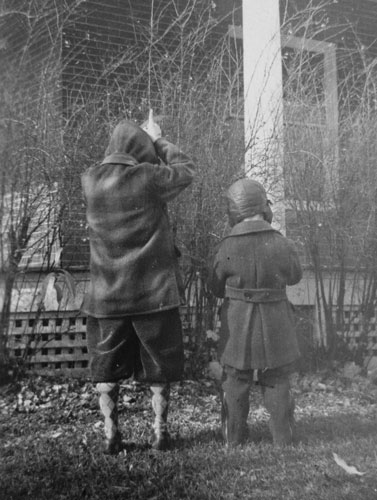
Mom was an observer rather than a participant today.  She never had much luck with a camera and it was more enjoyable for her to just be out than it was to take pictures.  I didn’t argue because I remember the history of Mom’s battles with the camera.  Here is one example taken during World War II.  This is my younger brother and me.  Our Dad was off in the Pacific with the Navy and Mom wanted to send him a picture of his boys.  We were decked out in our winter gear and facing the camera.  Mom fidgeted with that infernal machine and after a few minutes Rob and I got more interested in what was behind us.  Mom meanwhile was either so intent on the mechanics of picture taking that she didn’t notice which way we were facing or she just gave up.
Over the years her skill at cooking, raising two boys, participating in community life, playing the piano and many other things all improved but her picture taking didn’t.  So I was happy for her to just be along for the experience this morning.  So was she.


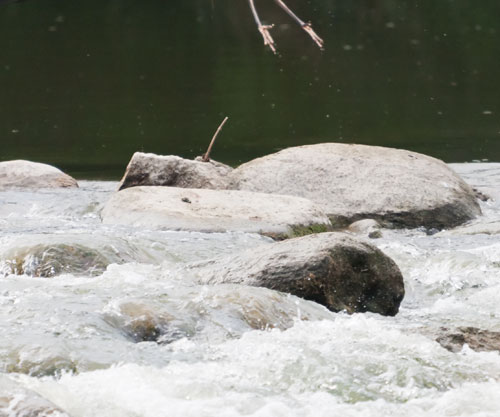
We were out before it was too hot but I still needed a headband.  Good thing to have in this weather.  So the water looked especially inviting.


I have to tell you that Mom died in body if not in spirit this morning at 3:00.  She was 95 years old and her body had been shutting down over the last few weeks.  She was not ambulatory for the last week or so.  So last night her body finished its task and closed down.  I was called at 3:15 and I went over.  She was at peace.  The last thing to go was her smile.  This was her trademark.  Before she was so ill I would take her for rides in a wheelchair around Westminster Village North where she lived.  It is a sizable facility and there are lots of people.  But just about everyone knew Clara Lively because as I wheeled her around she gave everyone a cheery wave and a ‘Hello, dear!’  People would light up when they saw her coming.  And the smile lasted to the end.


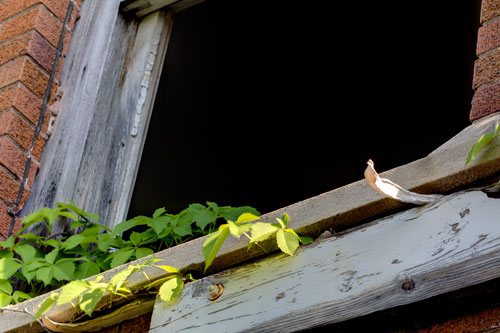
My way of coping includes going out to shoot.  Before I set out this morning I thought I would love to have Mom go with me in spirit if by no other means.  And I got the feeling that she would have loved to go too.  So she was with me.  Walking along Fall Creek we came to the I465 bridge over the creek.  It is a substantial bridge and large enough that the light under it is quite diffuse and often interesting.  There was a strip of rocks which would guide rain water away from the base of the bridge and usually there are leaves and other random objects there and they can be interesting to photograph.  I looked all along the strip of rocks and there was nothing else there but the feather above.  Nothing particularly remarkable about a feather being there.  Except that there was nothing else of interest.  And Mom’s nickname since she was small was Bird.


I think Mom and I will go shooting again.  Maybe tomorrow.
Awareness

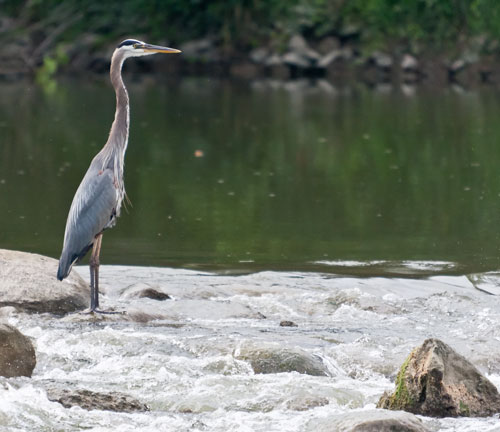
We all go through life not noticing much of the world around us.  This makes sense.  We have a limited capacity to process incoming information, or, more simply, we attend to some things at the cost of not attending to other things, many other things.  I suspect that even this blue heron is not aware of much more than what is going on in the water around it.


Although it did seem to notice me.


We all know about this limitation, but it can be surprising how severe it can be.  Imagine that you are watching a video of six people who are tossing two basketballs to one another.  Three of the people have black shirts and three have white shirts.  The white shirts are passing a ball to other white shirts and to black shirts while the black shirts are doing the same.  In other words, everybody is throwing to everybody.  Two balls constantly in motion and six people wandering around also constantly in motion.  Your task is to count how many times the white shirts pass the balls.  This is a somewhat demanding task.  Let’s suppose that when you are finished with the task, you counted the correct number of throws by the white shirts.  That is, you were concentrating pretty closely to the task at hand.  Now, let’s suppose that in the middle of the action, a young woman in a gorilla suit comes in at the right, walks among the players (who are ignoring her), stops in the middle facing you and beats her chest.  She then walks off to the left.  What are the odds that you would have attended closely enough to the ball throwing task to get the right count AND see the gorilla?  It turns out in replication after replication of this experiment, conducted in many different countries, that the odds are about 50:50 that you would have noticed the gorilla.  You can try this yourself by going to this website.  And be sure to watch the second video (The Monkey Business Illusion) and see how well you do in that task.


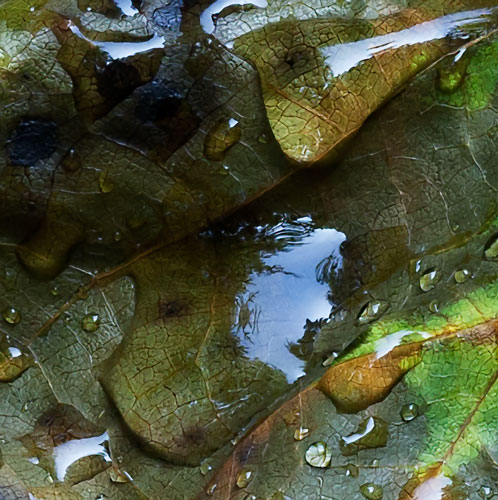
Our attention is indeed limited so how likely is it you would have seen the dew on the leaf above if you were thinking about what’s for lunch and you weren’t looking down at the ground?  I am not going to admonish anyone for being inattentive – I do a very good job at that myself, just ask my wife.  I am saying that there is an amazingly surprising and beautiful world out there, just waiting to be seen and perhaps photographed and other things such as looking at big shiny bright things or attending to our own thoughts get in the way.


So what do we do if we want to see more of the world?  One approach is to simply stand still and look around.  Give yourself some time, you may not see anything interesting right away.  But give it some time.


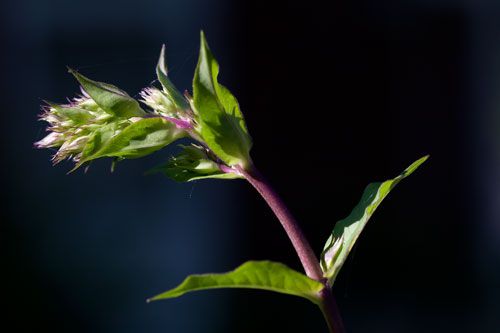
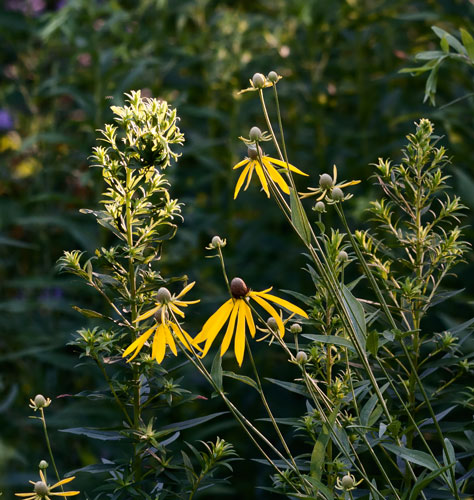
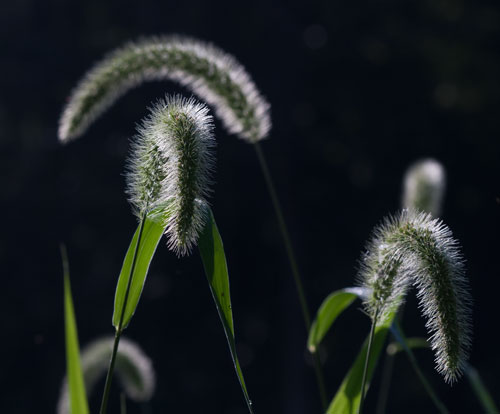
I don’t know if this plant above is a weed or a flower.  This brings up another very important point.  As you are looking, don’t try to name or classify what you see.  Get out of the ‘gardener’s way of seeing’ (e.g. this is a flower, that is a weed, this is good, that is bad) and into a way of seeing without words and without judgement about what is good and what is bad..  Don’t look for flowers, you may miss an interesting weed.  Look for interesting shapes, textures, colors. There is no doubt this is difficult, it runs counter to what we do all the time.


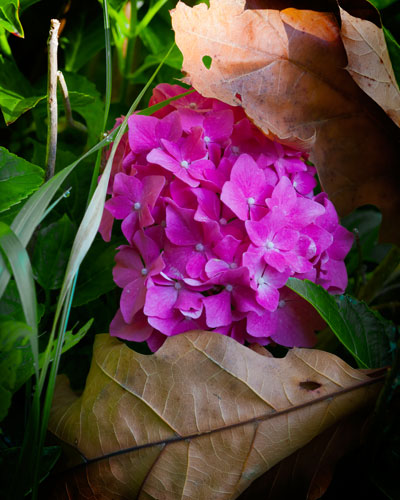
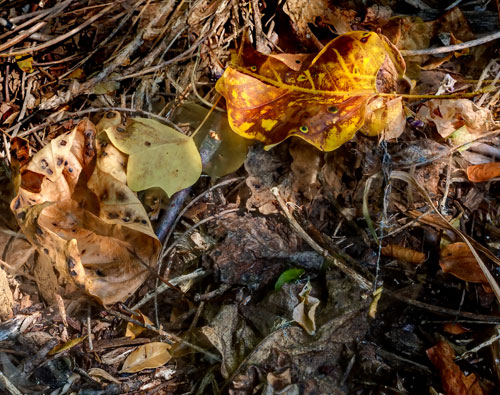
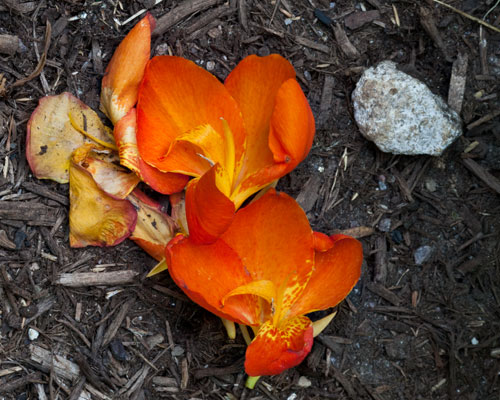
These leaves have texture and in a labeling way of seeing may be classified as junk, something to be gotten rid of.  You can bet that a groundskeeper will be raking them up as well as the fallen blossoms below.  These blossoms were found this way, they weren’t arranged.  And very little was required in Photoshop to make them presentable.
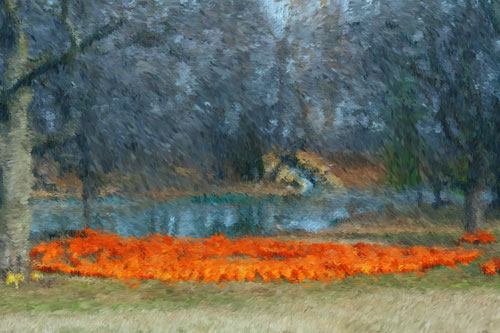

It can be rewarding to go out and simply look.  If that doesn’t turn up much, you might look for geometric shapes – circles, squares, triangles, etc.

But the aim is to work at looking at something without naming or judging, to see it not as it’s name, description or value but just for what it is.  I can’t say that I can do that well, but I’m working at it.

A perfect evening

Just a few pictures today.  Last evening I went out to Fort Harrison State Park around 7:00.  The temperature was in the low 80’s, a wood thrush was singing, and the skies were clear.  The sun light was soft and caressed the trees and summer flowers.  A good time for photography.


I’ve been reading the work of Richard Rohr, a Franciscan priest who is working on reviving practices of the mystics, practices that have been carried on by individuals but appear lost to religious institutions since the Reformation in the 16th century.  He writes of reciting litanies (phrases) to oneself as a way of experiencing the mystery of the Holy Spirit.  One such litany is ‘Pure Gift of God’.


The song of the wood thrush, the light, the beautiful flowers and this litany all came together for me last night.  It felt like time out of time, something to which one must be fully present.


I’m not very good yet at being fully present but if I ever needed motivation to keep working at it, this was it.

“Life is available only in the present moment.”
Thich Nhat Hanh

Central State Hospital

I was invited to join some friends from the Photo Venture Camera Club this morning on a photo shoot at Central State Hospital, a facility abandoned some years ago.


It was a beautiful morning and we got to Central State early, ahead of the heat.   Central State was occupied, I think, until sometime in the 90s.  The deterioration since then was quite evident.


In addition to walking around taking pictures, I was also going down two other mental paths, one concerned with the stories I have heard at our church, Church of the Saviour, about a mission group within the church that worked to close down this mental hospital.  The other path, distantly connected to the first, concerned the work I did at the Hutchings Psychiatric Center in upstate New York.


The church mission group had as one of its tasks finding and furnishing apartments for hospital residents who were being released to the community.  They also spent time with inpatients.  One inpatient had not spoken in many, many years.  One of the women in our church had children who were profoundly deaf and she could gesture American sign language.  She tried it with this woman and to everyone’s surprise the woman responded.  A beautiful hunch.


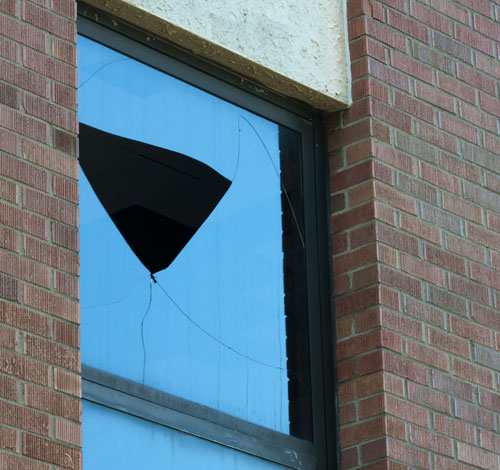
This image might represent the confused state of mind that someone who had been living as an inpatient for years might experience on hitting the streets.  This brings up the other path my thoughts were taking.  Many years ago I worked in the research department at Hutchings in Syracuse NY.  One of our jobs was identifying optimal locations for community outreach centers.  At the time Hutchings was charged with maintaining a relatively small inpatient unit and an extensive set of outreach units around the county staffed to provide medication, socialization, group therapy and some individual therapy in the community.  What I saw was that the system worked pretty well although there was significant return to the inpatient unit even with solid community programming.  I don’t know what the community programs are like here in Indianapolis, I would guess not as strong as the Hutchings program.  I’ve met some of the people who would have benefited from that when our church has fed the homeless.  That’s where some of them are now.

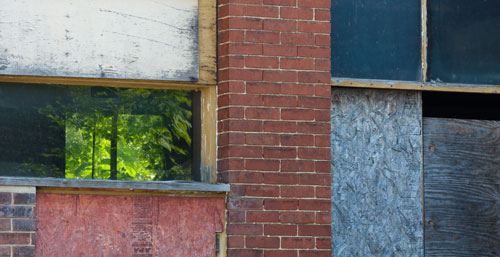
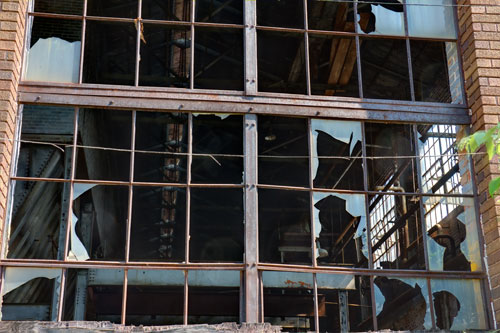
When out photographing, I’ve come to think about windows as metaphors for gateways to the human mind.  Windows can give us a hint about what is going on in there.

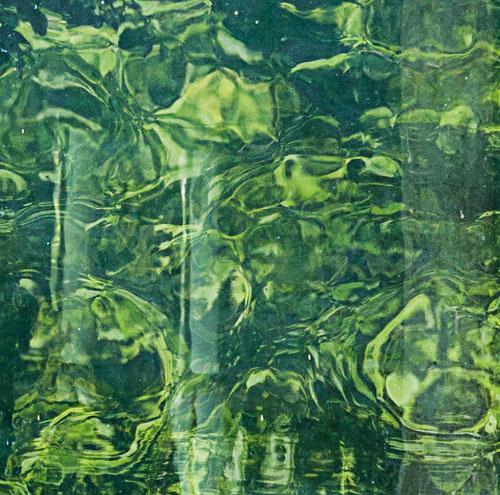
But often they simply reflect the world back at itself.


If they reflect anything more than the sky.


Abandoned.  The Central State institution is abandoned.  I think many of the people are as well.  One of the people on the shoot is a school speech therapist and as we were walking around this morning, she was describing the plight of of some young people going into the world after high school who stand little chance of anything meaningful in employment.  Somewhat retarded, they aren’t retarded enough to qualify for the help that is provided and they don’t have, and likely will never have, the skills needed to survive in the world.


This is Memorial Day.  My dad and all of my uncles who went into World War II came home safely, some level of miracle.  As we remember those who sacrificed for freedom, let us also remember those who are being passively sacrificed right here at home.


I don’t want to leave the impression that we have pulled the plug on all those people who came out of Central State.  We haven’t.  But care is needed for a lot of people, more care than is being provided.  Let’s remember that too.

This morning

It was a varied morning of shooting.


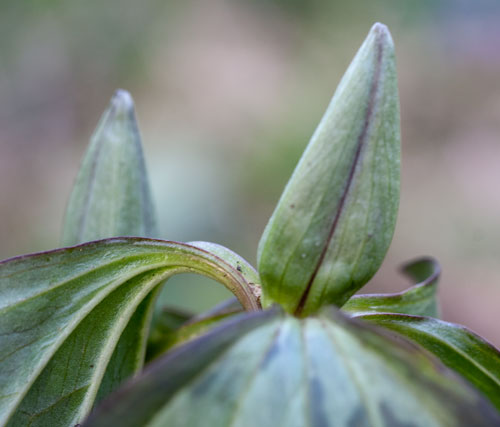
I’ve been following this trillium sessile for a few days and it is getting ready to pop.  It will be purple.  It is in the backyard.

Becky and I went to the Ecolab at Marion University later in the morning, a good place to go just about any time of the year but Spring seems to best suit it.


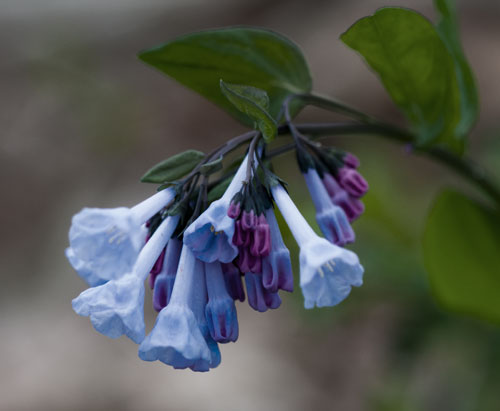
The bluebells are in bloom there.

The lily pads were dancing and who wouldn’t join them?


It was a good morning.


It was a spiritual morning, a morning to know we are connected to all life in this world.

Early Spring break

I’ve not been out shooting much recently and neither had my friend Becky so we went to the grounds of the Indianapolis Museum of Art this morning.  It was a sunny day and quite inviting.


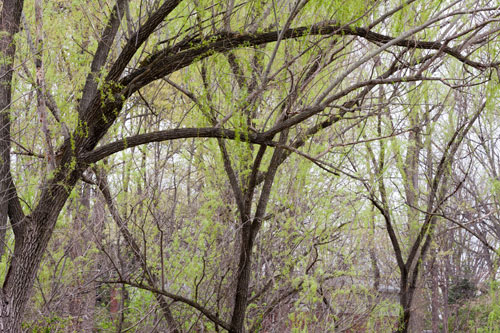
Surprisingly green for the second day of March, but no leaves on most of the trees.


It was cool but not cold enough for gloves or even zipping up my jacket.  Altogether pleasant.


Water in the canal and ponds was high, we’ve had a good bit of rain.


I don’t know if those are weeds or not.  Probably not.  In any case, I liked them.


The greenhouse was open and there were many photo opportunities there.


I suppose I should have stopped to find out what each plant was but I would have forgotten anyway.


The IMA grounds, a definite member of the short list of places to go for photography in Indianapolis.

Feel free to touch the paint

My brother is an academician who studies Mormon missionaries – why they are so dedicated to their mission, what it is like to be one, etc.  He himself is not Mormon but has had a long standing interest in that religion.  He told me about a couple of young missionaries who were going door to door in a small town.  They walked up the sidewalk of this one house and across the front porch.  They knocked on the door and after a few moments it was opened by a very irate man who said ‘What’s the matter with you?   I just painted the porch and can’t you see that paint’s still wet?  Who are you and what do you want?’   Thinking fast, one of the missionaries said ‘We’re Jehovah’s Witnesses and we’ll come back another time!  Sorry to have walked on your wet paint!’


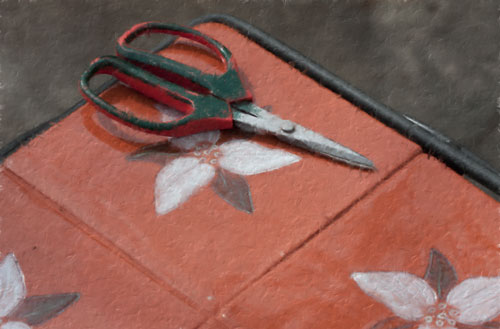
I’ve been working with Corel Painter 11 along with Photoshop and have been so immersed in it I haven’t even been out to shoot much let alone write about it.  Lots of paint here but no wet paint.


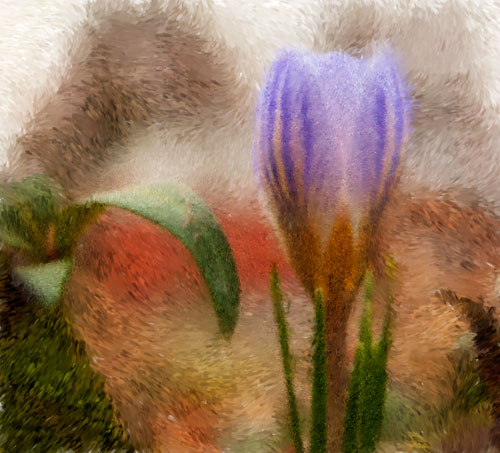
One of the first things I found out about this program is that it destroys details and presents pretty much only the larger elements along with tonality and color.


In other words, it puts a high premium on basic composition.


One quickly finds out that ‘it don’t mean a thing if it ain’t got that swing.’  And the swing here is composition.


I’m starting to get it.  The good thing about it is that many elements of composition can be learned.  Probably not all of them, certainly not all of them, but enough that any photographer or painter can improve.


Painter is almost as complicated as Photoshop so the learning curve is long.  But one can do enough right from the start to provide encouragement.


I’ve mentioned before that I’ve always wanted a painterly effect in my work and now that possibility is here in spades.


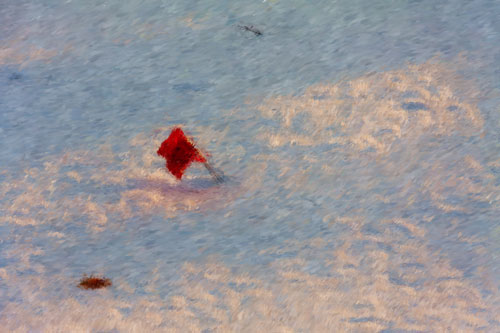
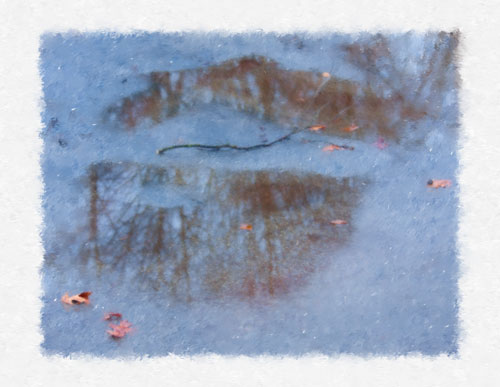
We had a lot of rain night before last and there were puddles in the driveway.  As soon as I saw them I knew I had to photograph them.  I’ve photographed puddles before and been disappointed because too much detail showed.  Gravel and blacktop aren’t that interesting to look at.  That’s changed now that I am using a paint program.


It’s fascinating to notice that I’m looking at the world differently now.  I’m not sure how to describe it, but having some idea of what I can do with images – standard photographic techniques and now painterly effects – affects what I look for.


Makes for a larger world. And it’s a world where the paint doesn’t need to dry.

What is there and what you see

Photo Venture Camera Club went to Garfield Park in Indianapolis to photograph flowers and foliage in the conservatory yesterday.  This is always a good trip.


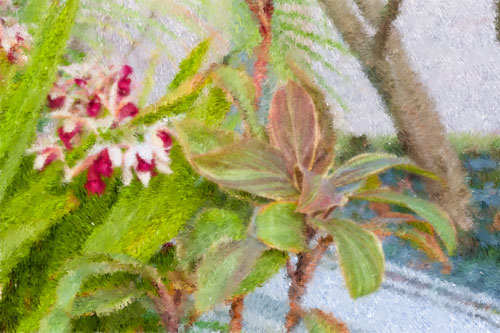
A friend and I were talking as we were shooting and he said that his wife asked why he photographed leaves.  He responded that he was attracted by the textures, colors, shapes, etc.; in other words, aspects we see but which do not translate easily into words.  The leaves were more a platform for exhibiting these features than they were objects in and of themselves, at least for my friend.  I suspect that is a problem for some photographers – they go out to photograph, say, leaves, and don’t get much because they are not attending to the light, the shapes, colors, textures etc., aside from the label ‘leaves’.  I bring this up because it can be hard to avoid getting trapped by the words.


Words are important as ingredients of communication but unless one is doing documentary photography where it is extremely important to show exactly what is there – the aftermath of a storm, the condition of a house that is for sale, an accident scene – the features of the scene – the light, textures, shapes, colors – are often more important than the fact that we are photographing leaves, trees, reflections in water.


As you can see from the examples I have shown so far, I don’t think it too important to represent what I saw as objects so much as platforms for the features.

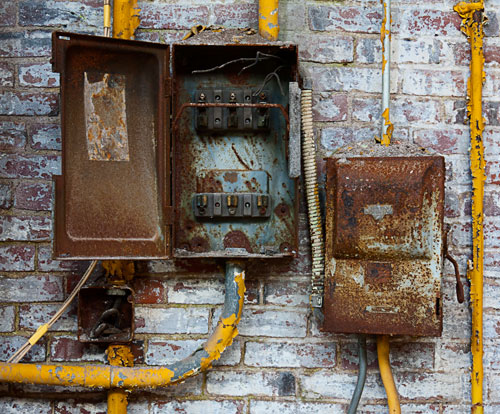
On the way home it struck me that maybe this is at least part of the answer why photographers are so often attracted to crumbling buildings.  These buildings can’t really be adequately described by words; pictures, images are needed and what is interesting about them is not so much the crumbling structures themselves but the textures, colors and shapes.

Well.  Having solved that problem we can move on to solving the problem of bringing peace to the world.


On second thought, let’s save that problem for another day.

A good day

Several of us were at church this morning digging out the driveway and enough of the parking lot that people could be dropped off in front of the church.  Two inches of hard, tight ice is difficult to remove.  While we were getting organized and the guys who were going to be using the rental frontloader were figuring out how to use it, I did a little photography.


The frontloader was equipped with a device on the back with large teeth.  The idea was that the teeth would break through the ice and as it was pulled along, the ice would come up.  The ice was not impressed.


So several of us attacked the ice with pickaxes, shovels, etc. while a snowplow on a garden tractor, a soil cultivator and the frontloader all peeled back the ice a little bit at a time.


Various ideas were proposed, including building a 10 foot wide parabolic mirror to focus the rays of the sun on the ice and drilling holes in the ice and loading them with M-80 fireworks.  Then we went back to work with the pickaxes and the shovels.

All this photography, by the way, was done before we got organized.


There is an abandoned house next to the church.  It called.  I answered.


If you are wondering when I will quit obsessing with impressionistic painting techniques, the answer is I don’t know.


I’m enjoying it though.  I hope I’m not as stiff in the morning as I am now.

Seems like a day for Impressionism

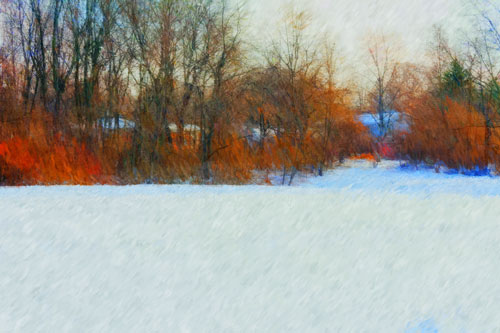
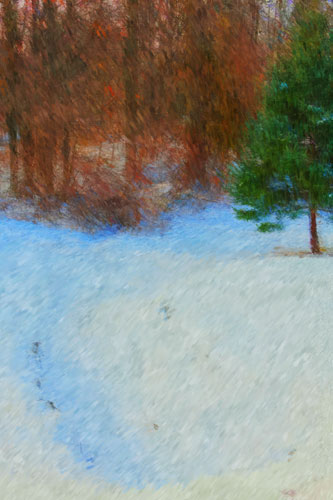
It’s snowing.  I’ll probably go out later today to do some shooting but right now I’ve been looking at older images and applying an Impressionist effect to them with Corel Painter Essentials and Photoshop.


I’m not pining for summertime even with two inches of ice on the ground, and more importantly, ice piled on the roof and in the gutters.  Also, we’ll be getting two to four inches of snow today.  But for some reason, Impressionism, which I normally associate with warm weather, seems the order of the day.


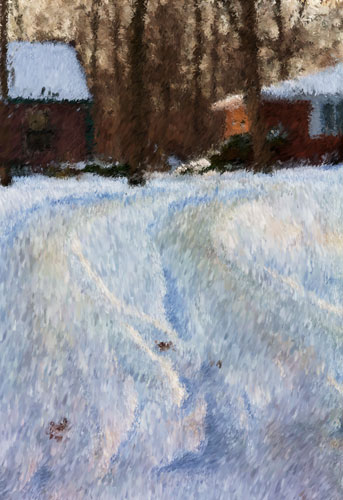
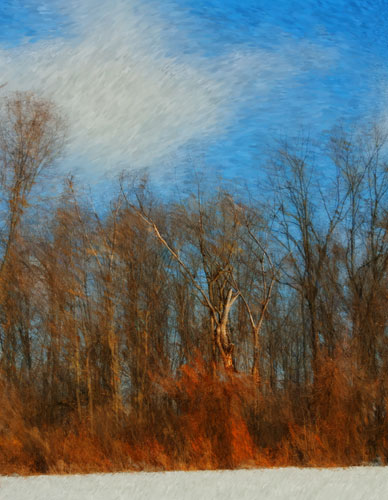
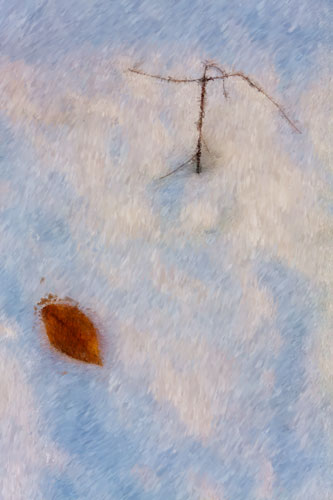
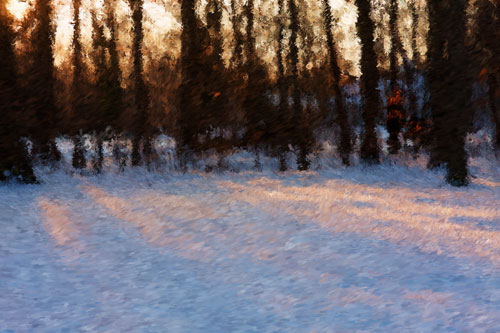
In keeping with the season, the above shot was made in early January.


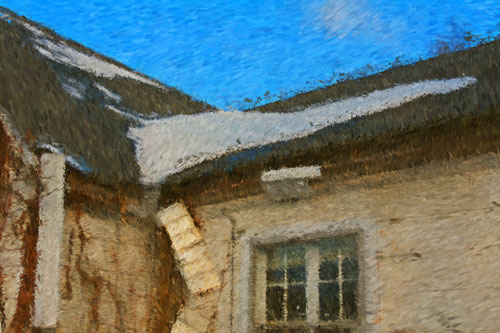
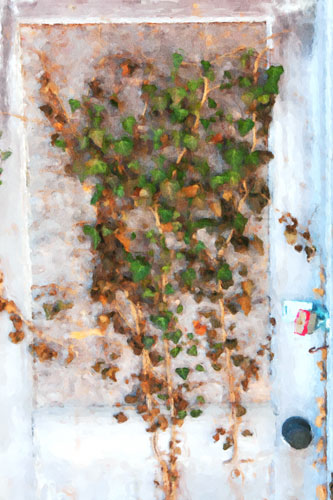
The season in these images is pretty obvious.


Gesundheit.


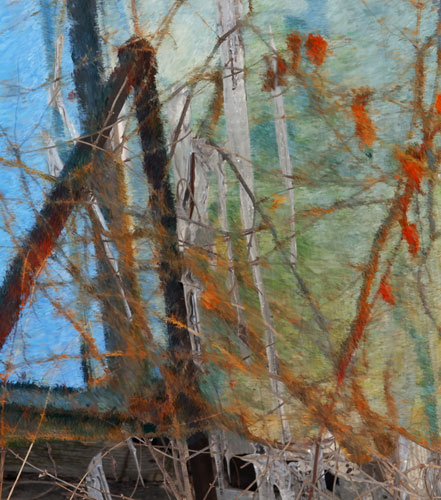
I don’t think Monet would eat his heart out after seeing this one unless he felt in some way responsible for it.


I know this one is over the top but I still like it.  Time to go get cold.