Macro photography: Come closer

Yesterday I talked about a recent program on macro photography at our camera club.  I prepared for that meeting by putting my macro lens on the camera and going out over a couple of days to get back in practice with it.  The lens I use does not permit focusing any closer than about a foot away.  We won’t be doing insect retinography with this lens because it can’t get that close but it does offer other possibilities at this kind of middle distance that I prefer.

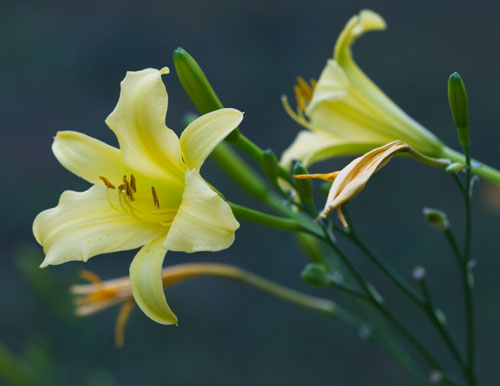
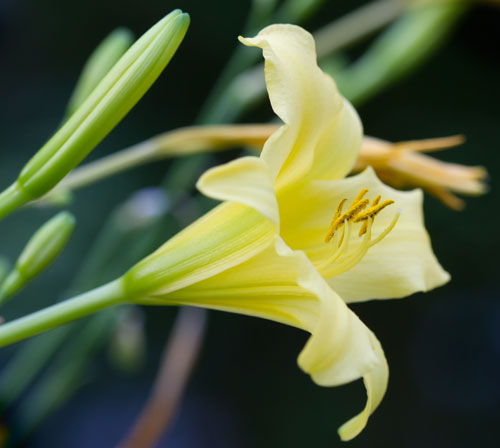
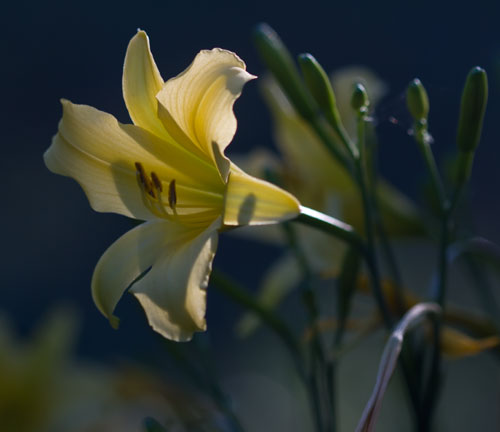
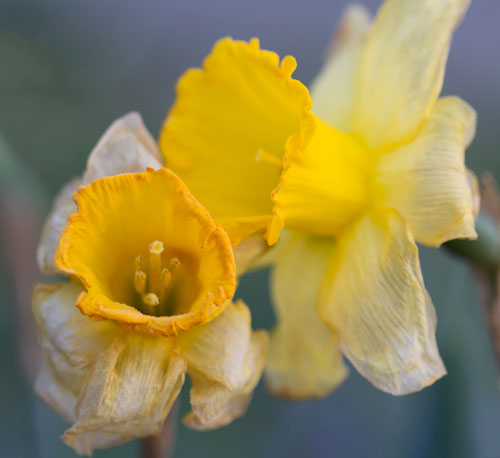
What struck me  was relationships between flowers.  At an objective level there is nothing more there than the juxtaposition of two flowers.  But images tell stories.  We, as observers, become co-authors with the photographer in developing those stories.  What stories do these images tell you?
Flowering tree


Do scenes or images of scenes communicate with you?
Our camera club was meeting last night at the Indianapolis Art Center and the topic was macro or close-up photography.  This was as much workshop as lecture and a lot of people were inside taking close-ups of small objects.  This is a great technique for seeing what is very small and not at all obvious to the eye busy with other sights.  They were using flash and other artificial lights because it was rather dark in there.   Because I don’t usually like to shoot with anything but natural light, I got out of their way and went outside.  They were having a good time and doing fine work.  I would find my good time outside.

I can’t tell you what kind of flowering tree this is, there are many species at the Art Center.  But I did find it hugely attractive.  At the time, it said “Japanese garden” to me.  Getting it home and seeing it on the screen brought out  a larger story.

I had started reading Jonah Lehrer’s “Imagine” the other day and this image contributed one understanding of what Mr. Lehrer was talking about.  His book is about creativity.  It brings in neuropsychology, personality, “mental illness” and many other areas of research in trying to better understand this most precious and human capacity that, truly, is so dimly understood.  One of his points is that it’s not  just the case that creativity can take any number of paths but that there are many kinds of creativity.  Let’s leave it at that for the present so we can get on with this post.  Read the book.

When I first saw the tree I thought I would eliminate the building and just show the tree with perhaps some flowers at the bottom.  But the more I looked at it, the more I thought the building was contributing to the image.  The horizontal lines in the wall and the vertical drain pipe form a frame for the tree.  But while most of the tree fits within the boundaries of the frame, some of it doesn’t.  And that is one part of what a lot of creativity is about.  It fits to some extent in the conventional frame of reference but at the same time is moving out of the frame.  If it catches on with the populace, the frame might expand.

This was not macro photography but it was made with a 100 mm f/2.8 Canon macro lens.  This translates into “good lens”.  More on macro work tomorrow.

Each look, the first

In his poem ‘A Guide to the Field’, David Wagoner writes

‘Our first strange steps
On a path that leads us down on a path to its end in water.
Each look, the first.’

‘Each look, the first.’  That’s the way it felt this morning as I went out to shoot.  Aside from the trip to Gary last Sunday, I haven’t been out with a camera in some time.  So in a way it was ‘Each look, the first.’


I didn’t go far, just to the azalea bush out front, to start.


And then along the driveway.


Winter is supposed to be drab.  That’s not what I saw.


There’s a lot of color if we just look.


‘Each look, the first.’  But I won’t wait so long for the next outing.

Gary First Methodist Church

The competition topic this month at the Photo Venture Camera Club is ‘Spirit and Place’.  Having spotted an old Methodist Church in Gary that is beyond disrepair, three of us decided to go see if we could find spirit in the place.


The construction of this church was underwritten by US Steel back in the mid-twenties and at one time had thousands in the congregation.  At its highest point it is nine stories tall.


But the congregation is gone.


Not much is left.

Nature is taking over.


Is there still spirit here?  I was reminded of the Apostle’s Creed, especially the line that says “He descended into Hell and on the third day he rose from the dead”.  With this in mind, the title for the next image


is “…and He left his cross behind.”  Yes the Spirit is here.

Red River Gorge, Kentucky

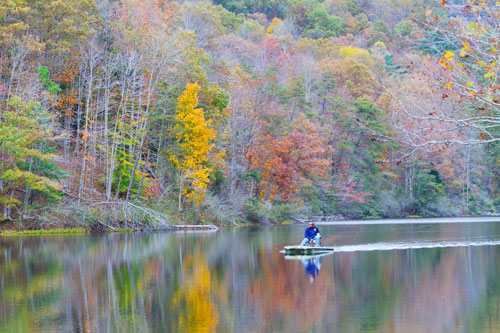
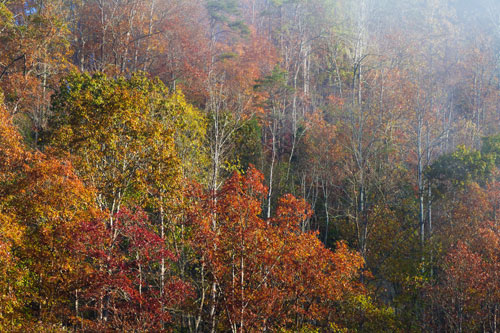
Several members of our camera club went down to the Red River Gorge a few weeks ago.  We had beautiful weather and many of the leaves were still on the trees.


If the weather had been like that of the previous week – rain, rain and more rain – we might have spent a lot of time indoors playing checkers or something.  But the weather was a gift.


I don’t think this fellow caught anything but then I don’t think he cared.


We spend a lot of moments thinking about the future or the past.  With a scene like this there is a strong call to stay right here in the present.


I’m ready to go again.

Once upon a time

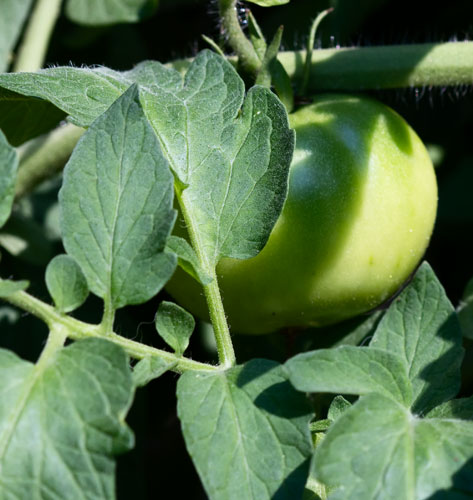
Once upon a time there was a beautiful princess in the flower of her youth.

As she matured, it became clear that she was going to be a tomato.

A red hot tomato.

The princess, aware of her beauty, decided to go to the big city where the pickings ought to be good.  There, she had four suitors, all named Basil.

The Basils, really quite crude if attractive and smelling good, couldn’t agree on who should have her so they cut her up.  All would marry their piece and so they called the parson.
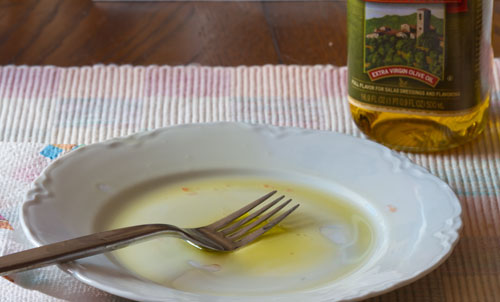
The parson had never married vegetables before and since he was hungry, he ate them all.  The moral of the story is that it is not wise to leave home if you have the sense of a vegetable, you might become an ingredient in someone’s salad.  Which will happen at home too but at least you won’t have to travel so far.
Special thanks to Edward Gorey.

Letting go

I was out in the front yard yesterday morning shooting some small yellow iris that have been blooming lately.


I was fairly pleased with what I was getting.


The light was diffuse and that saturated the colors.


Then the light changed and that was the end of it at least until later.

I didn’t get back out until this morning and I really wanted to do better with those iris.  I knew I had missed something but didn’t know what it was.


The light was different and even though I didn’t know what it was, I was farther from what I wanted than I was yesterday.


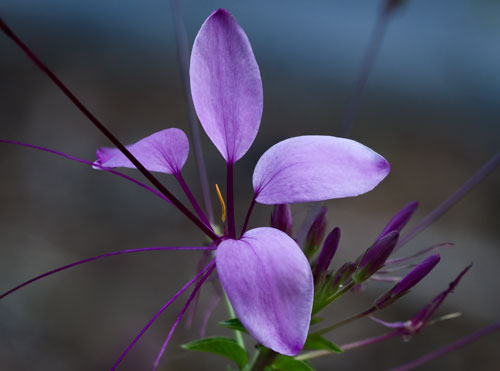
I headed back to the house and near the back door was this cleome (I think that is what it is).


The iris yesterday were nice.  The iris this morning were OK but the real gem was this flower.

I think I have part of the lesson now – going out with a tight agenda (I need better iris shots than I got yesterday) isn’t going to work if the conditions aren’t there.  Sometimes it’s better to let go and just look without any agenda at all.  The lesson yet to be learned is when is it time to give up one and go to the other?

Learning more about painting photographs

I’ve found that learning often progresses by spurts followed by a leveling off and then, if I keep at, another spurt and more leveling off.  The longer I’m at it, the more time elapses before the next spurt.  Right now I’m early in the process of learning to use Corel Painter Essentials 4, a paint program that, with a lot of choices on the user’s part, can turn a photograph into what looks like a painting.


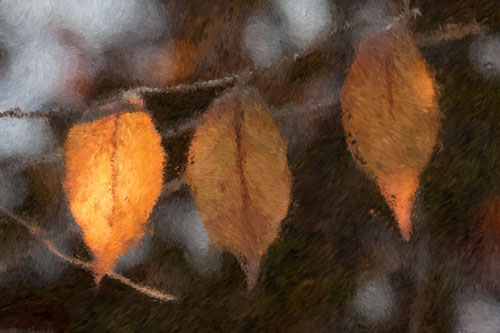
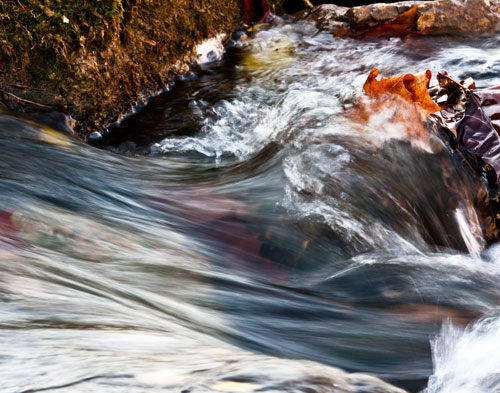
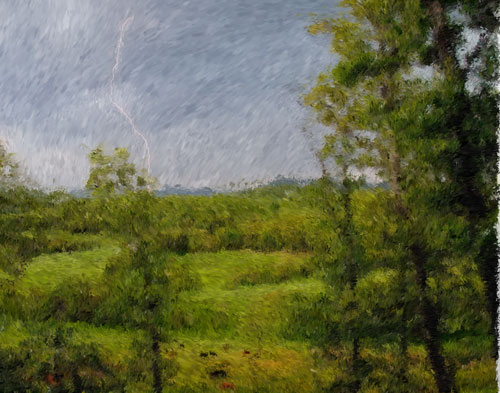
This image (above) started out as a photograph of a tree in a rock wall along the Buffalo National River in Arkansas.  Below is a spring storm on that same trip.


Here’s a hummingbird coming in to feed.


I do like this program.  And for all my complaining it isn’t hard, it just takes getting used to.


There are programs (apps) for the iPhone that do amazing things with photographs taken with the iPhone.  All the work is done in the phone and it is surprisingly good.  To see some good examples, click on the link to see Rad Drew’s work.  Be sure to look at the whole album.  For my part, I’m not tempted (yet) to get an iPhone.  I am happy to play with Photoshop and Painter Essentials.


Can’t go anywhere with my wife without seeing quilts of some kind:

I am still working on this one.


Actually I’m still working on all of them.


And I’m starting to see image possibilities with a view toward doing these ‘paintings’. More about that later.

The leaves are just about gone

We have a lot of trees around our house; that is one of the reasons we bought it 30 years ago.  The walnut leaves have been gone for some time as have most of the hickory leaves.  Some oak leaves are hanging on but they are coming down too.  I went out today to work on finishing getting the leaves off the ‘lawn’ but  it was so windy I decided to wait.  No point having to do it twice.

The leaves at Fort Harrison are largely gone.


I expect these will be gone in the next few days.


But as leaves are falling the sycamores are standing out more.  And there are still a few hangers on.


Their going is not without its beauty as well.


Sic transit gloria.