Post number 100 and it’s time for a celebration. It’s time for National Weed Month. Well, if we can’t get a month perhaps a week or even a day.
Come the day, I’m ready.

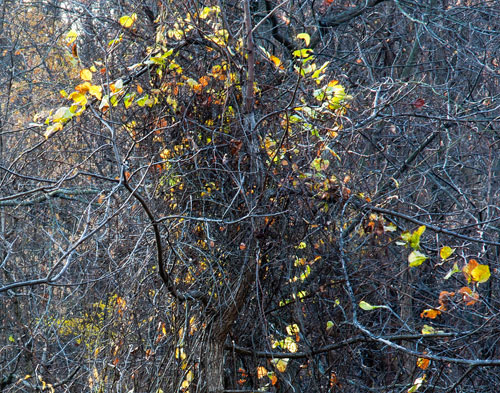

Write your member of Congress.
Post number 100 and it’s time for a celebration. It’s time for National Weed Month. Well, if we can’t get a month perhaps a week or even a day.
Come the day, I’m ready.
Write your member of Congress.
We had a lot of wind the other day (close to tornado conditions) and a good many leaves came down. The hickory and some of the maple trees are nearly bare but the oak and sycamore leaves are hanging on.
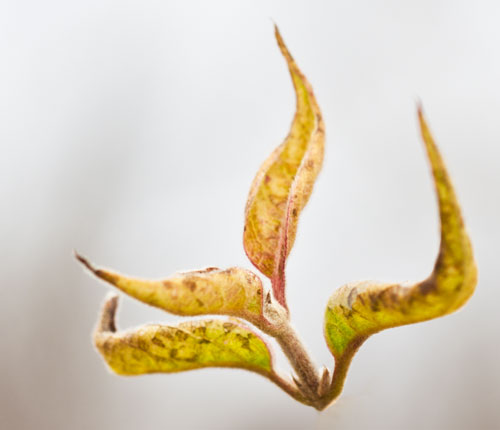
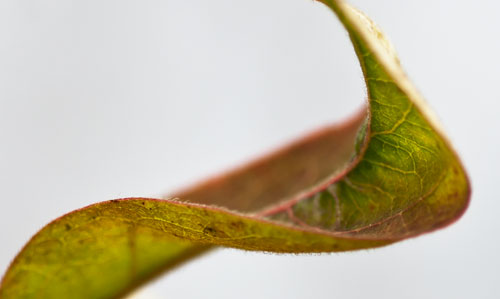
Here are some leaf images from this autumn I haven’t used yet in these posts.
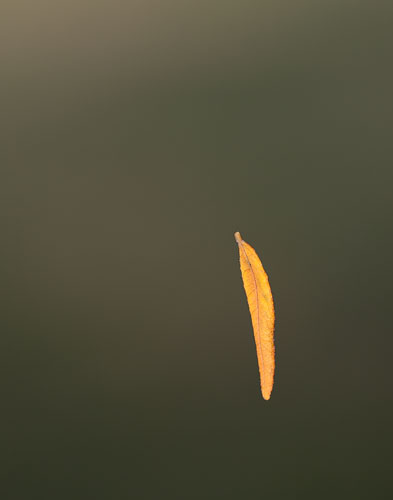
No texture there except what was in the leaf which was suspended on a thread from a spider’s web. Unfortunately the thread is not visible.
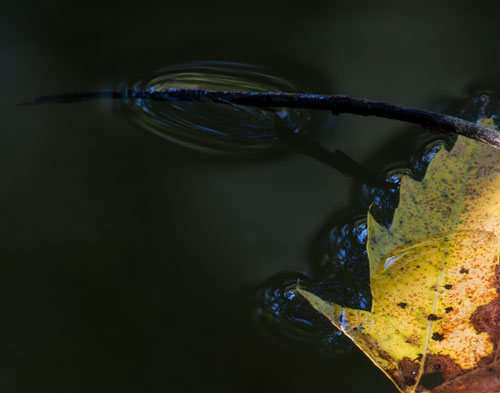
More surface tension. Expect to see more of these, I find them fascinating.
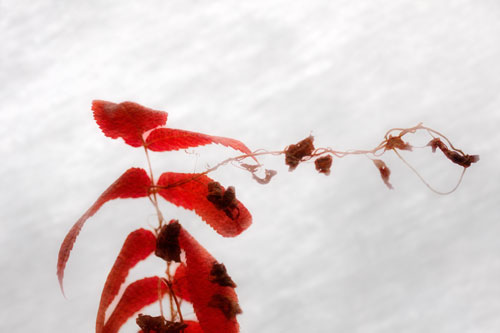
I was supposed to be photographing something else when I saw this. Sometimes I’m grateful for a limited attention span.
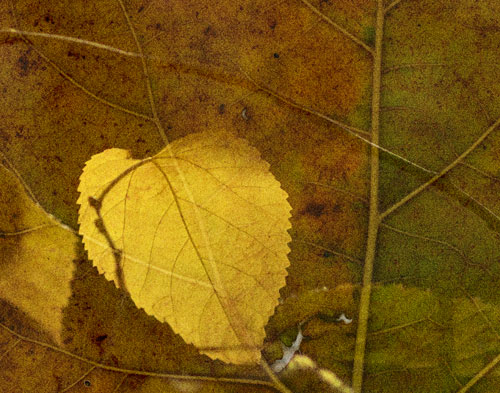
This is one of my (recent) favorites. It is a straight photograph superimposed on the output of a leaf scanned in a flat bed scanner.
Here are a couple more leaves that I ran through the flat bed scanner. Notice they are three dimensional; the lid of the scanner was left up so they didn’t get flattened. This is the leaf (a day later) that was scanned and used as the background in the image above.
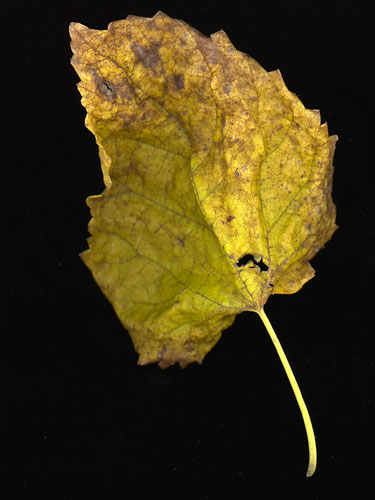
I especially like the three dimensionality.
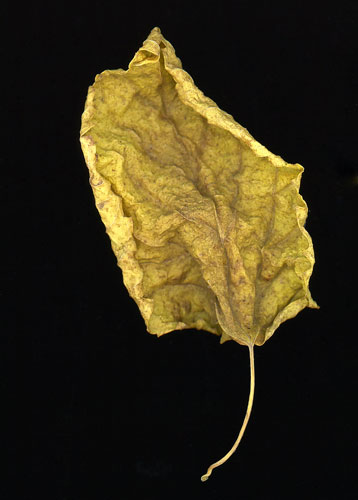
And here is one final image. This started out as a standard digital photograph and textures were added.
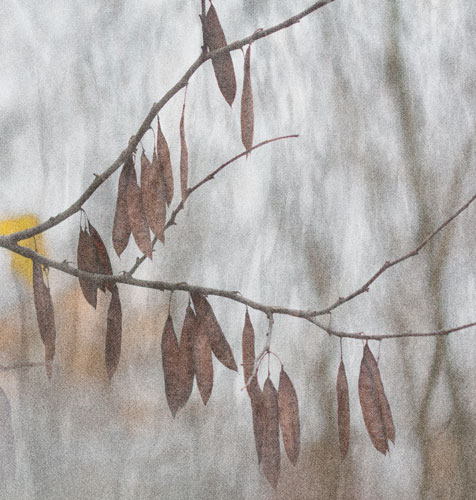
I’ve been impressed with how adding texture to an image can, in some cases, make it more interesting. I had taken this picture a couple of weeks ago but didn’t use it in a post because others at the time were more interesting:

I like the image well enough, it just doesn’t seem to have the umph I would want. I had been looking at what are called ‘grunge’ textures on the web and decided to download a few and try them. The one in this case was done by Jerry Jones. I added it to the image and this is what resulted.

It adds an atmosphere that I can’t quite define but what need is there to do that since we can all see it?
I began doing my own textures, largely by shooting scenes that seem to lend themselves to it. Here’s the first one I tried:
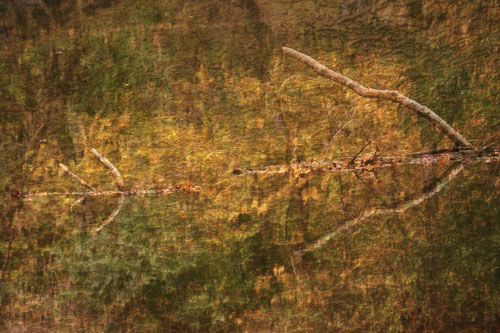
I think this is going to work as long as I don’t push it too far. Here are a couple I did today:
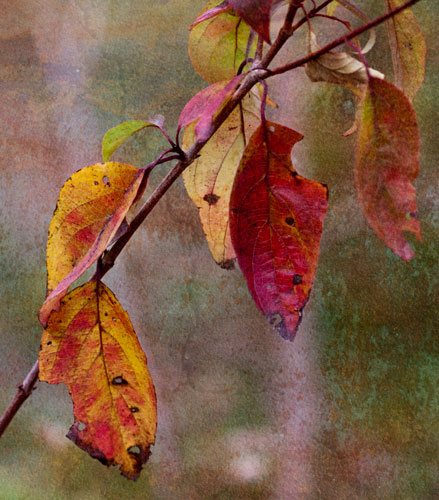
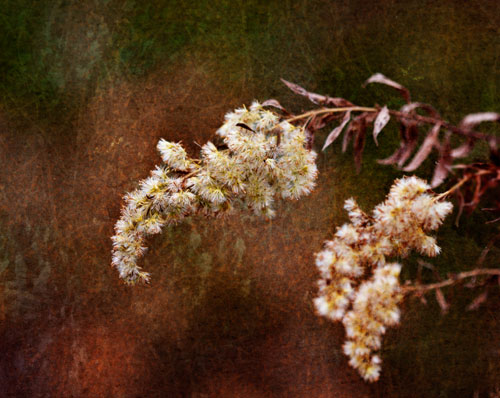
I would be interested in hearing what you think of this. Does it add interest?
My friend Sally and I went to a nature preserve outside of Cicero, IN this morning. The sky was clear and it was rather windy. The wind was sporadic and in between gusts there were opportunities for photographing plant life.
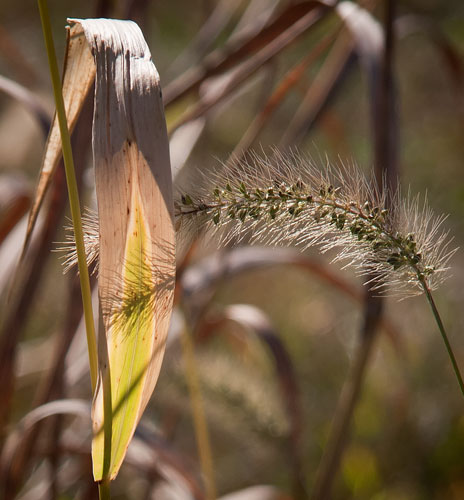
I go with every intention to photograph landscapes but I keep coming back to the small things.
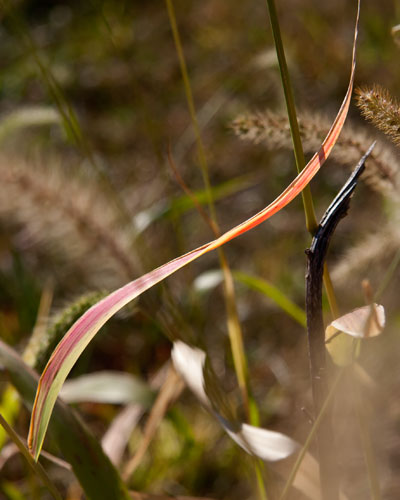
I think one reason for shooting small things is that there are so many of the them and they are often overlooked. Lots of opportunities there.
There were opportunities down by the creek as well.

There is something about these images that connote both motion and stillness, the ephemeral and the permanent.

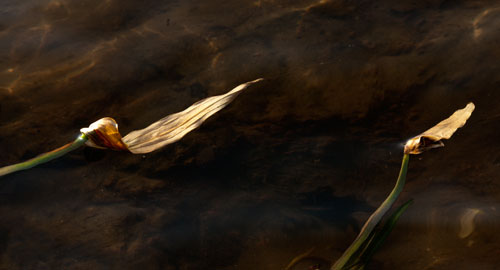
These two images were shot a couple of minutes apart. I was not aware of how pronounced the effect of surface tension is until I started photographing leaves in water.
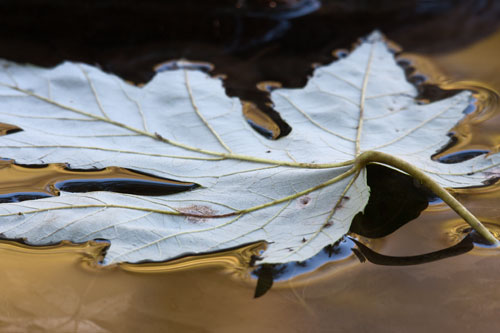
Perhaps I’ll get out again tomorrow.
The plan yesterday morning was to go out and shoot, come back in and write about it. I did go out and shoot and I did come back in but that’s when the disappointment started. 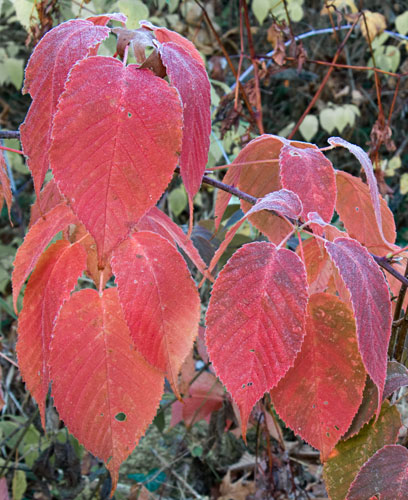
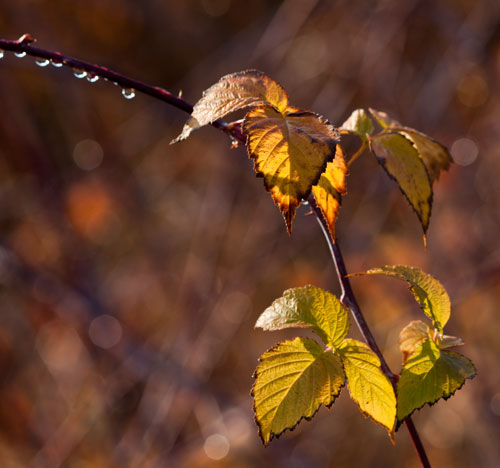
The images were ‘nice’ but not something I would want to hang on the wall or even show anyone. (So why am I showing them to you? Stay tuned.) It wasn’t as if there were no subjects. Black raspberry leaves in the fall are gorgeous and backlit golden leaves can be treasures.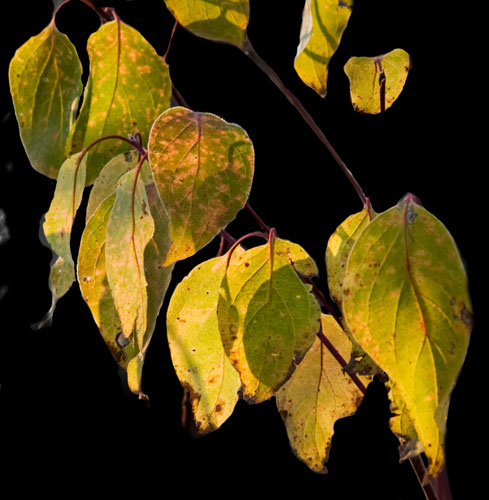
But that just didn’t seem enough. These were standard, garden variety fall pictures. Big deal.
I went to the camera club meeting last night and didn’t have great hopes for that either. We were going to shoot indoors. There would be models and good lighting, as well as a set up for macro photography. These were some fine opportunities but I thought instead I would take my camera and tripod outside. It was dark and lights were showing up some interesting opportunities. 
This was a lot better. I was not able to previsualize what I would get before I opened the shutter, I was just hoping for something interesting (and undefined).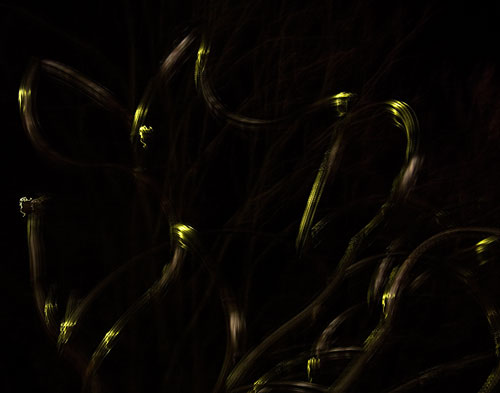
And that made it a lot more fun.
The name of this blog is ‘Spirit and Seeing.’ Why isn’t it called ‘Spirit and Photography?’ That’s what it’s really about isn’t it? The surface reason for not calling it ‘Spirit and Photography’ is that name seemed too long for people to type in; it’s just a bit more cumbersome than I would like the title to be. The deeper reason is that, for me at least, seeing is at least 75% of what goes into successful photography. A good camera is nice, a good lens is always welcome, technique – at least as far as operating the camera is concerned – is also good. But the selection of what appears in the viewfinder and the way it is composed there is even more important.

Spring impression
A modern digital camera – I’m using a Canon 40D – automates a lot of what used to trip me up. Autofocus is a boon, image stabilization is great and automatic metering is good too. Having a histogram adds a critical dimension to image making. All of that taken care of automatically to one extent or another means that the bulk of the job shifts even more over to image selection and composition, or seeing.
As complex as it is, the English language often compresses multiple meanings into a single word. Take for example the word ‘seeing.’ If I’m absent-mindedly walking along and managing to avoid running into trees, dogs, people and parked motorcycles, am I ‘seeing’ in the same sense as when I’m composing a picture that people will find interesting? The answer, obviously, is no.
One of the benefits of a strong interest in photography is that it helps us see more of the world. Not more square inches of the world, but more per square inch. When we first start out with a camera and have gotten to the point that we don’t have to think too much about the camera settings, it often happens that we see more and more interesting things when we have the camera in our hands than when we don’t. With more practice, that difference decreases and we see more ‘photographically’ even when we don’t have a camera with us.
I take our two dogs for a walk around the block every morning at around 5:45. We’ve been doing this for years. It is usually dark and there isn’t much that changes from one day to the next but thinking photographically helps me see things I hadn’t noticed before. The photo below was taken one winter morning. I had been by that tree hundreds of times but perhaps because of the frost on the ground and who knows what else, it was different. When we got back home I picked up the camera and tripod and went back to see if it was what I thought it was.

Do you really want to know what is behind that tree?
The light being obscured behind the tree makes a huge difference. Moving a few inches to the left or right turns the image into nothing very interesting. I’ve looked at this tree many times since and the shot just isn’t there for me now. Maybe when there is frost on the ground, then again, maybe never again.
So yes, this blog is about photography but then photography is largely about seeing. I’m happy with the title ‘Spirit and Seeing.’
The real voyage of discovery consists of not in seeking new landscapes but in having new eyes.
Marcel Proust
 Spirit and Seeing