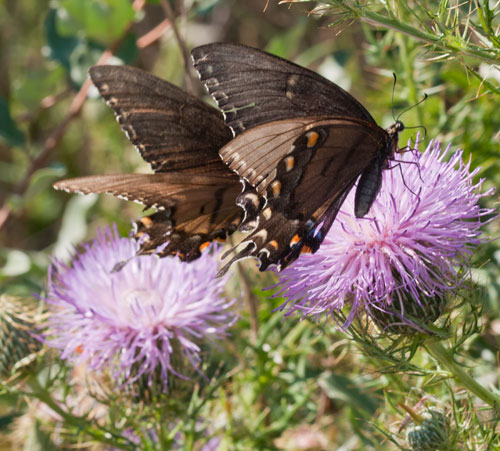
More than color

There is no doubt autumn foliage can be beautiful.  New England, for example, will soon be filling up with ‘leaf peepers’ who travel significant distances to see what fall has to offer.  There are even websites tracking the status of autumn color.


We’ve had a lot of dry weather in Indiana this year, there are bans on open burning in over 50 counties in the state.  No one expects the leaves here to be very colorful this autumn.  But if the foliage in general will be comparatively dull in color, there are exceptions.


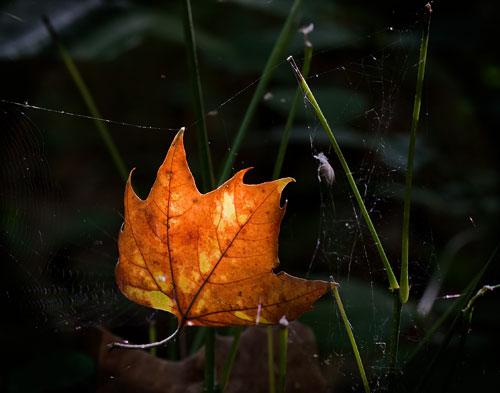
And one needs to be in the right place at the right time.


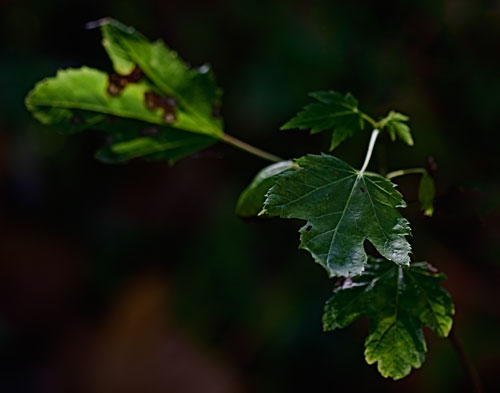
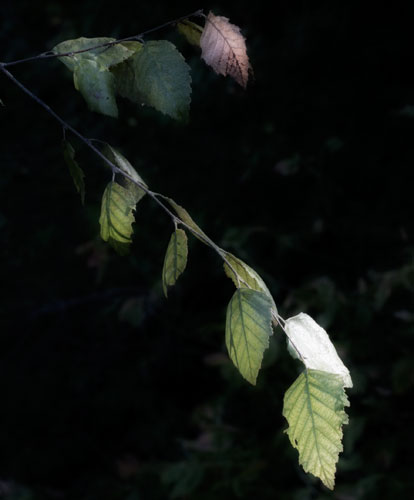
The sun backlit this maple leaf for only a few minutes and then it was gone.

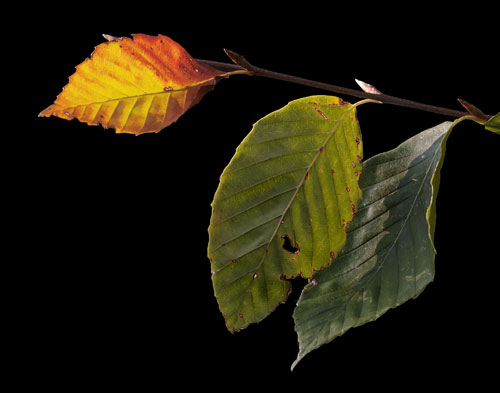
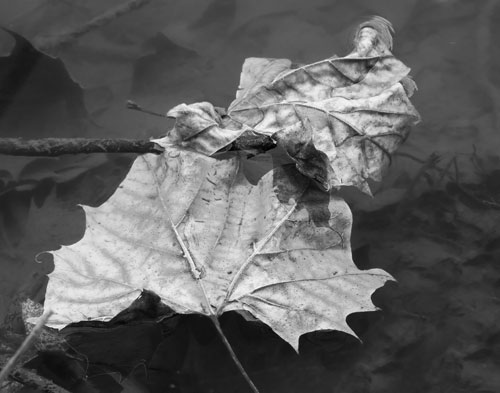
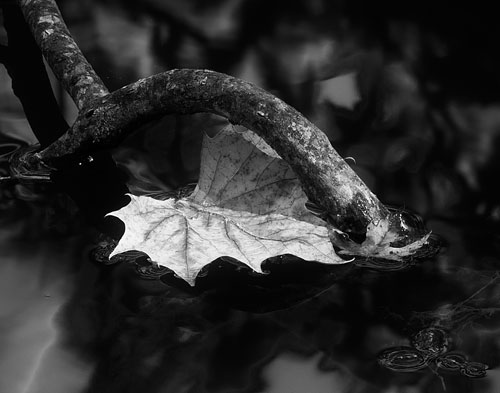
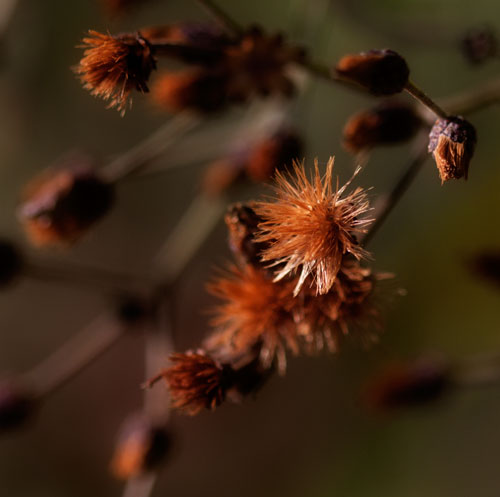
But if the color is not there as we would like to see it, the texture of leaves is still with us.


If you picked up these leaves you would have to be careful with them or they would crumple and fall apart.  But as long we just look at them, preferably closely, the texture is there and it is beautiful.


Time to go do some more shooting.  Today’s leaves will be different from yesterday’s.

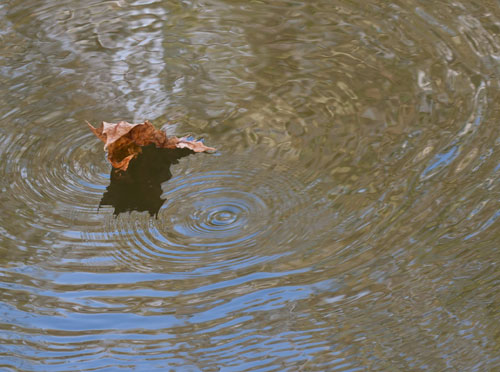
Leaves and water

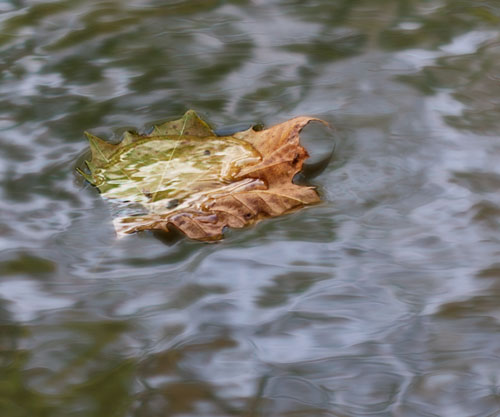
I went over to Fort Harrison State Park yesterday morning.  We had had a long spell of hot weather (record breaking on at least one day) and cooler air followed a front into the area.  In other words, it was still pretty warm but it was windy.  Not a good day for exacting close up work.  But it did mean that leaves would be falling on the water at Fall Creek.  I went down there and it was a bonanza.


The wind did die down long enough to do a little close up work.


I wonder what is out there today?

Wondering around

Mom patted me on the shoulder and said to the aide: ‘He’s a good boy.’  I turned 71 last week and I’m a good boy.  Well, Mom is 94.


This ‘boy’ doesn’t walk as fast as he used to and that’s good.  The faster you walk the more you have to treat the rest of the stuff in the world as potential obstacles to be avoided.  Walking slower, moseying, means you can see what else is there and perhaps appreciate it more.


One’s eyes don’t have to be old to see what is nearby though.  I ran into a librarian friend of mine this morning who had a young teen-age girl with her.  While we were talking the girl spotted a dead mole and a six inch garter snake and who knows what else within a six foot radius of where we were standing.  My friend tells me the girl is interested in photography.  She indeed has a good eye.


The cycle of the year is approaching its last quarter and if the year is aging it doesn’t appear to be slowing down.  We have defined time in an objective way in hours, minutes and seconds counted off by an atomic clock.  But the experience of time is anything but objective.  It does seem that days rush past faster as we get older but walking more slowly helps bring a bit more sanity to it.


And we can see more interesting stuff.

It’s a time for wondering.

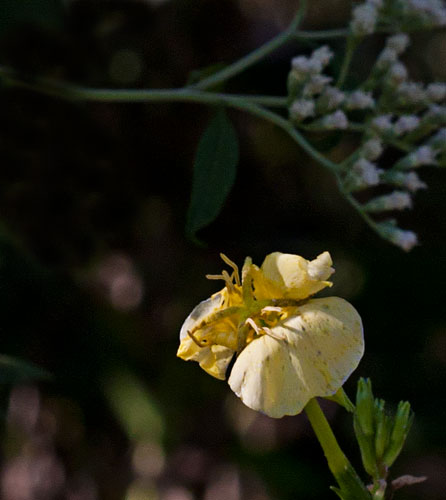
Some flowers

Going into the woods, a field, anywhere, for that matter, where there are good opportunities for photography is, for me, akin to going into a beautiful cathedral.  There is beauty and if I am still enough inside, there is a Presence.  I spell Presence with a capital ‘P’ because it is something beyond comprehension and while elusive, present none the less, open to awareness at some level.  I think this is one of the main reasons for loving photography.  It brings me closer to the Presence.  I’ll say no more about it now and simply ask you to go out yourself and be open to the Presence.

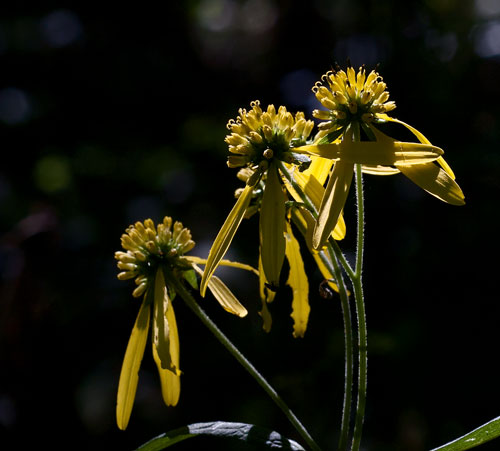
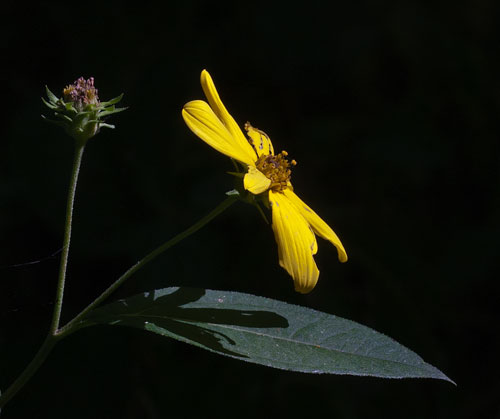
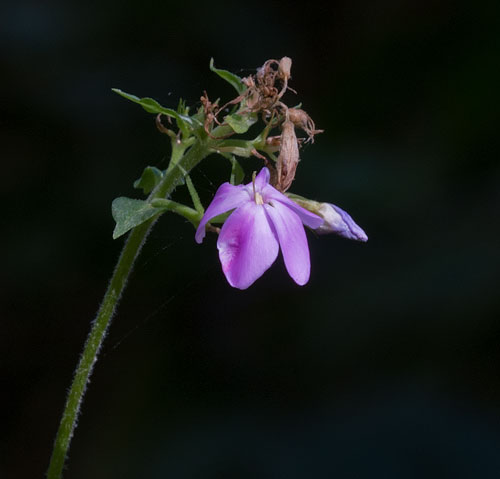
Here are some of the images I got today in the Presence.


It was a good day.

The days grow short when you reach September

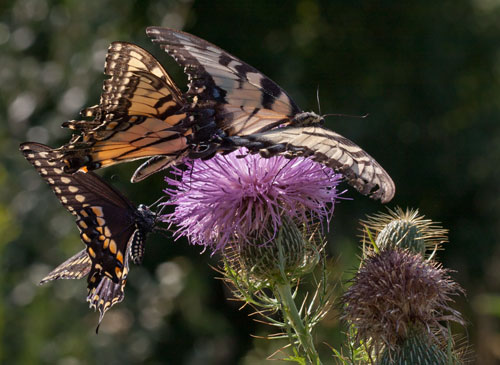
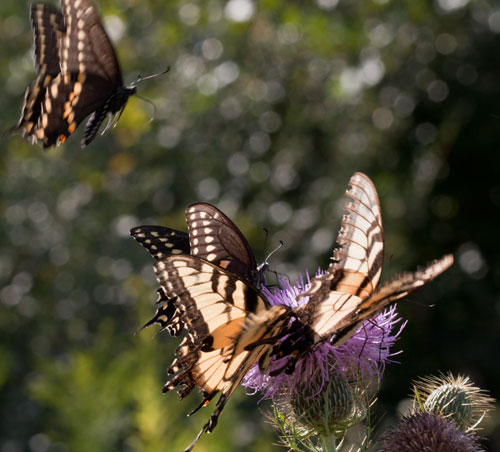
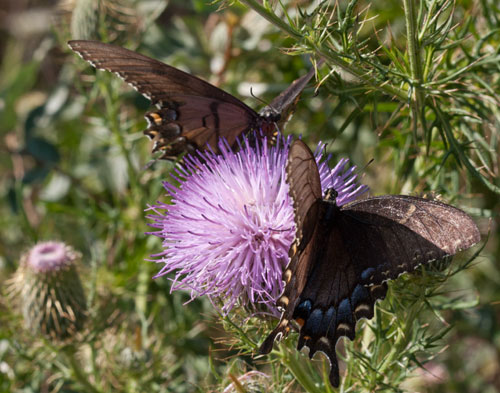
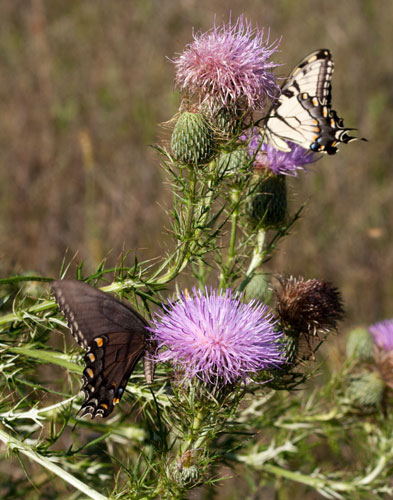
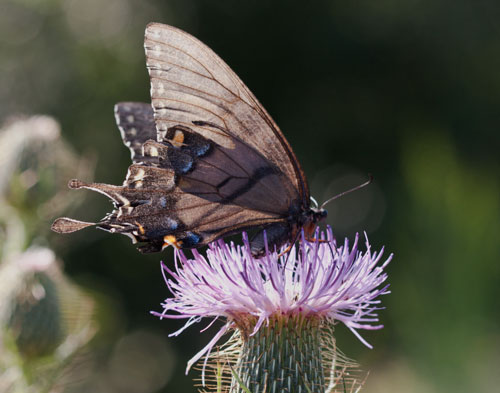
A few days ago the thistle blossoms were covered with butterflies and now the numbers are much reduced.  In the hot weather morning was a good time to see them but cooler weather is here and afternoon is now the better choice.


Photographing butterflies on a windy day is good exercise for toning up the reflexes.  Whoops, that wasn’t a butterfly at all.


And with the cooler weather September Song is the background music.

Oh, it’s a long, long while from May to December
But the days grow short when you reach September
When the autumn weather turns the leaves to flame
One hasn’t got time for the waiting game

Indeed with the shortening of days the butterflies are fewer and all the more precious.


Don’t wait, go out and shoot.

Fountain Square

Our camera club went down to Fountain Square last night for a shoot.  Fountain Square is one of the eight cultural districts in Indianapolis which, after a period of decline, is picking itself up and thriving.

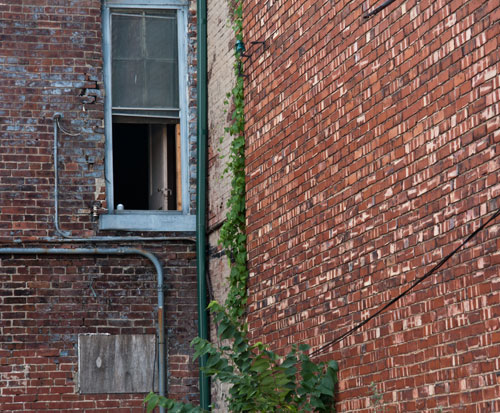
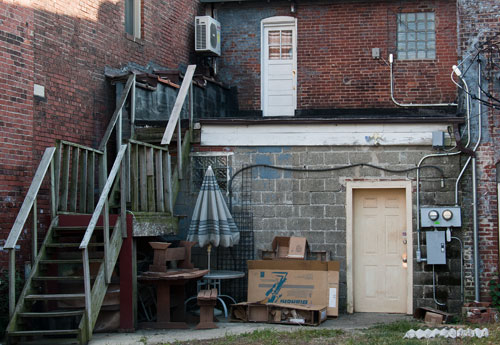
I don’t know what it is, but while it is good to visit an area that is coming up in the world, there is something more alluring about the alleys and out of the way places.


A lot of our people had the same idea and while some were on the streets, more seemed to be in the alleys.


Perhaps these areas, roughened up by life have stories to tell.


People live here.  They have lives, they have dignity.


And they have stories.

I couldn’t help myself

Having published eight images of butterflies in the last couple of days it was time to give them a rest.  Time to move on to other subjects.
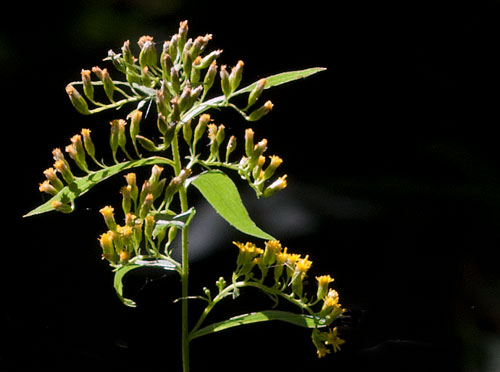
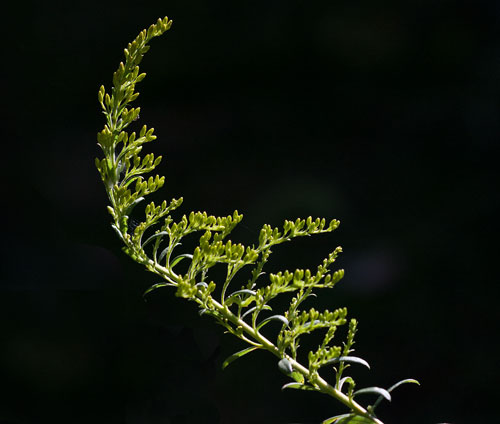
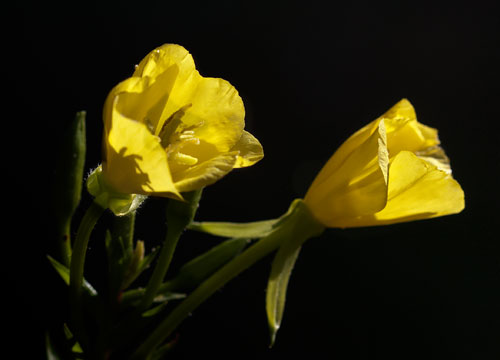
Weeds make fine images, lots of texture and even a little drama.  Flowers are good too.

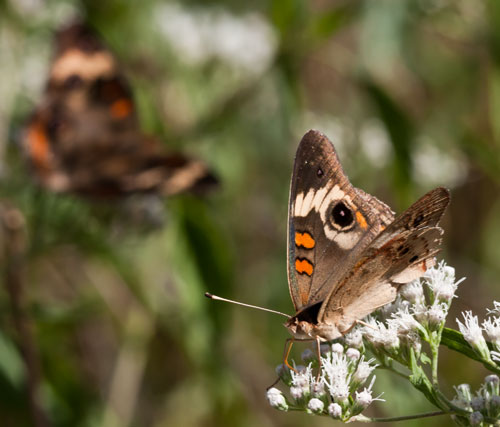
But despite hundreds of acres of foliage, water, birds, etc. at Fort Harrison State Park, I went right back to the butterflies.


They just kept coming.

You may not be able to count them all, but there are nine butterflies in this image:

I suppose I could have called some friends and asked them to talk me out of it but they would have wanted to come along too.

My name is Barry.  I photograph butterflies.

More butterflies

Here are some more butterflies from Fort Harrison State Park yesterday.


Later this morning I’ll go see if the butterflies are still there.  That will be part of the trip, but it is time to look for something new as well.  But I’ll still check out the butterflies.

Gifts: Today it was things with wings

It was William James who spoke of the ‘slow dead heave of the will’ and boy, did that expression come home to me this morning.  I was getting ready to go see my mother and I thought I would stop off at Fort Harrison State Park on the way home and shoot what there was to shoot (with a camera).  I had a good visit with Mom and then it started: do I really want to go shoot or not?  What was I going to shoot?  What would be interesting?  Anything?  Maybe I won’t go.  I’ll go tomorrow.  You get the idea.  And the moral of the story is that the head should not be in charge of some decisions.  Sometimes it is best just to go do it.  Which I did.

I went over near the walnut plantation and was roaming around among the weeds and I came upon a good sized thistle with lots of blooms and on many of the blooms there was a butterfly.


Hoo boy!  This is the good stuff!  Fortunately the camera was in burst mode where all I had to do was point it and hold the button down and it would take up to six and a half frames a second.  Butterflies were coming and going and everything was changing from one moment to the next.


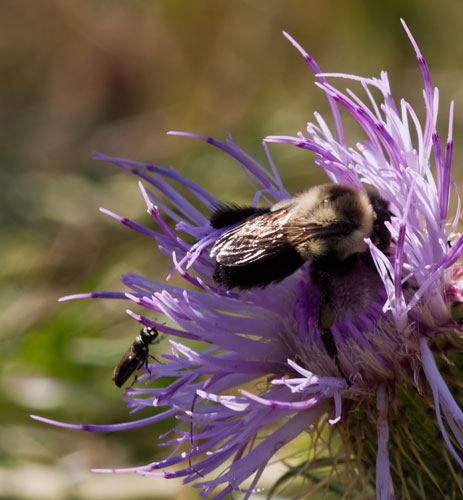
Bumblebees were getting into the act as well.

And that was when the Canada geese showed up.


Yes, the moon was right there.  I will admit I didn’t even notice it until much later.  Some days we’re just lucky, which is nice because it balances out some of those other days.

To shoot or not to shoot is no longer the question.  My hero is Elwood P. Dowd, the Jimmy Stewart character in the movie ‘Harvey.’   If someone said the two of them ought to go for a drink sometime, Elwood would reply ‘When?’

Photography, haiku, haiga

How often does it happen that you see something, want others to see it too, make a picture of it, and then get it in front of people?  A lot of the time I would guess.  Certainly the millions of photos online are evidence of that wish.  People are saying ‘I shot this, I’m proud of it and I want you to see it.’   I feel the same way.

I was watching a video of Jane Reichhold (highly recommended), an American master of haiku, and the same point came up there.  She said

‘And the way you know a haiku is lurking about is if you see something and say oh!  I want to show that to somebody!’

The way a leaf is falling from a tree, the colors in a sunset, a mother playing with a child and as many other examples as we can think of all point to the same thing:  we see something beautiful or interesting and we want to share it with others in a creative way.  That is true of many of the arts that work in the present but right now I’m thinking especially of photography and haiku.  Photography has little choice but to operate in the present moment and haiku is written in present tense.  It also shares with photography the intention of capturing a moment.  Both are typically achieved quickly at least to the level of the first draft.

We all learned that haiku consists of 17 syllables in a 5, 7, 5 arrangement.  It is true that Japanese haiku consists of 17 sound units in that arrangement but the problem is that Japanese sound units don’t translate directly into English syllables.  For example the word ‘Tokyo’ is three English syllables while it is four sound units in Japanese.  Seventeen syllables would generally be about one third too many in English so a shorter poem is needed here.  Jane Reichhold recommends fewer than 17 in a short, long, short arrangement.  Other English haiku experts simply recommend keeping it short, abandoning the short, long, short recommendation.  Two recommendation that are pretty consistent among experts are that the haiku consist of a (long) phrase and a (short) fragment and that it not be a sentence.  For example:

last fleeting gift
of the sun
cricket song

‘last fleeting gift of the sun’ is the phrase and ‘cricket song’ is the fragment.  What is that haiku saying to you?

Working in both photography and haiku can produce an interesting combination known as haiga which most simply is image plus haiku.

Some of my images seem to beg for companionship with words.  They seem complete in themselves but they also appear to want something more.  I ran across the idea of haiga  not long ago.  You’ve undoubtedly seen Japanese paintings with calligraphy; the writing is likely haiku; the painting plus the haiku is haiga.  This form is gaining popularity in Western countries and I’ve been experimenting with it recently.last_rays_8922_2

Did your interpretation of the haiku change as a result of pairing it with an image?

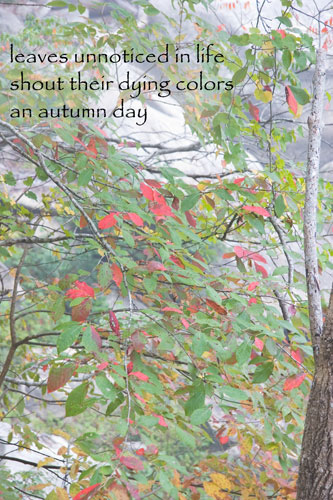
Here are some more examples.
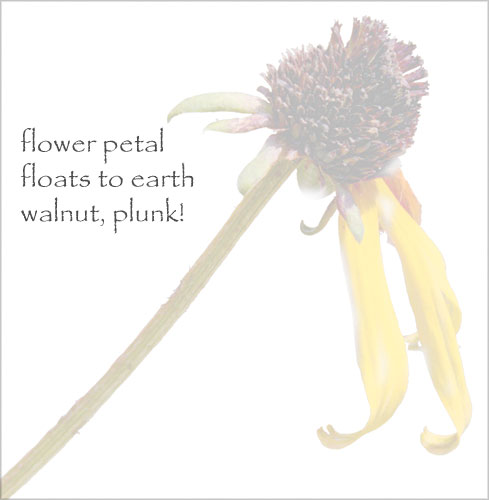

Here the remaining part of the flower (minus the petals) even looks a bit like a walnut.  We have a couple of walnut trees in our front yard and they do make a lot of noise when they fall from the trees and hit the driveway.  Flower petals, not so much.
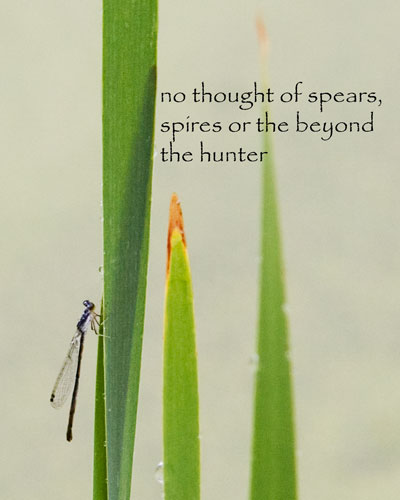


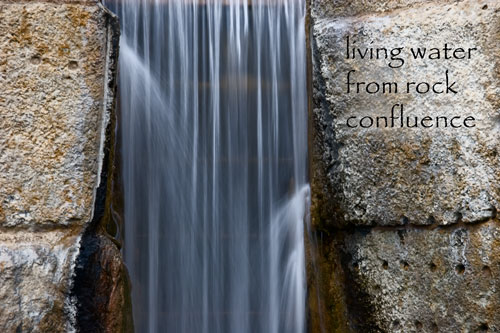
Confluence here is intended in at least two ways.
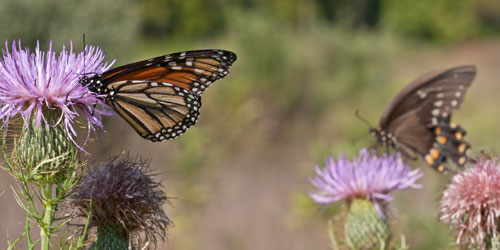
On reflection, I don’t know that what I have written would qualify as haiku and I don’t think I really care if I am following a specific form.  The important thing is to get started and work at distilling a thought or a scene into a few words, and if it seems appropriate, pair it with an image.  I enjoy it, you might too.