Flowering tree


Do scenes or images of scenes communicate with you?

Our camera club was meeting last night at the Indianapolis Art Center and the topic was macro or close-up photography.  This was as much workshop as lecture and a lot of people were inside taking close-ups of small objects.  This is a great technique for seeing what is very small and not at all obvious to the eye busy with other sights.  They were using flash and other artificial lights because it was rather dark in there.   Because I don’t usually like to shoot with anything but natural light, I got out of their way and went outside.  They were having a good time and doing fine work.  I would find my good time outside.

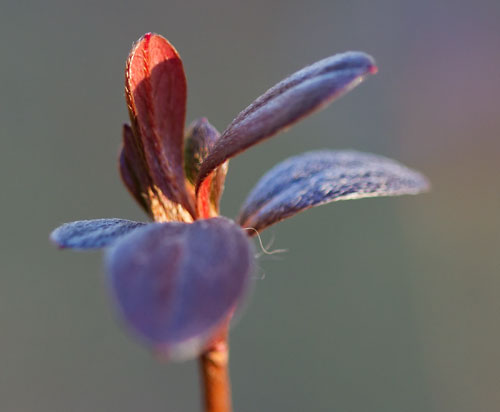
I can’t tell you what kind of flowering tree this is, there are many species at the Art Center.  But I did find it hugely attractive.  At the time, it said “Japanese garden” to me.  Getting it home and seeing it on the screen brought out  a larger story.

I had started reading Jonah Lehrer’s “Imagine” the other day and this image contributed one understanding of what Mr. Lehrer was talking about.  His book is about creativity.  It brings in neuropsychology, personality, “mental illness” and many other areas of research in trying to better understand this most precious and human capacity that, truly, is so dimly understood.  One of his points is that it’s not  just the case that creativity can take any number of paths but that there are many kinds of creativity.  Let’s leave it at that for the present so we can get on with this post.  Read the book.

When I first saw the tree I thought I would eliminate the building and just show the tree with perhaps some flowers at the bottom.  But the more I looked at it, the more I thought the building was contributing to the image.  The horizontal lines in the wall and the vertical drain pipe form a frame for the tree.  But while most of the tree fits within the boundaries of the frame, some of it doesn’t.  And that is one part of what a lot of creativity is about.  It fits to some extent in the conventional frame of reference but at the same time is moving out of the frame.  If it catches on with the populace, the frame might expand.

This was not macro photography but it was made with a 100 mm f/2.8 Canon macro lens.  This translates into “good lens”.  More on macro work tomorrow.
Each look, the first

In his poem ‘A Guide to the Field’, David Wagoner writes

‘Our first strange steps
On a path that leads us down on a path to its end in water.
Each look, the first.’

‘Each look, the first.’  That’s the way it felt this morning as I went out to shoot.  Aside from the trip to Gary last Sunday, I haven’t been out with a camera in some time.  So in a way it was ‘Each look, the first.’


I didn’t go far, just to the azalea bush out front, to start.


And then along the driveway.


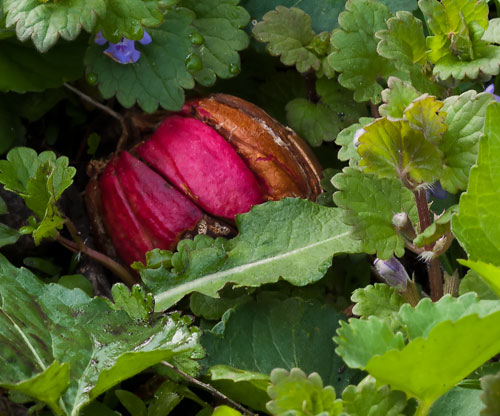
Winter is supposed to be drab.  That’s not what I saw.


There’s a lot of color if we just look.


‘Each look, the first.’  But I won’t wait so long for the next outing.

Gary First Methodist Church

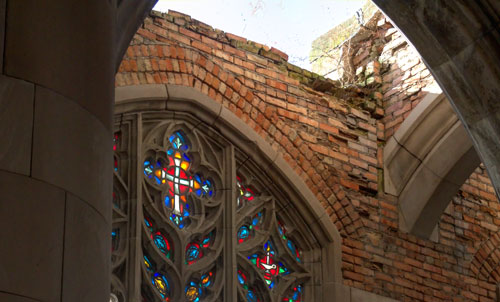
The competition topic this month at the Photo Venture Camera Club is ‘Spirit and Place’.  Having spotted an old Methodist Church in Gary that is beyond disrepair, three of us decided to go see if we could find spirit in the place.


The construction of this church was underwritten by US Steel back in the mid-twenties and at one time had thousands in the congregation.  At its highest point it is nine stories tall.


But the congregation is gone.


Not much is left.

Nature is taking over.


Is there still spirit here?  I was reminded of the Apostle’s Creed, especially the line that says “He descended into Hell and on the third day he rose from the dead”.  With this in mind, the title for the next image


is “…and He left his cross behind.”  Yes the Spirit is here.

Living in a shell

This is a reworking of a reworking of a story by Maurice Nicoll.

Once upon a time there was a great and ancient forest.  In the middle of the forest there lived an old and majestic oak tree.  Its limbs were home to birds, its acorns fed many animals.  Generation after generation of acorns fell to the ground and after awhile they formed a community and they had their own way of looking at the world.  For example, for one to say to another ‘you’re nuts!’ was quite a complement and much prized.  The goal of nearly every acorn was to have a bright, shiny, blemish-free shell.  Much work went into this: visits to the buffer’s shop to be cleaned and buffed; visits to the nut doctor to mend cracked shells;  group therapy sessions to deal with issues such as fear of falling, etc.

As you can imagine, condition of the shell was a primary factor in one’s social position and acorns are nuts about social position.

Then one day a bird dropped an old, dirty cracked acorn from the sky right into the middle of the acorn community.  His thoughts were not nutty, they were crazy.  ‘We can be that!’ he said, motioning to the oak tree.  ‘The first step is for our shells to crack and us to sink into the ground!’  How far was that going to get him in the acorn community?  ‘We would no longer be acorns if we did that!’ they argued.  He agreed.


Winter came and then the spring.  We don’t know what happened to all the acorns.  Some were taken away by animals, one in particular though, shunned by the others and now largely without a shell, sank into the ground.  At the same time the old oak was beyond its normal span of years and that spring it didn’t leaf out as it always had, but a sprout of an oak came up near the old tree.  Who knows what happened after that?

On offering a mostly opaque criticism of art

Let’s suppose I create this piece of art and it appears in an art exhibition.


Let’s further suppose that you attend this exhibition and someone asks your opinion of this particular work.  Your reaction to it is visceral (positive or negative) but difficult to put into words.  Friends and relations, I have the answer for you.  Go to The Instant Art Critique Phrase Generator at Pixmaven.com, enter any five digit number in the box and a critique will appear.  Here are  some examples of what you might get:

“With regard to the issue of content, the disjunctive perturbation of the negative space seems very disturbing in light of the eloquence of these pieces. ”

“As an advocate of the Big Mac Aesthetic, I feel that the metaphorical resonance of the figurative-narrative line-space matrix spatially undermines the exploration of montage elements. ”

Memorize a couple of these so you will be ready.  If ever called on to use them though, be sure to confidently announce them in a clear voice and then keep moving.  Take no questions and don’t turn your back on the artist.

Red River Gorge, Kentucky

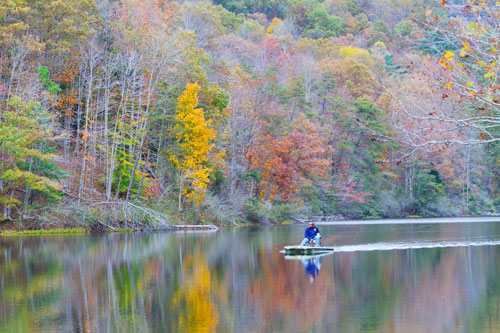
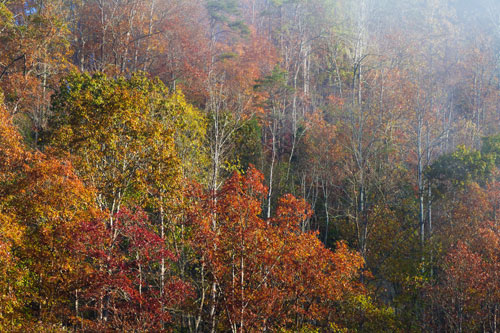
Several members of our camera club went down to the Red River Gorge a few weeks ago.  We had beautiful weather and many of the leaves were still on the trees.


If the weather had been like that of the previous week – rain, rain and more rain – we might have spent a lot of time indoors playing checkers or something.  But the weather was a gift.


I don’t think this fellow caught anything but then I don’t think he cared.


We spend a lot of moments thinking about the future or the past.  With a scene like this there is a strong call to stay right here in the present.


I’m ready to go again.

A time for contemplation

This last month and a half has been quite busy and I brought down the level of activity with a retreat in southwestern Indiana last week.

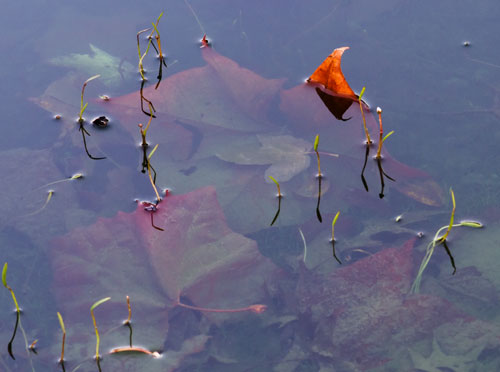
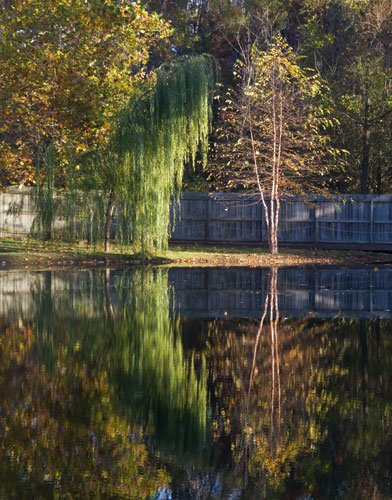
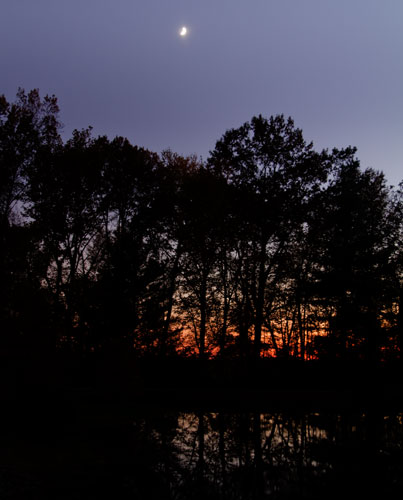
This was at Willow Pond Retreat, a small retreat center owned by Charles and Sarah Gipson.  Charles had been pastor at Church of the Saviour in Indianapolis in the period just before my wife and I joined that community.  I was at the retreat center for several days and while I spent a lot of time photographing the beautiful landscape, I found myself concentrating on the one acre pond that is part of the retreat center and within the pond, just along the shore.


Leaves in water are fascinating.


I suppose one could see melancholy in photographing in the autumn but it is enormously inspiring to me.


Inspiring because there is beauty in both the life and death of these leaves and beyond that, regeneration will follow.


Is this a metaphor for our own lives?  We can see beauty in life all around us and my mother in some respects became even more beautiful as she was dying.  Mom remains as a gift that will be with me for the rest of my life.

But what about regeneration, life after death?  My religion teaches that there is life beyond but I can’t speak from personal experience.


All I can say for sure is that there is life here and now and our sacred job is to live it.  Thank you, Charles and Sarah.

Massachusetts Avenue, Indianapolis

Members of the camera club participated in a world wide photo walk a few weeks ago.  It was brisk when we got started at 9:30 but it warmed up after a bit.

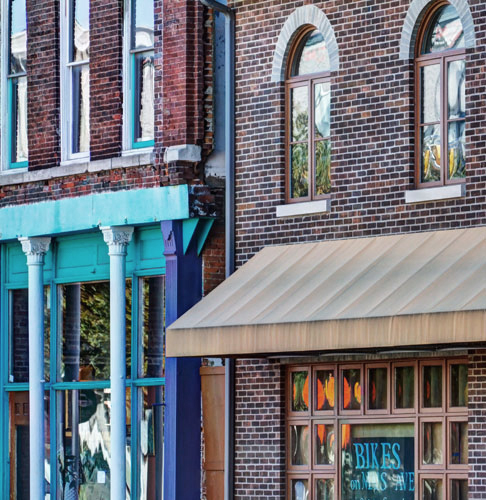
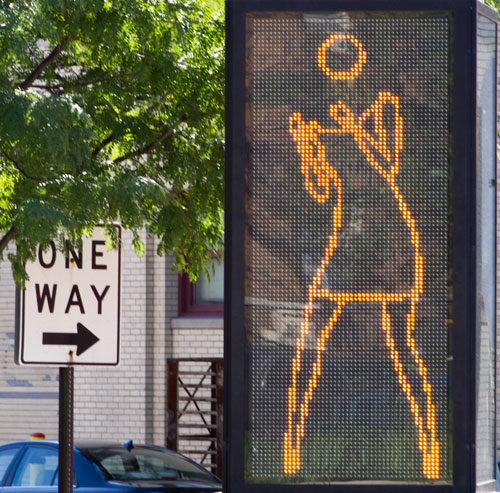
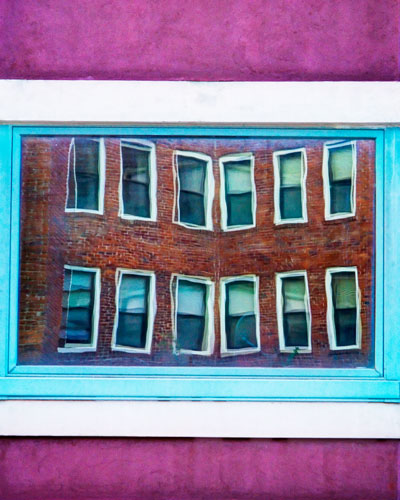
We worked in the Massachusetts Avenue area of Indianapolis, a historic area with many artists.  A lot of the images I have here were created by combining images shot at different exposures (High Dynamic Range or HDR).  High saturation, which is often a part of HDR images,  just seemed the right thing to include with many of them.

It was a go-go kind of morning.

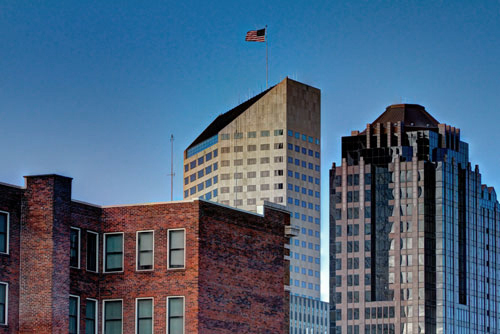
I liked seeing these three kinds of architecture together.

Indianapolis Fire Department Station 7.

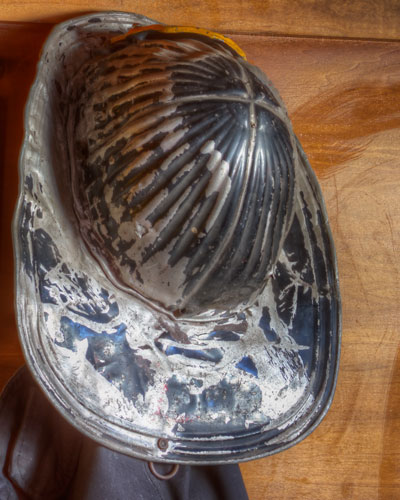
At the Indianapolis Fire Museum up the street from the fire station.

Many years ago, when I first started working at AT&T’s Bell Laboratories in Holmdel NJ, I worked on automating Directory Assistance.  I learned that the DA offices often served areas far removed from their physical location.  A few years after we moved to Indianapolis, my wife and I started going to the Agio Restaurant.  It moved around some in those early years and when we stopped by at the last known location, it was dark on a Friday night.  Moved again, but where?  I called Directory Assistance and asked for the number for Agio and the operator replied “I was by there the other night and it was dark.  I guess they moved.”  Not the answer I expected.  I’m glad to know where it is now, it’s a good restaurant.


Mass Ave.  An excellent place to go with a camera.

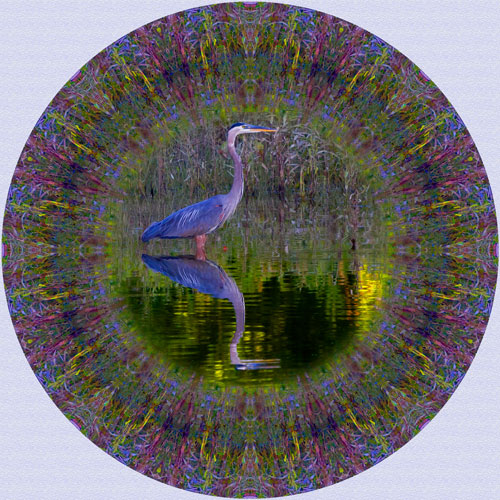
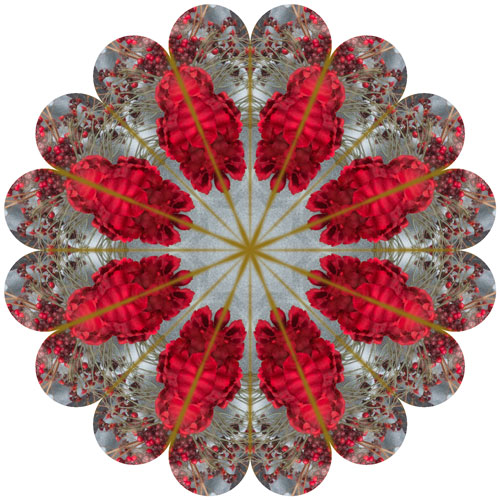
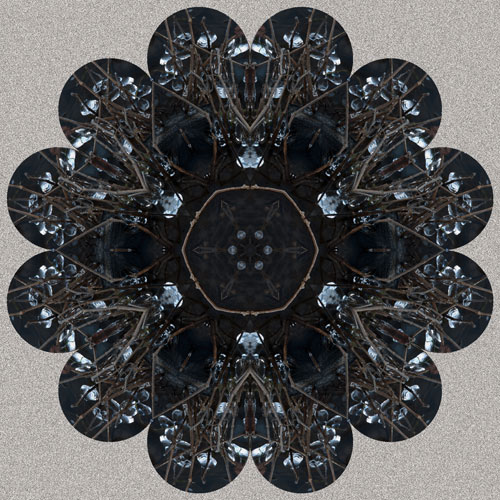
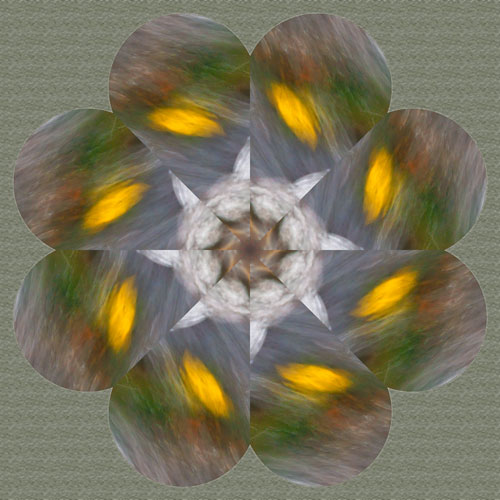
Kaleidoscope images? Sure, why not?

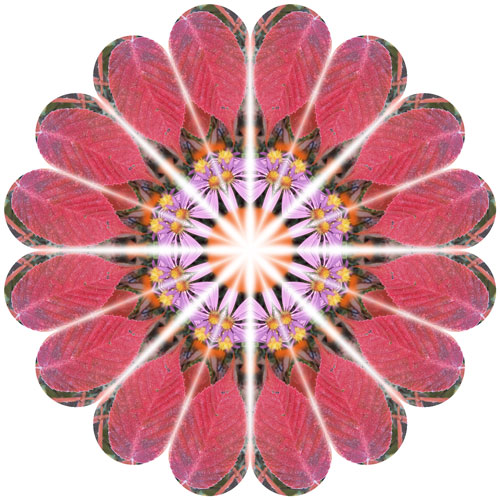
The other evening a friend mentioned that someone was doing kaleidoscope images with photographs.  This sounded interesting and in this day and age, the first thing to do would be to check for software that does that.  There is such software and it does an interesting job.  Here are some examples:


Some are clearly better than others but I’m learning more and I hope the next batch will be better.  I don’t know how creative this is, but it’s fun.